
2026 Best Air Condition Pump Types for Global Buyers?

Choosing the right Air Condition Pump in 2026 requires more than comparing cooling capacity or purchase price. Global buyers must examine climate, voltage, refrigerant standards, installation skills, noise limits, and long-term service access. A pump designed for a humid coastal city may perform poorly in a dry inland market. Small details matter.

Fatih Birol, Executive Director of the International Energy Agency, has described heat pumps as “a central technology in the global transition to clean energy.” His view reflects a wider industry shift toward efficient, reversible systems. However, efficiency claims need careful checking. Laboratory ratings may not match dusty filters, unstable power, poor airflow, or extreme outdoor temperatures.

This guide compares the leading Air Condition Pump types for international purchasing decisions. It considers scroll, rotary, reciprocating, inverter-driven, and heat-pump configurations. Each option has strengths. Each also has limits.

That part is often overlooked.

Experienced buyers should review seasonal efficiency, compressor protection, oil compatibility, control-board availability, and local technician training. A cheaper unit can become expensive when one unavailable component stops an entire cooling system. Conversely, a premium pump may be unnecessary for a small, lightly used room.

The best choice depends on evidence, not slogans. Product manuals, test conditions, warranty terms, and verified supplier records deserve attention. Some recommendations may still require adjustment after field experience. Markets change quickly, and no single pump type suits every country, building, or operating schedule.
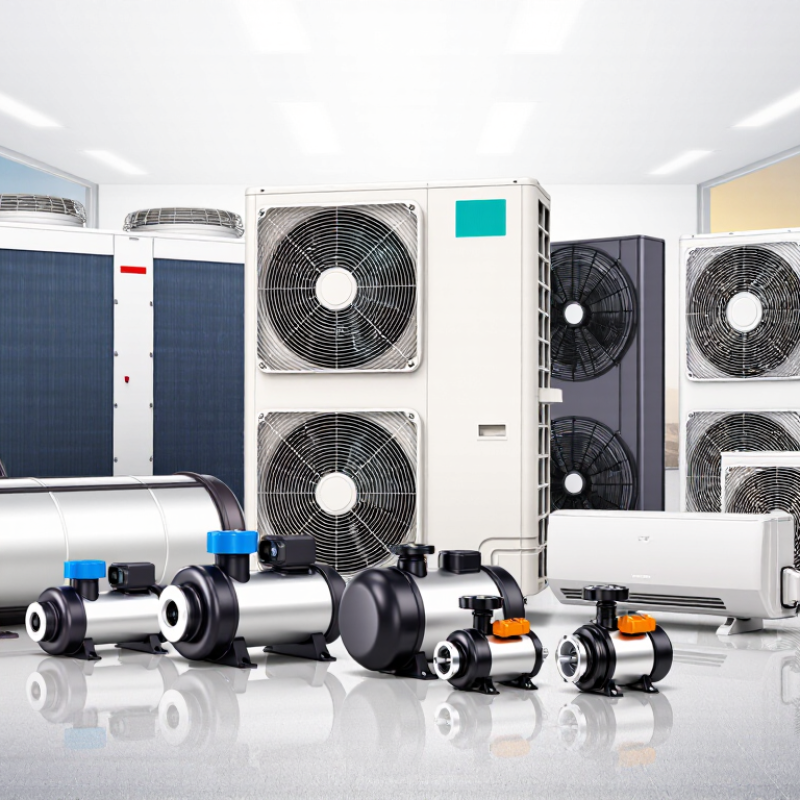
2026 Best Air Condition Pump Types for Global Buyers?

Air Condition Pump Basics: Definitions, Roles, and Core Components

2026 Best Air Condition Pump Types for Global Buyers?

An air-conditioning pump is a device that moves refrigerant, water, or condensate through a cooling system. The term can be confusing. In many systems, “pump” means the refrigerant compressor. It raises refrigerant pressure and circulates heat between indoor and outdoor coils. A condensate pump performs a different job. It lifts collected water when gravity drainage is impossible. Hydronic systems may also use circulation pumps to move chilled water through indoor fan coils.

Core components include the motor, pump housing, impeller or compression mechanism, bearings, seals, sensors, and control board. Refrigerant compressors commonly use scroll, rotary, screw, or reciprocating mechanisms. Each design affects noise, efficiency, pressure range, and maintenance needs. A condensate pump usually includes a reservoir, float switch, inlet screen, and discharge pipe. Small details matter. A blocked screen can stop drainage.

From field inspections, correct sizing often matters more than impressive specifications. Buyers should check voltage, frequency, refrigerant compatibility, flow rate, lift height, operating temperature, and service access. Coastal installations need stronger corrosion protection. Dusty sites need reliable filtration and simple cleaning access. Energy labels help, but test conditions can differ between regions. This distinction is easy to miss. Installation quality also changes vibration, efficiency, and working life. A pump may appear suitable on paper, yet fail when the pipe route is too long or poorly supported.

Main Air Condition Pump Types and Their Operating Principles

Air Condition Pump Types and Their Operating Principles

Air-conditioning systems rely on pumps, commonly called compressors, to move refrigerant through a closed circuit. A reciprocating compressor uses a piston inside a cylinder. The piston draws in low-pressure vapor, compresses it, and sends hot vapor toward the condenser. This design offers strong starting torque and easy servicing, but its moving parts can create noticeable vibration.

A rotary compressor compresses refrigerant with a rotating vane or rolling piston. It is compact and performs smoothly in smaller cooling systems. A scroll compressor uses two spiral elements. One orbiting scroll traps refrigerant pockets and gradually reduces their volume.

This produces steady compression, lower vibration, and efficient operation. Screw compressors use twin rotors and suit larger buildings because they can deliver continuous refrigerant flow.

Selection depends on climate, cooling load, voltage, refrigerant compatibility, and maintenance skills. In humid coastal areas, corrosion protection and sealed electrical parts deserve careful attention. In dusty regions, blocked coils can raise discharge pressure quickly. Field inspections often reveal that poor airflow causes more trouble than pump design.

A simple ranking is tempting, but it can mislead. A compact rotary unit may outperform a larger compressor in a small room. However, it may struggle under extreme heat or frequent cycling. Buyers should check performance data at local outdoor temperatures, not only rated laboratory conditions.

Installation quality matters just as much. Even a reliable pump performs poorly with incorrect piping, insufficient oil, or careless evacuation.

How to Compare Pump Capacity, Efficiency, and Refrigerant Compatibility

Choosing an air conditioning pump in 2026 requires more than matching a catalog number. Pump capacity must suit the system’s cooling load, pipe length, elevation, and outdoor temperature. A unit rated at 10 kW may deliver less on a 40°C day. Check both nominal and peak performance figures.

Efficiency should be measured across realistic operating conditions. Look for seasonal efficiency data, not only a single laboratory rating. Variable-speed pumps usually reduce cycling and electricity waste. However, savings depend on controls, insulation, and maintenance. A dirty coil can erase impressive efficiency claims. Small details matter.

Refrigerant compatibility needs careful verification. Confirm the pump’s pressure range, lubricant requirements, seals, and approved refrigerant type. Retrofitting without checking these points can cause leaks, overheating, or early compressor damage. Local safety rules also affect installation and refrigerant handling. Independent test reports and clear technical manuals provide stronger evidence than sales language. Field engineers should record suction pressure, discharge pressure, and power use after installation. The comparison is rarely perfect. Temperature changes, inaccurate gauges, or poor airflow can distort results. A practical buyer should leave room for uncertainty, then review performance after several weeks.

2026 Best Air Conditioning Pump Types for Global Buyers

Comparison of typical nominal cooling capacity, full-load efficiency, and common refrigerant compatibility by compressor type.

Pump Type Typical Application Common Refrigerants Main Buyer Consideration
Fixed-Speed Rotary Small residential split systems R32, R410A Lower purchase cost and simple servicing
Inverter Rotary Variable-load residential and light commercial units R32, R410A, selected R290 designs Best part-load efficiency and temperature control
Scroll Commercial split, rooftop, and heat-pump systems R410A, R32, R454B Good efficiency, reliability, and medium capacity
Screw Large chillers and industrial cooling R134a, R513A, R1234ze, selected R32 systems High capacity and stable continuous operation

The chart uses representative mid-range values for commonly sold air-conditioning systems: nominal cooling capacity in kW and full-load COP in W/W. Actual performance varies with ambient temperature, operating conditions, system design, and certification standard. Refrigerant compatibility must always be confirmed for the specific compressor and system design; refrigerants are not interchangeable without engineering approval.

Choosing the Right Air Condition Pump for Different Global Markets

Choosing the Right Air Condition Pump for Different Global Markets

The best air-conditioning pump depends on climate, building design, and maintenance access. Climate changes everything. In humid coastal regions, condensate pumps need corrosion-resistant materials and reliable drainage. A small, quiet model may suit apartments, but commercial systems often require higher lift and continuous-duty performance.

Cold markets usually need heat pump systems with strong low-temperature performance. Their outdoor units must manage frost, drainage, and repeated defrost cycles. In hot, dry regions, circulation pumps should tolerate high operating temperatures and dusty conditions. Variable-speed pumps can reduce energy use when cooling demand changes, though their controls may require better technician training.

Electrical supply also matters. Buyers should confirm voltage, frequency, motor protection, and local installation requirements before ordering. Water quality can affect circulation pumps in large buildings, especially where mineral deposits build inside narrow passages. Field inspections often reveal a simple mistake: the pump was selected by capacity alone. That is not enough. Measure twice. Review noise, service access, spare parts, and expected operating hours. A pump with excellent specifications can still fail commercially if local technicians cannot repair it. Some projects also need backup drainage or alarm signals, particularly in hospitals, hotels, and equipment rooms. Regional testing and documentation should be checked carefully. The perfect choice is rarely the strongest pump; it is the one that fits the market, system, and people maintaining it.

Installation, Maintenance, Safety, and Future Technology Trends

Choosing the right air conditioning pump depends on climate, building size, and service access. Variable-speed pumps improve comfort by adjusting output gradually. Fixed-speed systems cost less, but they may create sharper temperature swings. Installation should include correct pipe sizing, firm mounting, sealed connections, and clear condensate drainage. A poorly sloped drain can leave water beneath the indoor unit. That small mistake becomes expensive.

Maintenance needs a practical schedule. Clean or replace filters every one to three months, depending on dust and operating hours. Technicians should inspect coils, electrical terminals, fan blades, insulation, and refrigerant pressure. Do not release refrigerant or open sealed circuits without qualified training and suitable recovery equipment. Safety also requires an accessible electrical disconnect, grounded wiring, and protection from moving parts. Local codes differ, so independent inspection is wise. I have seen efficient equipment perform badly after rushed commissioning.

Tips: Photograph pipe joints before closing walls. Record filter dates and unusual sounds. Check the drain outlet after heavy cooling. A faint rattle may reveal loose hardware, not a failing compressor. Future systems will use smarter sensors, variable-speed motors, low-global-warming refrigerants, and predictive maintenance alerts. Connected controls can reduce waste, but they need secure passwords and careful data settings. Technology is improving quickly, yet complicated controls can confuse owners. Simple service access still matters.

We Meet Our Clients Needs.

Meeting the diverse needs of our clients, we have complete machining facilities for everything from single part prototypes to large quantity production. Our small size is one of our biggest assets. It allows us to control costs and maintain the highest of standards.

Quality orientated  and delivery always on time or earlier than originally promised.

Strongly recommend MSD.