
2026 Best Smart Door Lock Solutions for Global Buyers

Choosing the right Smart door lock solution in 2026 requires more than comparing sleek designs and app features. Global buyers need dependable access, clear security controls, and practical support after installation. A lock may look impressive in a showroom, yet fail during a weak Wi-Fi connection or a drained battery.

Security technologist Bruce Schneier offers a useful reminder: “Security is a process, not a product.” His principle applies directly to connected door access. A reliable solution combines strong encryption, controlled user permissions, mechanical override options, firmware updates, and transparent data policies. It should also match local door types, climate conditions, installation skills, and building requirements. Small details matter. A hotel manager may need temporary mobile credentials. A family may prefer fingerprint access for children. A factory may require audit records and offline operation.

This guide examines the 2026 market from a buyer’s perspective. It compares residential, commercial, hospitality, and multi-property requirements without assuming that one platform fits every region. Standards and certification practices differ across markets. So do network quality, replacement-part access, and privacy expectations. Buyers should verify these details with suppliers and qualified installers.

There is no perfect lock. Batteries still run down. Sensors sometimes misread a fingerprint. Cloud dependence can create uncomfortable weaknesses. However, careful product selection can reduce these risks. The strongest Smart door lock solution is not always the most advanced. It is the one that remains secure, usable, serviceable, and understandable in everyday conditions.
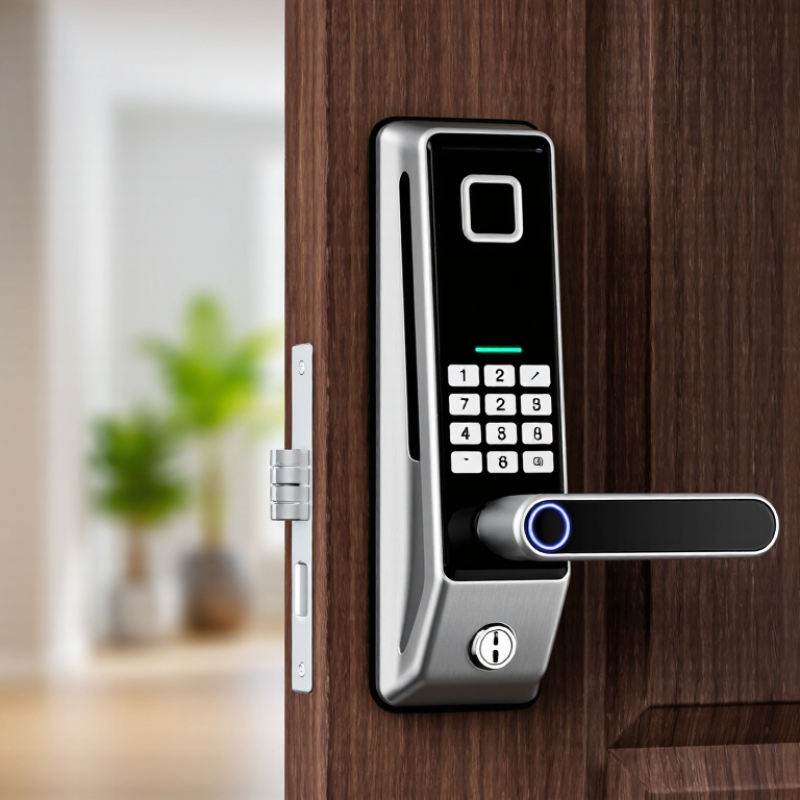
2026 Best Smart Door Lock Solutions for Global Buyers

2026 Smart Lock Market: 20%+ CAGR Forecasts and Global Buyer Segments

Global buyers are entering a fast-changing smart lock market. However, the 20%+ CAGR forecast needs careful reading. MarketsandMarkets estimates the market could grow from about USD 2.3 billion in 2023 to USD 4.4 billion by 2028, representing a 14.9% CAGR. Grand View Research reports a higher trajectory, with strong growth through 2030. Some regional forecasts exceed 20%, especially where apartment construction and smartphone adoption are accelerating. These differences matter. A forecast is not a purchase order.

Buyer segments are becoming more distinct. Residential developers often need keypad entry, temporary codes, battery alerts, and simple installation. Hospitality operators usually prioritize remote access, audit records, and integration with property systems. Office and rental-property managers may require offline operation when internet service fails. In humid coastal areas, corrosion resistance and stable seals deserve close attention. A lock can look advanced but still fail during a low-battery morning.

Fortune Business Insights also identifies connected homes, rental properties, and commercial facilities as major demand areas. Global purchasers should compare cylinder standards, door thickness, emergency power options, and mobile access reliability. Certification requirements vary by market, so local testing remains essential. This is where many procurement plans become too optimistic. Hardware costs receive attention, while cloud fees, installation labor, and after-sales support remain underestimated. The market is growing quickly, but practical fit still decides long-term value.

Security Standards: NIST AAL2, ANSI/BHMA Grades 1–3, and IEC 60529 IP Ratings

For global buyers, smart door lock selection should begin with measurable security standards, not app features. NIST AAL2 describes a moderate authentication assurance level for digital access systems. It generally requires two distinct authentication factors, such as a password and a registered device. A lock alone does not automatically achieve AAL2. The complete setup, including identity management and recovery controls, must be evaluated.

ANSI/BHMA Grades 1–3 indicate different levels of hardware durability and performance. Grade 1 suits demanding commercial applications and frequent use. Grade 2 often fits lighter commercial or high-quality residential doors. Grade 3 usually serves basic residential needs. Field checks matter. A lock may meet a grade, yet poor installation can weaken the door, strike plate, or mounting screws. That detail is easy to overlook.

Tips: Match the grade to traffic levels, door material, and replacement access needs. For outdoor installations, read the IEC 60529 IP rating carefully. IP65, for example, offers strong dust protection and water-jet resistance, but it does not guarantee protection against flooding or condensation inside the door. Ask for test conditions and certificates. Be cautious with vague terms like “weatherproof.” In one rainy-site inspection, the exterior looked intact while moisture had reached the battery compartment. Standards help, but installation quality still decides much of the outcome.

2026 Best Smart Door Lock Solutions for Global Buyers - Security Standards: NIST AAL2, ANSI/BHMA Grades 1–3, and IEC 60529 IP Ratings
Solution Profile Recommended Use Primary Access Methods NIST AAL2 Alignment ANSI/BHMA Target Grade Recommended IEC 60529 Rating Security and Durability Priorities Global Buyer Verification Points
Premium Exterior Entrance Lock Detached homes, villas, executive residences, and exposed front doors PIN code, secure mobile credential, physical key override, optional biometric factor Suitable with compliant architecture
Use two distinct factors, such as a device-bound credential plus a PIN. A lock alone is not an AAL2 certification.
Grade 1 preferred
Highest ANSI/BHMA performance category for applicable lock hardware.
IP65 or higher
IP65 means dust-tight protection and protection against water jets.
Strong attack resistance, protected credential storage, tamper alarms, encrypted communications, low-temperature operation, and mechanical key backup Confirm door thickness range, backset, cylinder format, regional radio approvals, emergency power method, and outdoor installation instructions.
Multi-Unit Residential Access Lock Apartment buildings, condominiums, student housing, and managed residential developments Mobile credential, PIN code, RFID credential, temporary guest code, mechanical override Suitable with compliant identity system
Use separate authentication factors and a secure verifier or access-control service.
Grade 1 or Grade 2
Grade 1 is preferred for high traffic; Grade 2 may fit moderate residential traffic.
IP54 to IP65
IP54 provides limited dust ingress protection and protection against water splashes; IP65 is preferable for exposed doors.
Central credential revocation, audit logs, role-based permissions, passage-mode control, battery monitoring, and fire-egress compatibility Check data-hosting location, privacy obligations, offline behavior, access-log retention, building-code requirements, and integration with existing entry systems.
Commercial Office Smart Lock Office suites, meeting rooms, clinics, and controlled internal areas Employee mobile credential, PIN, RFID credential, administrator override, optional biometric reader Suitable with compliant deployment
AAL2 requires two distinct authentication factors when the protected workflow requires that assurance level.
Grade 1 preferred
Appropriate for demanding commercial use when the complete hardware set is tested accordingly.
IP42 to IP54
Suitable for protected indoor locations; exposed or wash-down areas require a higher rating.
Fast user provisioning, anti-passback options, auditability, administrator separation, privacy controls, and reliable fail-safe or fail-secure configuration Validate local emergency-exit rules, accessibility requirements, door closer compatibility, network dependency, and single sign-on or directory integration.
Hospitality and Short-Stay Access Lock Hotels, serviced apartments, vacation rentals, and guest accommodation Time-limited PIN, mobile key, RFID credential, front-desk credential, physical emergency key Conditional
Guest convenience credentials may not provide AAL2 unless the guest identity workflow uses two distinct factors.
Grade 1 or Grade 2
Select according to traffic level, door construction, and local certification requirements.
IP54 to IP65
Use IP65 or higher for doors exposed to rain, spray, or coastal conditions.
Automatic credential expiry, rapid reprogramming, privacy-mode control, low-battery alerts, offline access, and damage-resistant keypad surfaces Check property-management integration, multilingual user experience, guest-data handling, emergency override procedures, and replacement battery availability.
Coastal or High-Humidity Exterior Lock Coastal residences, humid regions, outdoor gates, and weather-exposed service entrances PIN code, mobile credential, RFID credential, physical key override Conditional
Use a separate two-factor identity design when AAL2-level assurance is required.
Grade 1 preferred
Use corrosion-resistant hardware and confirm the test scope for the complete lock assembly.
IP66 or IP67
IP66 provides protection against powerful water jets; IP67 provides temporary immersion protection under specified test conditions.
Corrosion resistance, sealed battery compartment, UV-resistant materials, drainage design, conformal-coated electronics, and wide operating temperature range IP testing applies to the tested enclosure and conditions; verify installation orientation, seals, maintenance requirements, salt-air resistance, and warranty exclusions.
Budget Residential Retrofit Lock Existing homes, rental properties, and low-to-moderate traffic residential doors PIN code, mobile credential, physical key override, optional temporary guest code Usually not sufficient by itself
A single PIN or single device credential is not two-factor authentication.
Grade 2 or Grade 3
Grade 3 is the basic residential performance category; Grade 2 is preferable for heavier use.
IP44 to IP54
Suitable only when the installation is sheltered and not exposed to direct weather.
Correct retrofit dimensions, secure mounting, mechanical override, battery warning, offline operation, and resistance to common forced-entry methods Measure backset, door thickness, strike position, handing, and clearance before purchase; confirm compatibility with local door standards.
Industrial or Utility Access Lock Equipment rooms, warehouses, utility cabinets, remote facilities, and controlled service areas PIN, RFID credential, mobile credential, administrator credential, mechanical override Conditional
AAL2 depends on the complete authentication and access-management system, not only the lock enclosure.
Grade 1 preferred
Confirm suitability for the specific door, enclosure, traffic pattern, and attack environment.
IP65 to IP67
Select based on dust, water-jet, wash-down, or temporary-immersion exposure.
Dust and water sealing, vandal resistance, offline credential validation, audit logs, tamper detection, temperature tolerance, and secure maintenance access Review hazardous-area requirements separately; an IP rating does not by itself indicate explosion protection, impact resistance, or cybersecurity compliance.
Enterprise Access-Control Lock Corporate campuses, laboratories, data rooms, and high-value restricted areas Smart card, mobile credential, PIN plus credential, security-token workflow, administrator override Best fit when fully integrated
Design the identity, verifier, credential, device, and policy layers to meet the required AAL2 controls.
Grade 1 preferred
Use higher-performing hardware for high traffic and sensitive zones.
IP54 to IP65
Choose according to the environmental exposure of each access point.
Strong identity lifecycle management, least-privilege access, cryptographic protection, tamper events, centralized logs, offline fallback, and separation of administrative duties Request independent test reports, security architecture documentation, software-update policy, vulnerability disclosure process, audit export capability, and regional compliance evidence.
Standards interpretation: NIST AAL2 describes the assurance level of an authentication process and is not a standalone smart-lock product grade. ANSI/BHMA Grades 1–3 describe performance categories for applicable builders’ hardware; Grade 1 is the highest category and Grade 3 is the basic residential category. IEC 60529 IP codes describe protection against solid particles and water under defined test conditions. Always verify the tested product configuration, installation method, door assembly, and local building or emergency-egress requirements.

Connectivity Selection: Bluetooth LE 5.4, Wi-Fi, Zigbee, Z-Wave, and Matter 1.4

For global smart lock buyers in 2026, connectivity should match the doorway, not merely the product brochure. Bluetooth LE 5.4 suits apartments, hotels, and battery-powered locks. It offers local unlocking, lower energy use, and simpler installation. The phone must be nearby, however. Remote control still needs a gateway or another network path.

Wi-Fi delivers direct cloud access and live alerts. It is convenient, but continuous network activity can shorten battery life. Zigbee and Z-Wave create low-power mesh networks, which help in larger homes with several sensors. Their regional frequencies and gateway requirements need careful checking. The Bluetooth SIG forecasts 5.4 billion Bluetooth device shipments annually by 2028, showing strong ecosystem momentum. Scale matters here.

Matter 1.4 improves cross-platform interoperability and supports more flexible smart-home networks, according to the Connectivity Standards Alliance. Yet compatibility claims require testing. A lock may support Matter but still lack every desired feature through each controller. Parks Associates’ smart-home research consistently links reliability with consumer satisfaction, not novelty. I would test operation during router failure, phone loss, and weak signal conditions. That judgment is imperfect. Battery behavior also changes in cold weather, thick doors, and busy apartment corridors. For global projects, dual connectivity often offers better resilience than choosing one protocol blindly.

Global Compliance: FCC Part 15, RED 2014/53/EU, GDPR, and UK PSTI Rules

2026 Best Smart Door Lock Solutions for Global Buyers

Global compliance should shape a smart door lock before production begins. In the United States, FCC Part 15 testing supports limits for radio-frequency emissions and interference. A lock intended for Europe may require assessment under RED 2014/53/EU, covering radio performance, safety, and electromagnetic compatibility. The correct route depends on the product’s wireless functions, power system, and market claims. One report rarely covers every region.

GDPR also matters when locks collect names, access records, mobile identifiers, or video data. Buyers should request clear data maps, retention periods, encryption details, and user-access procedures. In the United Kingdom, the PSTI rules focus on consumer connectable product security. Practical evidence may include unique passwords, vulnerability reporting channels, software update policies, and documented security support periods. Ask for the technical file, declaration documents, and test scope. Do not accept vague “global certification” language.

Tips: Check compliance before signing a purchase contract. Confirm the exact model and radio module tested. Review firmware update control and failure procedures. Test the lock during power loss and weak-network conditions. That small test can reveal serious design gaps. A checklist helps, but it is not proof. Requirements can change, and supplier documents may contain mistakes. Independent laboratory review and local legal advice remain sensible for high-volume launches.

2026 Smart Door Lock Compliance Map for Global Buyers

Regulatory relevance for a radio-enabled, internet-connected smart door lock that may process user data in the United States, European Union, and United Kingdom.

1 indicates that the framework is directly relevant to the stated product and market scenario; 0 indicates that it is not the framework’s primary regulatory focus. RED cybersecurity and privacy requirements apply to relevant internet-connected radio equipment under the applicable EU delegated rules. GDPR relevance depends on the processing of personal data and territorial scope.

Supplier Comparison: Battery Life, AES-256 Encryption, TCO, Warranty, and ROI

For global buyers, supplier comparisons should begin with measurable operating costs, not keypad design. NIST SP 800-57 recognizes AES-256 as a strong approved encryption option for protecting sensitive data. However, encryption claims need verification. Ask suppliers for independent test reports, secure update procedures, and documented key management.

Battery life deserves practical testing. Request results under a clear usage pattern, such as 20 unlocks daily, Wi-Fi enabled, and low-temperature operation. Marketing figures often assume lighter use. A 2024 Grand View Research report estimated the global smart lock market at more than USD 2 billion, increasing supplier choice but also making specifications harder to compare. Small differences matter. A lock needing four batteries every six months creates labor, access, and disposal costs.

Total cost of ownership should cover hardware, gateways, batteries, installation, software fees, maintenance, and warranty handling. For example, a USD 180 lock with USD 25 annual service can exceed a USD 240 model within three years. Warranty length is useful, but response time matters more for rental housing and hotels. Calculate ROI from fewer rekeying visits, reduced lost-key incidents, and faster staff access. Energy Star’s lifecycle-cost method supports comparing purchase price with operating expenses, though it is not designed specifically for locks. That limitation matters. Suppliers should provide failure-rate data, repair terms, and regional support coverage before buyers trust projected savings.

Article Source:

We Meet Our Clients Needs.

Meeting the diverse needs of our clients, we have complete machining facilities for everything from single part prototypes to large quantity production. Our small size is one of our biggest assets. It allows us to control costs and maintain the highest of standards.

Quality orientated  and delivery always on time or earlier than originally promised.

Strongly recommend MSD.