2026 Top Trends in CNC Machining Technology and Innovations?
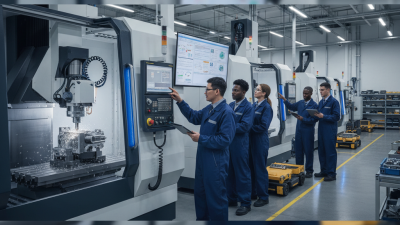
The CNC machining industry is rapidly evolving. Experts like Dr. Emily Carter, a leading authority in manufacturing technologies, state, "Innovation in CNC machining drives efficiency and precision." As we look ahead to 2026, several pioneering trends are emerging.
One significant trend is the integration of AI and machine learning. This technology is transforming CNC machining into a smarter, more responsive process. Advanced machines can now adapt to real-time data, enhancing productivity. Additionally, automation continues to reshape production lines. Companies are facing challenges in balancing human touch with machine efficiency.
Sustainability is another pressing theme. Manufacturers are seeking eco-friendly practices. Energy-efficient CNC machines are now a priority. This shift reflects a growing commitment to environmental responsibility. However, embracing these innovations comes with its hurdles. Companies must invest in training and technology updates, often grappling with high initial costs. The path ahead is exciting yet complex, calling for careful consideration in adoption.
Emergence of Advanced Materials in CNC Machining
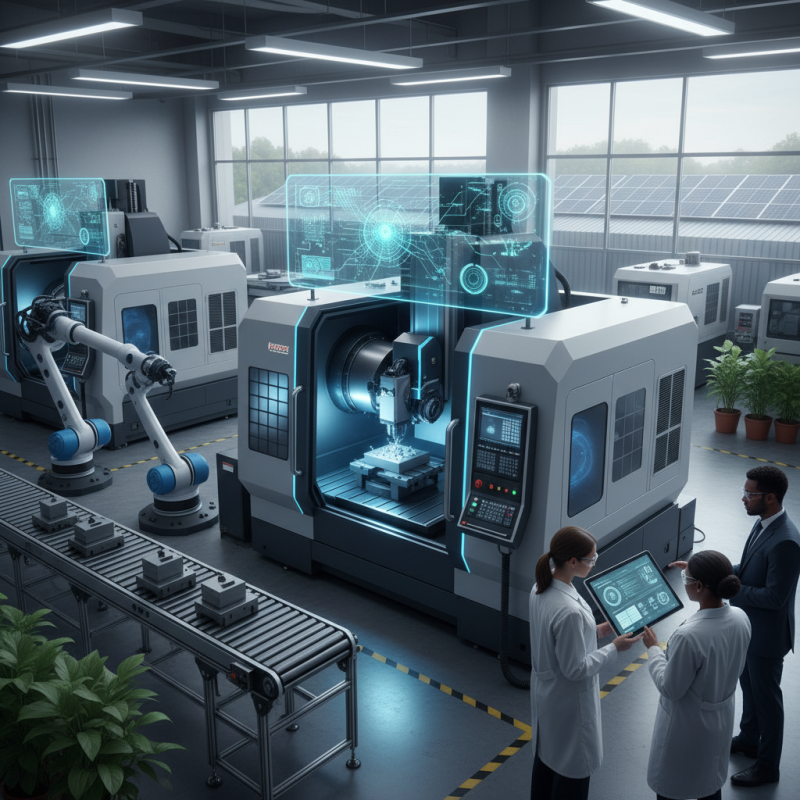
The emergence of advanced materials in CNC machining is reshaping the industry. Materials such as carbon fiber, titanium alloys, and high-performance polymers are becoming more prevalent. These materials offer superior strength-to-weight ratios, enhancing the efficiency of machined parts. According to recent industry reports, the market for advanced materials in CNC machining is projected to grow at a rate of 10% annually until 2026.
The incorporation of these materials presents challenges. Machining them often requires specialized tools and techniques. For example, carbon fiber can cause excessive wear on conventional cutting tools. This aspect necessitates constant innovation in tool manufacturing to improve durability. Additionally, heat management during the machining process is critical. High-performance polymers can deform if not handled properly, leading to material wastage.
The need for skilled labor is increasing as well. Operators must understand the unique behaviors of advanced materials. Training programs to enhance skills are becoming essential. As industries adopt these materials at a growing pace, the demand for expertise in CNC machining will only increase. Balancing innovation with practical application remains a significant concern for businesses.
2026 Top Trends in CNC Machining Technology and Innovations - Emergence of Advanced Materials in CNC Machining
| Trend | Description | Impact on CNC Machining | Material Examples |
|---|---|---|---|
| Increased Use of Composites | Growing interest in lightweight yet strong materials for aerospace and automotive applications. | Enhances performance and efficiency while reducing weight. | Carbon Fiber, Glass Fiber Reinforced Plastics (GFRP) |
| Additive Manufacturing Integration | Combining CNC machining with 3D printing techniques for complex geometries. | Reduces material waste and allows for customized production. | Metal Alloys, Polymeric Materials |
| Smart CNC Machines | Implementation of IoT and AI technologies for predictive maintenance and optimization. | Improves uptime and reduces operational costs. | N/A |
| Sustainable Manufacturing Practices | Focus on eco-friendly materials and processes to minimize environmental impact. | Meets regulatory standards and consumer demand for sustainable products. | Recycled Materials, Biodegradable Plastics |
| High-Performance Alloys | Development of next-generation alloys for extreme conditions. | Enhances durability and performance in demanding environments. | Titanium Alloys, Nickel-Based Superalloys |
Integration of IoT and Automation in CNC Manufacturing Processes
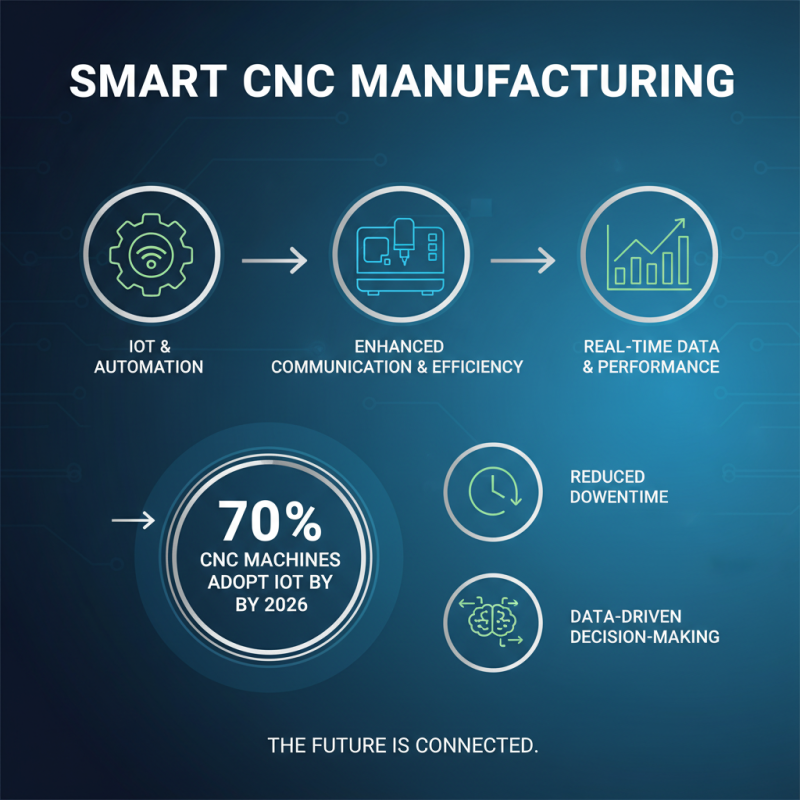
The integration of IoT and automation in CNC manufacturing is paving a new path for the industry. Reports indicate that by 2026, more than 70% of CNC machines will adopt IoT technology, enhancing communication and efficiency. This shift allows manufacturers to collect real-time data, improving machine performance and reducing downtime. Data-driven decision-making is becoming the new standard.
However, there are challenges. Not all manufacturers are ready to integrate these technologies. Some may struggle with cybersecurity threats that come with connected devices. In a recent survey, 40% of companies reported concerns about data breaches in automated systems. Training staff to operate these advanced machines is also a hurdle. Many workers find it difficult to adapt to automated environments.
Despite these challenges, the advantages of IoT integration are significant. Automation can lead to a 30% increase in productivity, according to industry estimates. Improved efficiency translates into reduced operational costs. Yet, it's crucial for companies to assess their readiness for such transformations and not rush into implementation without proper planning. The journey towards full automation is complex and necessitates careful consideration of technology, workforce capability, and security protocols.
Impact of AI and Machine Learning on CNC Machining Efficiency
The integration of AI and machine learning in CNC machining is transforming the industry. These technologies enhance precision and reduce waste. For instance, predictive maintenance prevents machine downtimes through real-time data analysis. This boosts production efficiency and minimizes operational costs.
Moreover, AI algorithms can optimize tool paths for intricate designs. They analyze various parameters to ensure minimal material usage without sacrificing quality. However, not all implementations are flawless. Challenges remain in training AI systems to understand complex human inputs effectively. Misinterpretations can lead to suboptimal machining outcomes.
The reliance on AI demands ongoing training and updates. This is crucial to keep pace with evolving machining demands. Companies must invest in talent to interpret AI outputs. Balancing human intuition and machine efficiency is essential. Adapting to this new era requires reflection on current practices.
Sustainability Practices in CNC Machining Technologies
Sustainability is becoming key in CNC machining. The industry is seeing significant changes as companies adapt to environmental pressures. According to a report by Market Research Future, the global CNC machining market is projected to reach $100 billion by 2026, with sustainable practices playing a crucial role in this growth.
Utilizing renewable energy sources and eco-friendly materials can reduce the carbon footprint of CNC machining. Reports indicate that companies adopting these practices have seen energy cost reductions of up to 30%. This shift not only improves operational efficiency but also promotes a positive public image.
Tips: Consider implementing machining fluid recycling processes. This can minimize waste and lower operational costs. Regular audits of energy consumption can also identify areas for improvement.
Despite these advancements, challenges remain. Not all companies have the resources to invest in sustainable technologies. Additionally, transitioning to greener practices may disrupt current production flows. Striking a balance between sustainability and efficiency is an ongoing struggle for many manufacturers in the CNC machining sector.
2026 Top Trends in CNC Machining Technology and Innovations
This chart illustrates the top trends in CNC Machining Technology for 2026, highlighting the implementation levels of various sustainability practices. The data indicates a strong emphasis on sustainable materials and energy efficiency, with enhanced precision and automation integration also receiving significant focus.
Trends in CNC Machining Software and Digital Twin Applications
The integration of digital twin applications in CNC machining is revolutionizing the industry. Digital twins create a virtual representation of physical machining processes. This technology enables real-time monitoring and adjustments to enhance precision. Engineers can simulate various scenarios without the risk of physical prototyping. Immediate feedback helps in fine-tuning operations, leading to better outcomes. However, not all simulations produce accurate results. Some discrepancies can arise from data inaccuracies.
CNC machining software is also evolving. Advanced algorithms improve the efficiency of machining operations. These systems utilize machine learning to predict tool wear and maintenance needs. This proactive approach minimizes downtime. Still, it requires an ongoing commitment to data management. Inconsistent data input can lead to flawed analyses and outcomes. It’s crucial for manufacturers to refine their data collection methods.
While technology is a powerful ally, doubts remain about its reliability. Cybersecurity is a critical concern. As machinery becomes more interconnected, the risk of cyber threats rises. Companies must remain vigilant and invest in robust security measures. Balancing technological advancement with these challenges will define future CNC machining innovations.
Related Posts
-
How to Optimize CNC Machining Manufacturing for Maximum Efficiency and Quality
-
How to Achieve CNC Machining Precision for Global Buyers?
-
2025 How to Achieve High CNC Machining Precision in Manufacturing
-
Why Is CNC Machining Precision Essential for Modern Manufacturing?
-
What is CNC Machining Equipment and How Does It Work Explained
-
Top CNC Machining Technology Trends Shaping the Future of Manufacturing?
We Meet Our Clients Needs.
Meeting the diverse needs of our clients, we have complete machining facilities for everything from single part prototypes to large quantity production. Our small size is one of our biggest assets. It allows us to control costs and maintain the highest of standards.
Quality orientated and delivery always on time or earlier than originally promised.
Strongly recommend MSD.