2026 Top Borosilicate Glass Sheet Types for Global Buyers
Global buyers in 2026 will find more than one standard option when sourcing Borosilicate Glass Sheet. Clear 3.3 borosilicate remains widely used for laboratory equipment, lighting covers, observation windows, and industrial panels. Low-iron sheets offer improved visual clarity for display and architectural applications. Heat-strengthened and chemically treated versions may provide better durability, but their performance depends on processing quality and final thickness. Some suppliers also offer coated, frosted, patterned, or laminated sheets for glare control, privacy, and safety requirements.
Real procurement is messier.
A reliable comparison should examine thermal expansion, thickness tolerance, flatness, surface quality, edge treatment, and available dimensions. Buyers should request test reports, batch information, and clear references to applicable ASTM, EN, ISO, or regional standards. A polished datasheet is helpful, but it cannot replace production evidence. In practical use, a sheet near a furnace may face repeated heating and cooling, while a laboratory panel may contact aggressive chemicals every day. These conditions require different specifications. A small edge chip, unnoticed during inspection, can become a serious weakness after installation. This risk is easy to underestimate. Supplier experience, cutting accuracy, packaging quality, and after-sales communication also influence total value. Pricing alone can mislead global buyers, especially when freight, breakage, certification, and replacement delays are included. This guide compares major Borosilicate Glass Sheet types and highlights where each option performs well, where it may fail, and which questions deserve closer review before ordering.
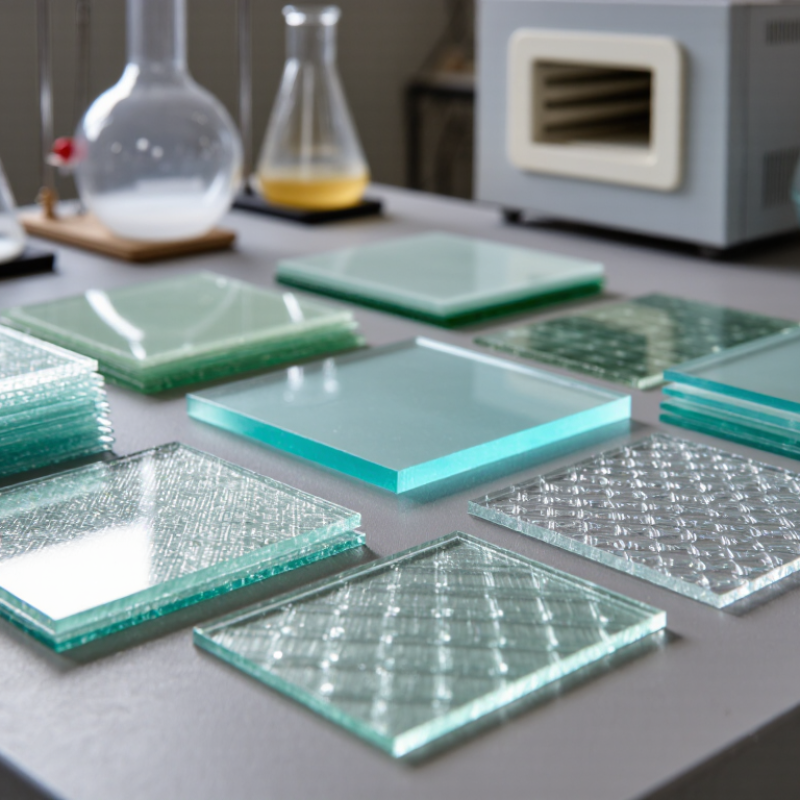
Borosilicate Glass Sheet Basics and Key Performance Features
Borosilicate glass sheets contain significant boric oxide, which improves thermal and chemical stability. ISO 3585 specifies a nominal thermal expansion coefficient near 3.3 × 10⁻⁶ K⁻¹. That is far below ordinary soda-lime glass. In practical use, a warm sheet is less likely to crack when exposed to cooler air or liquids. Still, thermal shock resistance is not unlimited. Edges, drilled holes, and scratches remain vulnerable.
Key performance depends on more than composition. A 2024 market assessment by Grand View Research projects steady borosilicate glass demand through 2030, supported by laboratory, lighting, and industrial applications. Buyers should request thickness tolerance, flatness, light transmission, chemical-resistance data, and annealing records.
For heat-facing panels, maximum service temperature matters more than a headline softening point, which is commonly around 820°C. Surface quality also matters. Tiny inclusions can become visible under strong backlighting.
In my experience, procurement teams sometimes compare sheets only by thickness and price. That approach is incomplete. A 3 mm sheet with poor edge finishing may fail sooner than a slightly thicker, carefully annealed sheet. Ask for test methods, not vague claims. ASTM E228 can support thermal-expansion verification, while visual inspection should check scratches, bubbles, and roller marks. One limitation deserves attention: published values often describe ideal laboratory samples, not cut production pieces. Real performance may be less predictable.
Main Types of Borosilicate Glass Sheets in 2026
2026 Top Borosilicate Glass Sheet Types for Global Buyers
Main Types of Borosilicate Glass Sheets in 2026
Clear borosilicate 3.3 remains the main sheet type for laboratories, lighting, cookware, and viewing windows. Its thermal expansion coefficient is about 3.3 × 10⁻⁶/K. ISO 3585 identifies this grade as suitable for strong thermal resistance and chemical durability. Buyers often choose it for repeated heating and cooling.
Low-iron borosilicate sheets provide higher visible-light transmission. They fit solar covers, optical instruments, and display protection. Tempered versions offer improved impact resistance after controlled heat treatment. However, tempering does not remove edge damage risks. Cut quality still matters. Laminated sheets add safety when breakage control is required. Coated sheets can improve reflection, solar control, or surface hardness.
Opaque and colored borosilicate sheets serve lighting, architectural details, and technical enclosures. Amber glass helps reduce ultraviolet exposure for sensitive contents. Industry reports from Grand View Research and IMARC Group continue to identify laboratory, pharmaceutical, and lighting uses as major demand areas. IMARC’s 2024 assessment also reports steady market growth through 2032, supported by heat-resistant applications. The exact outlook varies by report. That difference deserves attention. Global buyers should compare CTE data, thickness tolerance, flatness, surface finish, and test standards. A low price can hide weak edge processing or inconsistent optical quality. Request recent inspection records before approving production.
How to Compare Sheets by Composition, Thickness, and Application
2026 Top Borosilicate Glass Sheet Types for Global Buyers
How to Compare Sheets by Composition, Thickness, and Application
Borosilicate glass sheets differ mainly in chemical balance and manufacturing control. A typical grade contains high silica, boron oxide, and small amounts of alkali and alumina. This structure supports low thermal expansion and better resistance to sudden temperature changes. Do not judge quality by the word “borosilicate” alone. Ask for the exact composition, applicable standard, and batch test report.
Thickness should match both heat conditions and mechanical demands. Thin sheets can transmit light efficiently but may flex during installation. Thicker sheets provide stronger handling performance, yet they add weight and may respond more slowly to temperature changes. Check nominal thickness, tolerance, flatness, surface quality, and edge treatment. A sheet listed as 5 mm may not measure 5 mm everywhere. That detail matters.
Application decides the practical grade. Furnace viewing windows need thermal stability and clean surfaces. Laboratory equipment may require chemical resistance and precise dimensions. Solar or lighting systems often prioritize optical clarity, coating compatibility, and long-term weather exposure. Compare thermal expansion data with the surrounding frame material. Mismatched expansion can create stress at the edges. It is easy to focus on the glass and overlook the frame. That mistake is common. For international purchasing, review packaging methods, inspection records, and test conditions. A supplier’s technical sheet helps, but independent inspection remains sensible for large orders.
Selecting the Right Borosilicate Glass Sheet for International Use
2026 Top Borosilicate Glass Sheet Types for Global Buyers
Selecting the right borosilicate glass sheet for international use requires more than checking thickness and price. Type 3.3 glass remains a common choice because its thermal expansion is about 3.3 × 10⁻⁶/K. ISO 3585 identifies this composition as suitable for demanding thermal and chemical environments. It works well for laboratory panels, viewing windows, and heated equipment.
For outdoor equipment, ask for low-iron or solar-control grades when light transmission matters. For industrial covers, heat-resistant sheets with polished edges can reduce cracking during installation. A 2024 Grand View Research report projects continued growth in the global borosilicate glass market, supported by laboratory, pharmaceutical, and technical applications. However, market growth does not guarantee that every sheet meets the same export requirements. That assumption needs checking.
Tips: Request a test certificate showing thermal expansion, softening point, chemical resistance, and thickness tolerance. Confirm whether measurements follow ISO, ASTM, or another accepted standard. Ask for edge protection during sea transport. A small corner chip can become a full crack after temperature changes. Also verify packing dimensions, because oversized sheets may trigger different freight handling rules. Do not select the thinnest option automatically. In my experience, a slightly thicker sheet often provides better handling confidence, but the final choice should follow load calculations, not habit.
2026 Top Borosilicate Glass Sheet Types for Global Buyers
Selecting the Right Borosilicate Glass Sheet for International Use
The chart compares nominal coefficients of thermal expansion for commonly specified borosilicate glass grades. Lower values generally indicate better resistance to thermal stress, while the final selection should also consider sheet thickness, optical quality, chemical resistance, applicable standards, and destination-market requirements.
Reference values are nominal grade designations expressed as ×10⁻⁶ K⁻¹; actual specifications may vary by manufacturer and applicable standard.
