
2026 Top Bus Handrail Types for Global Buyers?
Bus Handrail selection is becoming a safety, durability, and passenger-comfort decision for global transit buyers. Fleet modernization is accelerating, especially as cities expand electric and low-emission bus programs. The International Energy Agency’s Global EV Outlook 2024 identifies electric buses as a leading commercial vehicle segment. This shift changes interior requirements. Battery layouts, wider aisles, standing zones, and frequent cleaning can affect handrail placement and material choices.
The UITP Global Public Transport Trends 2024 report highlights continuing investment in resilient, accessible, and passenger-focused transport systems. A reliable Bus Handrail must support these goals. Stainless steel offers strength and familiar tactile feedback. Powder-coated aluminum reduces weight. Thermoplastic and antimicrobial surfaces can improve comfort and maintenance control. However, “antimicrobial” should not be accepted without verified test evidence. That assumption is incomplete.
Global buyers should compare straight rails, vertical poles, horizontal grab bars, three-point systems, flexible straps, and modular combinations. Each type suits different passenger flows and vehicle layouts. A crowded city route needs stable gripping points near doors and standing areas. An airport shuttle may prioritize clean lines and fast interior cleaning. Procurement teams should review corrosion resistance, load performance, edge finishing, flame behavior, accessibility, and compatibility with local vehicle regulations. UNECE Regulation No. 107 provides an important reference for bus construction and passenger safety requirements. Yet, compliance alone does not guarantee excellent usability. Test the rail with wet hands, gloves, and limited reach. Observe real passenger movement. Small details matter. A polished specification can still fail in daily service.
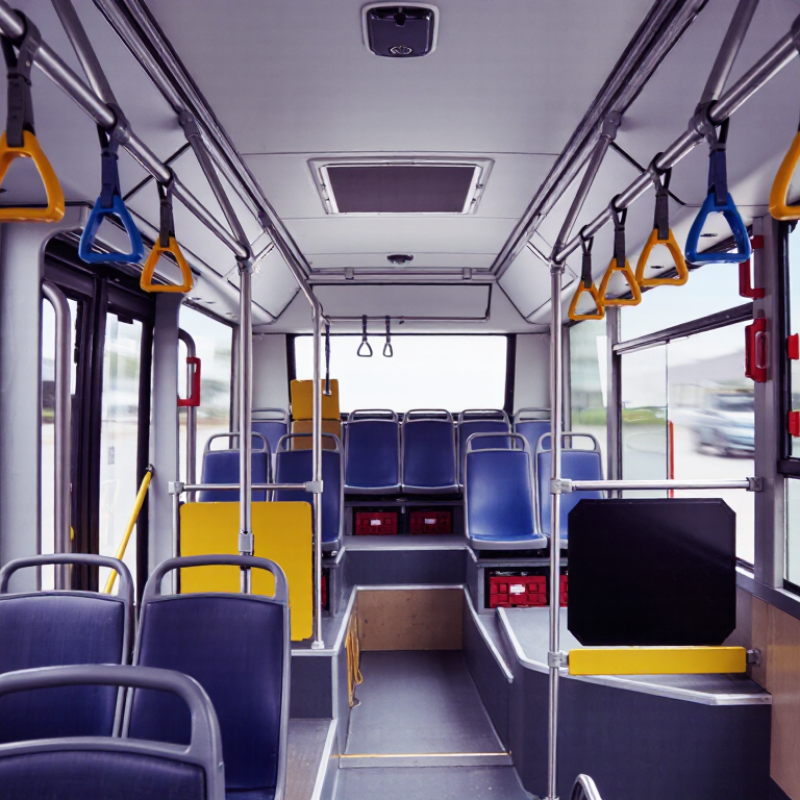
What Is a Bus Handrail and Why Does Its Design Matter?
A bus handrail is a fixed or suspended support that helps passengers balance while boarding, standing, or moving through the aisle. Common types include vertical poles, horizontal rails, overhead straps, and flexible loop handles. Each type serves a different passenger need.
Its design matters because passengers face sudden braking, crowded aisles, wet shoes, and uneven movement. A well-designed rail should offer a firm grip, rounded edges, stable anchoring, and enough clearance for hands. Its height must suit both shorter passengers and taller adults. Materials also matter. Textured surfaces can improve grip, while smooth coatings are easier to clean. However, overly rough surfaces may feel uncomfortable during long journeys.
Tips: Check rail strength under repeated pulling, not only during installation. Inspect joints, fasteners, and protective covers regularly. Leave enough space around each rail for hands and winter clothing. A rail may look strong but still move slightly under pressure. That small movement deserves attention. No design is perfect. Passenger feedback can reveal problems that measurements miss. For global buyers, testing should consider local climate, cleaning routines, passenger volume, and accessibility expectations. Clear inspection records also support reliable quality control.
2026 Top Bus Handrail Types for Global Buyers? - What Is a Bus Handrail and Why Does Its Design Matter?
| Handrail Type | Typical Location | Common Materials | Typical Design Dimensions | Main Advantages | Key Design Considerations | Common Applications |
|---|---|---|---|---|---|---|
| Vertical Stanchion | From the vehicle floor to the ceiling or roof structure, especially near doors and standing areas. | Stainless steel Aluminum Powder-coated steel | Common tube outside diameter: approximately 25–38 mm. Height is customized to the vehicle interior and mounting structure. | Provides stable support during acceleration, braking, and turning; supports high passenger loads; suitable for dense standing areas. | Must be firmly connected to reinforced floor and ceiling points. Avoid obstructing passenger circulation, emergency exits, or driver visibility. | City buses, articulated buses, airport shuttle buses, and high-capacity transit vehicles. |
| Horizontal Grab Rail | Along the ceiling, side wall, seat rows, and standing zones. | Stainless steel Aluminum Steel | Common tube outside diameter: approximately 25–38 mm. Length and bend radius depend on the interior layout. | Offers continuous support for multiple passengers and can improve movement through the aisle. | Brackets must resist vibration and repeated loading. The rail should have a smooth, easy-to-clean surface without sharp edges. | Urban transit buses, commuter buses, school buses, and long-distance coaches. |
| Overhead Passenger Rail | Suspended from the ceiling above the aisle or standing passenger area. | Aluminum Stainless steel Composite components | Usually paired with hanging straps or loops. Rail height is selected according to interior clearance and passenger reach. | Maximizes floor space, supports many passengers, and keeps the aisle relatively open. | Ceiling attachments must be structurally reinforced. The design should maintain adequate head clearance and allow simple inspection of straps and fittings. | High-floor city buses, articulated buses, rapid transit buses, and vehicles with large standing capacities. |
| Hanging Strap or Loop | Attached to an overhead rail for passengers who cannot comfortably reach a fixed rail. | Thermoplastic elastomer Polyester webbing Polyurethane Metal fitting | Loop size and hanging length vary by interior height and accessibility requirements. | Flexible, lightweight, and accessible to passengers of different heights; can reduce standing instability. | Materials should tolerate repeated pulling, cleaning chemicals, humidity, and temperature changes. Fasteners require regular inspection. | City buses, articulated buses, school transportation, and other vehicles with significant standing capacity. |
| Entrance and Exit Handrail | Beside stairways, door openings, and step wells. | Stainless steel Powder-coated steel Aluminum | Common tube outside diameter: approximately 25–38 mm. Curved or angled sections are often used to follow the step geometry. | Helps passengers maintain balance while boarding or leaving and can improve safety in wet or crowded conditions. | Must provide continuous, unobstructed gripping areas and sufficient clearance from doors, steps, and adjacent panels. | City buses, coaches, school buses, low-floor buses, and accessible transit vehicles. |
| Priority Area Handrail | Near wheelchair spaces, mobility aid areas, priority seats, and accessible boarding zones. | Stainless steel Aluminum High-strength polymer fittings | Dimensions are coordinated with wheelchair clearances, seat geometry, and the vehicle accessibility layout. | Supports passengers with reduced mobility and helps improve stability during boarding, stopping, and turning. | Must not reduce wheelchair maneuvering space or interfere with restraint systems, ramps, lifts, or priority seating. | Low-floor city buses, paratransit vehicles, accessible coaches, and public transport vehicles designed for inclusive mobility. |
| Seat-Adjacent Handhold | Mounted to seat frames, seat partitions, or side panels near passenger seating. | Aluminum Stainless steel Glass-fiber-reinforced polymer | Compact grip sections are shaped around seat pitch, aisle width, and passenger clearance requirements. | Provides a convenient grip when standing up, sitting down, or moving beside a seat. | The grip should not create a snagging hazard or reduce legroom. Seat-frame connections need to withstand repeated passenger loading. | Coaches, commuter buses, school buses, and urban buses with mixed seating and standing areas. |
| Partition-Mounted Handrail | Installed on glass, composite, or metal partitions near doors, stairs, and seat groups. | Stainless steel Aluminum Reinforced polymer | Straight, curved, or offset profiles are selected to match partition thickness and passenger clearance. | Uses existing interior partitions and can combine passenger guidance with interior space management. | Mounting points must be reinforced. Transparent partitions require careful load distribution to prevent cracking or excessive flexing. | Transit buses, airport buses, premium coaches, and vehicles with separated entrance or seating zones. |
| Fold-Down or Swing-Away Rail | Near priority seats, wheelchair spaces, or areas requiring occasional access clearance. | Stainless steel Aluminum Engineering polymer joints | Geometry is customized to provide a usable grip while maintaining the required clear passage when folded or moved. | Balances passenger support with flexible space management in multifunctional interior zones. | Hinges, locks, and stops must be durable and easy to operate. The rail must not swing unexpectedly during vehicle movement. | Accessible buses, demand-responsive vehicles, shuttle buses, and vehicles with convertible interior layouts. |
| Anti-Microbial or Soft-Touch Handrail | Frequently touched areas such as entrance rails, vertical poles, and priority zones. | Textured polymer Elastomer sleeve Coated metal | Core dimensions generally follow the supporting rail; surface thickness and texture depend on the grip system. | Can improve tactile comfort, grip confidence, and perceived cleanliness when paired with a validated surface treatment. | Antimicrobial claims should be supported by appropriate test evidence. The surface must remain resistant to abrasion, cleaning agents, and color fading. | Urban buses, healthcare shuttle buses, school transportation, and high-frequency public transit fleets. |
Note: Dimensions shown are typical design ranges rather than universal requirements. Final handrail geometry, strength, accessibility, fire performance, surface treatment, and installation details should be verified against the applicable vehicle regulations and customer specifications in the target market.
We Meet Our Clients Needs.
Meeting the diverse needs of our clients, we have complete machining facilities for everything from single part prototypes to large quantity production. Our small size is one of our biggest assets. It allows us to control costs and maintain the highest of standards.
Quality orientated and delivery always on time or earlier than originally promised.
Strongly recommend MSD.