
What Are the 2026 Top Epoxy Adhesive Types for Buyers?
Choosing the right Epoxy Adhesive in 2026 requires more than comparing prices or advertised strength. Buyers must understand how each formulation behaves under real working conditions. A workshop repairing a cracked metal bracket needs different performance from a manufacturer bonding glass, carbon fiber, or heat-sensitive plastic. Cure speed, viscosity, temperature resistance, flexibility, chemical exposure, and surface compatibility can change the final result. Small details matter.
This guide examines the leading epoxy adhesive types expected to attract buyers in 2026, including one-part, two-part, fast-curing, flexible, structural, and specialty formulations. It considers practical evidence from common assembly, repair, construction, automotive, marine, and electronics applications. A reliable product should offer clear technical data, consistent batch quality, suitable packaging, and safety instructions that users can actually follow. Certifications may support confidence, but they should not replace independent testing or careful application.
Real experience often reveals the gaps. A strong adhesive can still fail because a surface was oily, damp, poorly prepared, or exposed beyond its rated temperature. Marketing language can also sound more certain than the evidence allows. Buyers should question impressive claims and review technical data sheets before purchasing. No single epoxy works everywhere. The best choice depends on the materials, joint design, curing schedule, loading conditions, and expected service life. This overview provides a practical framework for comparing options, while recognizing that laboratory performance may not perfectly match a busy workshop or changing outdoor environment.
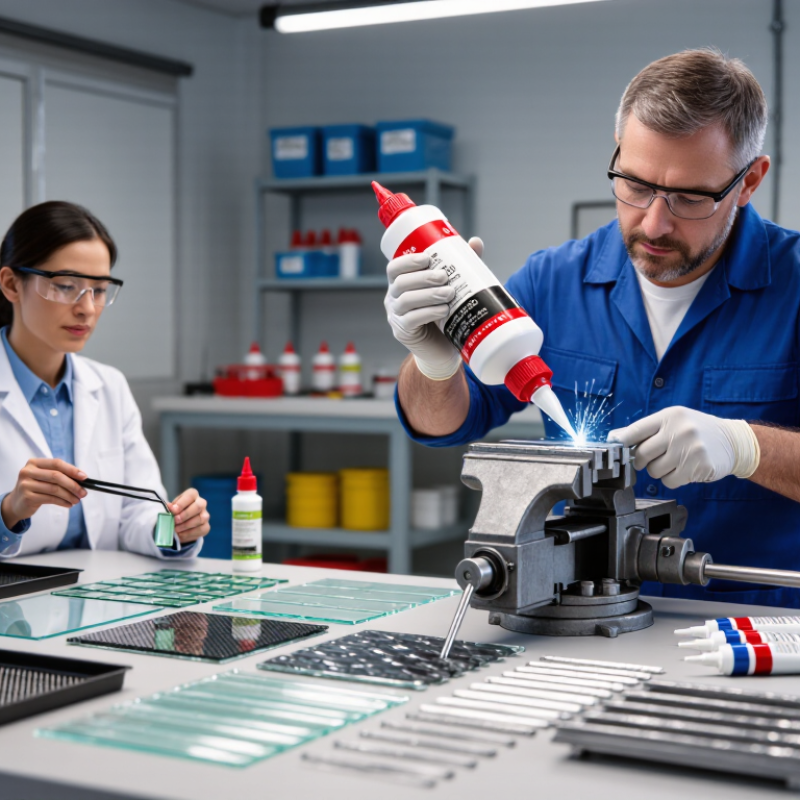
Epoxy Adhesive Basics and Key Selection Criteria
What Are the 2026 Top Epoxy Adhesive Types for Buyers?
Epoxy adhesive usually combines resin and hardener to create a strong, durable bond. In 2026, buyers may compare two-part, one-part heat-cured, fast-curing, flexible, and toughened epoxy types. Two-part systems suit structural assembly because users can adjust working time and cure speed. One-part formulas reduce mixing errors but often require controlled heat. Fast-curing grades save production time. They may provide less positioning time.
Selection should begin with the materials being joined. Metal, glass, ceramics, plastics, and composite surfaces need different preparation. Clean, dry surfaces usually improve adhesion. Light abrasion can help, but excessive sanding may weaken delicate parts.
Check the adhesive’s viscosity, gap-filling ability, cure temperature, and usable working time. A thin liquid suits close-fitting parts, while a paste handles uneven surfaces better.
Temperature and movement also matter. A rigid epoxy may crack when bonded parts expand differently. Toughened or flexible grades can absorb vibration and impact more effectively. Review tensile, shear, peel, and service-temperature data from reliable technical documents.
Do not trust one headline strength value.
I have learned that real assemblies often fail because of poor cleaning, incorrect mixing, or insufficient cure time. Small test panels reveal problems early. Record the mix ratio, curing conditions, and surface method for repeatable results. Even careful selection can be imperfect when the final environment is unknown.
One-Part Epoxy Adhesives for Convenient Industrial Applications
In 2026, one-part epoxy adhesives remain practical for industrial assembly lines. They contain resin and latent curing agents in one ready-to-use package. No on-site mixing means fewer ratio errors, cleaner workstations, and faster operator training. That matters.
Most grades cure with controlled heat, often through ovens, heated fixtures, or induction equipment. Their strong bonding suits metals, ceramics, composites, and selected engineering plastics. Manufacturers can dispense precise beads with automated pumps or robotic systems. This supports repeatable production around motors, sensors, housings, and structural components.
Buyers should match the adhesive to the process, not only the advertised strength. Check curing temperature, fixture time, viscosity, storage life, and resistance to vibration, moisture, oils, and thermal cycling. A low-viscosity formula may fill narrow gaps, while a tougher grade may handle movement better. Surface preparation still matters. Oil, oxide layers, and dust can weaken a carefully selected bond.
There is a trade-off. Heat curing may not suit temperature-sensitive parts or large assemblies. Refrigerated storage can also increase handling costs. In practice, a trial run often reveals dispensing problems that technical sheets cannot show. We have seen production teams overlook nozzle clogging, cure shadows, and uneven heating. Those details deserve testing before approval. Keep batch records, verify cure conditions, and inspect bonded samples during routine quality checks.
| One-Part Epoxy Type | Typical Cure Mechanism | Typical Cure Profile | Typical Viscosity | Typical Service Temperature | Primary Industrial Applications | Key Buying Considerations |
|---|---|---|---|---|---|---|
| Standard Heat-Cure Epoxy | Latent hardener and accelerator activated by heat; no separate mixing required. | Approximately 120–150 °C for 20–60 minutes, depending on formulation and bond thickness. | Approximately 5,000–100,000 mPa·s; available in paste or thixotropic grades. | Approximately −40 to 150 °C after full cure. | Structural bonding of metals, ceramics, glass, composites, sensors, and general industrial assemblies. | Good balance of handling convenience, bond strength, and process reliability. Confirm oven compatibility and required fixture time. |
| Fast-Cure Heat-Activated Epoxy | Highly accelerated latent curing system activated by moderate or elevated heat. | Commonly 100–140 °C for approximately 5–30 minutes. | Approximately 2,000–50,000 mPa·s. | Approximately −40 to 130 °C. | High-throughput assembly, automotive components, electronic housings, and automated production lines. | Reduces cycle time but may provide a shorter working window and greater sensitivity to storage and process temperature. |
| Low-Temperature-Cure Epoxy | Special latent curing package designed to react at relatively low oven temperatures. | Approximately 60–100 °C for 30–120 minutes; some grades cure at lower temperatures with extended time. | Approximately 3,000–80,000 mPa·s. | Approximately −40 to 120 °C. | Heat-sensitive plastics, battery components, coated metals, compact electronics, and assemblies that cannot tolerate high heat. | Useful for protecting substrates from thermal damage. Verify complete cure, outgassing, and compatibility with sensitive materials. |
| Toughened Heat-Cure Epoxy | Heat-activated epoxy modified with rubber, thermoplastic, or core-shell toughening agents. | Typically 120–160 °C for 20–90 minutes. | Approximately 10,000–150,000 mPa·s; often supplied as a gap-filling paste. | Approximately −50 to 150 °C. | Transportation structures, vibration-prone assemblies, composite bonding, metal joining, and impact-loaded parts. | Improved peel and impact resistance compared with rigid epoxy. Buyers should compare modulus, elongation, lap-shear strength, and fatigue data. |
| Electrically Insulating Epoxy | Heat-cured epoxy formulated for dielectric insulation and electrical protection. | Approximately 100–150 °C for 20–90 minutes. | Approximately 5,000–100,000 mPa·s. | Approximately −40 to 150 °C, formulation dependent. | Coil fixation, transformer components, motor assemblies, sensors, circuit protection, and electronic encapsulation. | Review dielectric strength, volume resistivity, moisture resistance, ionic purity, and coefficient of thermal expansion. |
| Thermally Conductive Epoxy | Heat-activated epoxy containing electrically insulating ceramic or mineral fillers. | Typically 100–150 °C for 30–90 minutes. | Approximately 10,000–200,000 mPa·s; paste grades are common. | Approximately −40 to 150 °C. | Heat sinks, power modules, LED assemblies, battery systems, sensors, and thermal interface bonding. | Compare thermal conductivity, electrical insulation, bond-line thickness, filler sedimentation, and dispensing requirements. |
| Optically Clear or UV/Dual-Cure Epoxy | Light-initiated cure, often supported by a secondary heat cure for shaded or deeper areas. | UV exposure commonly takes seconds to minutes; secondary heat cure may require approximately 60–120 °C. | Approximately 100–20,000 mPa·s, from flowable liquid to gel-like grades. | Approximately −40 to 120 °C. | Optical components, displays, transparent assemblies, small electronics, and applications requiring rapid positioning. | Check light transmission through the substrates, yellowing resistance, optical clarity, shadowed-area cure, and lamp compatibility. |
| Film or Preformed One-Part Epoxy | Solid or semi-solid epoxy film containing latent curing agents; activated by heat and pressure. | Commonly 120–180 °C for 30–120 minutes, depending on film thickness and pressure. | Not usually specified as liquid viscosity; flow is evaluated at the bonding temperature. | Approximately −55 to 150 °C after cure. | Composite structures, aerospace-style laminates, honeycomb panels, and controlled bond-line assemblies. | Provides clean, consistent bond-line control and low waste. Evaluate freezer storage, shelf life, tack, drape, and required consolidation pressure. |
Two-Part Epoxy Adhesives for Strong Structural Bonding
What Are the 2026 Top Epoxy Adhesive Types for Buyers?
Two-Part Epoxy Adhesives for Strong Structural Bonding
Two-part epoxy adhesives remain a leading choice for structural bonding in 2026. They mix resin and hardener shortly before application. This reaction creates strong bonds across metals, composites, ceramics, and selected plastics. Grand View Research’s 2024 Epoxy Adhesives Market report projects market growth above 6% annually through 2030. Demand is increasing in transport, construction, electronics, and renewable-energy equipment.
For buyers, the most useful types include room-temperature curing, heat-curing, toughened, flexible, and filled epoxy systems. Room-temperature grades simplify field repairs and small-batch assembly. Heat-curing formulas usually deliver higher final strength and chemical resistance. Toughened epoxies help absorb vibration and impact. Filled grades can improve gap filling and thermal performance.
Check the technical data sheet carefully. Compare tensile shear strength under ASTM D1002 or ISO 4587 conditions. These values are laboratory results, not guaranteed site performance. A low-viscosity adhesive may wet rough surfaces better, but it can run on vertical joints. Fast curing sounds efficient. It can also reduce adjustment time. Surface preparation remains critical: remove oil, abrade smooth metal, and control the bond-line thickness. MarketsandMarkets’ Epoxy Adhesives Market report identifies transportation and construction as major demand areas, yet buyers should not select by industry trend alone. A small compatibility test may expose failure before production begins.
Flexible, Fast-Curing, and Heat-Resistant Epoxy Formulations
What Are the 2026 Top Epoxy Adhesive Types for Buyers?
In 2026, flexible, fast-curing, and heat-resistant epoxy formulations lead practical buying decisions.
Flexible epoxy suits materials that expand, vibrate, or bend slightly during service. It helps reduce cracking on plastics, composites, and mixed-material joints.
Fast-curing epoxy saves production time, especially during repairs or small assembly runs. However, speed can reduce working time and increase placement errors.
Heat-resistant epoxy protects bonded parts near engines, lighting systems, appliances, and industrial equipment. Always check the continuous and peak temperature ratings.
They are not the same. Testing matters more than impressive packaging claims. Apply the adhesive to clean, dry surfaces with the recommended bond thickness. Record cure time, pressure, temperature, and failure behavior.
A flexible grade may feel weaker at first but perform better after repeated movement. A heat-resistant grade may become brittle after long exposure. That detail is easy to miss.
Buyers should compare shear strength, peel resistance, viscosity, mixing ratio, and storage life. Compatibility testing remains essential, particularly with low-energy plastics and coated metals.
Tips: Test a small joint first. Use a timer during mixing. Do not rush curing. Check the technical data sheet and safety instructions before production use. If the bond carries a heavy load, repeat testing under real temperature and vibration conditions. A quick result is not always a reliable result.
How Buyers Can Compare Epoxy Adhesive Types in 2026
Buyers comparing epoxy adhesive types in 2026 should start with the joint, not the product label. Two-part structural epoxies suit metal, composites, and rigid plastics. One-part heat-cure epoxies can offer cleaner automation, but they need controlled ovens. Toughened epoxies resist impact better, while flexible grades handle vibration and thermal movement. The strongest option is not always the safest choice for a moving assembly.
Compare open time, fixture time, viscosity, and full-cure conditions. A thick adhesive may bridge a visible gap, yet it can trap air around a narrow fitting. A low-viscosity grade wets surfaces well, but it may run before curing. Check lap-shear, peel, tensile, and temperature data under similar test conditions. Those numbers are useful, not absolute. Substrate preparation matters just as much.
Request the technical data sheet, safety data sheet, batch information, and storage limits. Then test bonded coupons using the actual materials, surface finish, and production gap. Leave some samples in heat, humidity, and repeated temperature changes. A neat datasheet can still mislead. I would also compare dispensing waste, mixing-ratio control, cure speed, and rework difficulty. Electrically insulating or flame-conscious formulations may require additional verification for the intended equipment. Small trials often reveal poor wetting, brittle edges, or unexpected cure shrinkage. That is where a buyer may need to revise the original specification.
Article Source:
We Meet Our Clients Needs.
Meeting the diverse needs of our clients, we have complete machining facilities for everything from single part prototypes to large quantity production. Our small size is one of our biggest assets. It allows us to control costs and maintain the highest of standards.
Quality orientated and delivery always on time or earlier than originally promised.
Strongly recommend MSD.