
7 Best Droplet Molding Apparatus Manufacturers
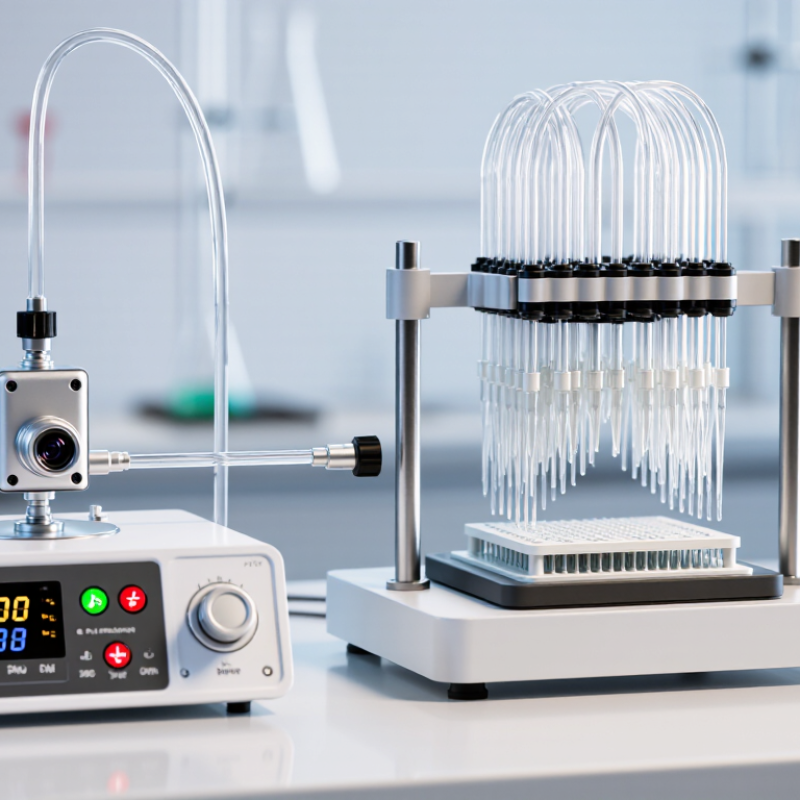
Droplet Molding Apparatus has become increasingly important in microfluidics, pharmaceutical development, diagnostics, and advanced materials research. These systems help researchers create controlled droplets with defined volumes, repeatable spacing, and stable production rates. A typical setup may include a pressure controller, microfluidic chip, precision tubing, and optical monitoring near the outlet.
Market data supports this growing interest. MarketsandMarkets estimated that the global microfluidics market could increase from approximately USD 22.9 billion in 2023 to USD 45.6 billion by 2028, reflecting a 14.7% compound annual growth rate. Grand View Research also reported strong expansion in the same sector, linking demand to clinical testing, drug discovery, and laboratory automation. These figures describe the broader microfluidics market, not Droplet Molding Apparatus alone. That distinction matters.
The seven manufacturers discussed in this guide were selected through practical criteria, including equipment precision, material compatibility, throughput, customization, technical support, and published application experience. Some companies focus on compact research platforms. Others provide integrated production systems for demanding laboratory workflows. Features that look impressive in brochures may perform differently under real operating conditions. A device producing uniform droplets at 100 micrometers may require different control hardware than one handling viscous polymers or biological samples.
No ranking is permanently correct. User priorities change. The best manufacturer for a university laboratory may not suit a regulated production environment. ISO 21910-1:2020, which addresses droplet characterization, also highlights the need for consistent measurement methods. This overview therefore combines market evidence, technical considerations, and practical judgment to compare leading suppliers more fairly. Mistakes remain possible, especially where vendor data is limited.
What Is a Droplet Molding Apparatus?
A droplet molding apparatus is a controlled device for producing droplets inside, or against, a shaped mold. It usually combines fluid reservoirs, precision pumps, tubing, a mold chamber, and an observation system. The equipment guides a liquid through a narrow channel, where flow conditions divide it into repeatable droplets. These droplets can form beads, capsules, lenses, or microstructures after cooling, curing, or chemical treatment.
In practical laboratory work, operators adjust flow rate, temperature, pressure, and mold geometry. A transparent chamber helps reveal satellite droplets, uneven edges, or trapped bubbles. Small changes matter. For example, a slight temperature shift can alter viscosity and change the final shape. Stable results also depend on clean channels and accurately calibrated pumps. A clogged inlet may produce convincing data at first, then cause gradual size variation.
The apparatus is useful in microfluidics, materials research, coatings, food science, and controlled particle production. A reliable design should allow simple mold replacement and thorough cleaning. It should also protect delicate droplets from vibration and sudden pressure changes. Measurement records are important, including droplet diameter, production speed, temperature, and rejected samples. Not every smooth-looking droplet is acceptable. Internal voids or weak shell walls may remain invisible during inspection. This is where routine imaging and repeat testing become necessary. A well-designed apparatus improves consistency, but it cannot replace careful process judgment.
7 Best Droplet Molding Apparatus Manufacturers - What Is a Droplet Molding Apparatus?
A droplet molding apparatus is equipment used to generate, control, and collect discrete liquid droplets, often for microfluidics, encapsulation, diagnostics, drug delivery, and materials processing. The table below compares seven established apparatus configurations without listing company or brand information.
| Apparatus Configuration | Droplet-Formation Principle | Typical Droplet Scale | Main Control Variables | Suitable Applications | Key Selection Advantage |
|---|---|---|---|---|---|
| Flow-Focusing Microfluidic Device | A dispersed phase is hydraulically compressed by one or more continuous-phase streams until interfacial forces cause pinch-off. | Commonly produces droplets from a few micrometres to several hundred micrometres, depending on channel dimensions and flow rates. | Channel geometry, flow-rate ratio, viscosity ratio, interfacial tension, and surfactant concentration. | Monodisperse emulsions, biological assays, particle synthesis, and single-cell encapsulation. | Excellent size uniformity and precise control of droplet frequency. |
| T-Junction Microfluidic Device | A dispersed-phase stream intersects a perpendicular continuous-phase channel, where shear and pressure differences detach droplets. | Typically generates droplets in the tens-to-hundreds-of-micrometres range, with size linked to channel width and flow conditions. | Flow-rate ratio, channel width, phase viscosity, interfacial tension, and pressure drop. | Emulsion production, reaction screening, encapsulation, and laboratory-scale formulation studies. | Simple geometry, straightforward operation, and reliable droplet generation. |
| Coaxial Capillary Apparatus | Concentric capillaries introduce inner and outer fluids, enabling single or multiple emulsions through controlled breakup. | Often produces droplets from approximately 50 micrometres to the millimetre scale; nested droplets can be formed with suitable geometry. | Capillary alignment, inner and outer flow rates, fluid viscosities, wetting properties, and interfacial tension. | Core-shell particles, double emulsions, encapsulated ingredients, and controlled-release systems. | Supports complex droplet architectures and multilayer encapsulation. |
| Membrane Emulsification System | A dispersed phase is pressed through membrane pores into a continuous phase, where droplets detach at the membrane surface. | Droplet diameter is generally larger than the effective pore diameter and is commonly controlled in the micrometre range. | Membrane pore size, transmembrane pressure, cross-flow velocity, pore wetting, and surfactant level. | Food emulsions, pharmaceutical formulations, cosmetics, and scale-up research. | Gentle processing and relatively low shear compared with many high-energy emulsification methods. |
| Vibrating-Orifice Apparatus | A liquid jet exits through an orifice and is periodically disturbed so that it breaks into droplets at a controlled frequency. | Usually suited to droplets from tens of micrometres to several millimetres, depending on orifice size and operating conditions. | Orifice diameter, liquid flow rate, vibration frequency, fluid viscosity, and surface tension. | Particle production, bead formation, laboratory dispensing, and encapsulation processes. | Highly regular droplet timing and good control over jet breakup. |
| Electrospray Droplet Generator | An electric field pulls liquid into a charged cone-jet, which disintegrates into fine droplets as electrical forces overcome surface tension. | Can produce droplets from submicrometre dimensions to tens of micrometres, depending on electrical and fluid properties. | Applied voltage, nozzle-to-collector distance, flow rate, conductivity, viscosity, and surface tension. | Spray drying, pharmaceutical particles, coating, mass spectrometry interfaces, and fine-particle fabrication. | Produces very small droplets with a narrow size distribution under stable cone-jet operation. |
| Drop-on-Demand Inkjet Apparatus | A thermal or piezoelectric actuator ejects individual droplets through a small nozzle when an electrical signal is applied. | Commonly generates droplets in the tens-of-micrometres range, with exact size determined by nozzle and waveform design. | Nozzle diameter, actuation waveform, pulse frequency, liquid viscosity, surface tension, and solids loading. | Digital printing, biospotting, material deposition, micro-patterning, and localized reagent delivery. | Precise digital placement with minimal material waste and on-demand operation. |
Note: Droplet size ranges are typical engineering ranges rather than fixed specifications. Actual performance depends on fluid properties, device dimensions, operating conditions, and collection method.
We Meet Our Clients Needs.
Meeting the diverse needs of our clients, we have complete machining facilities for everything from single part prototypes to large quantity production. Our small size is one of our biggest assets. It allows us to control costs and maintain the highest of standards.
Quality orientated and delivery always on time or earlier than originally promised.
Strongly recommend MSD.