
3 Best 3 Way Switch Dimmers for Global Buyers?
Choosing a 3 Way Switch Dimmer is not merely a matter of matching a wall plate. Global buyers must consider voltage, frequency, load type, neutral wiring, lamp compatibility, and regional safety certification. A dimmer that performs quietly in Toronto may flicker in Dubai or fail with a low-voltage LED driver in Singapore. Small details matter.
The International Energy Agency’s Energy Efficiency 2023 report identifies efficient lighting as a practical route to reducing electricity demand. The U.S. Department of Energy also reports that LED products can use at least 75% less energy than incandescent lamps and last up to 25 times longer. These figures explain the market’s shift toward LED-compatible controls. However, dimming performance depends on the complete system, not the switch alone. The bulb, driver, wiring, and minimum load must cooperate.
Lighting engineer James Benya has said, “The quality of light is the quality of life.” That idea guides this comparison. The best 3 Way Switch Dimmer should create smooth transitions, avoid buzzing, and support comfortable brightness beside a sofa, kitchen island, or hotel corridor. It should also carry credible marks, such as UL, CE, UKCA, or other regionally accepted certifications.
No shortlist is perfect. Installation conditions vary. Some product specifications remain unclear. This guide therefore examines three practical options through compatibility, safety, control range, installation demands, and international usability. Buyers should still verify local codes and lamp lists before purchasing. A lower price can become expensive when flicker, heat, or rewiring appears later.
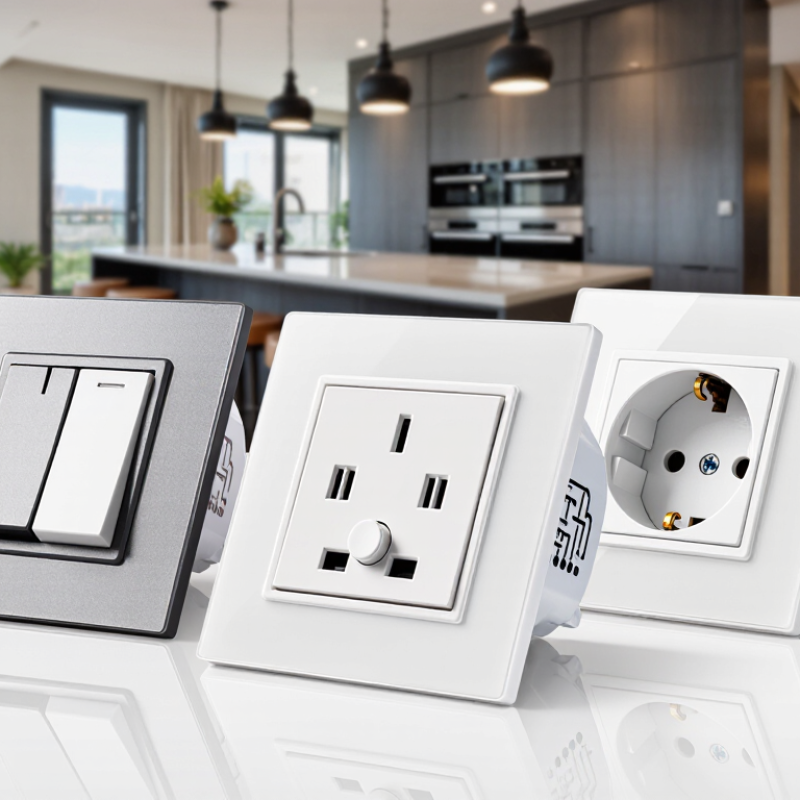
Understanding Three-Way Dimmer Switches for International Homes
3 Best 3 Way Switch Dimmers for Global Buyers?
Understanding Three-Way Dimmer Switches for International Homes
A three-way dimmer controls one light from two locations. In many countries, this arrangement is called two-way switching, so terminology can mislead international buyers. The best choice depends on local voltage, wiring, lamp type, and whether a neutral wire is available. IEC 60669-2-1 provides a useful safety reference for household switches and dimmers, but local installation rules still matter.
For LED lighting, three practical dimmer types stand out. A trailing-edge model usually offers quieter operation with modern LED lamps. A universal model supports more lamp loads, though compatibility testing remains essential. A smart multi-location dimmer can add schedules and remote control, but it may require a neutral connection and a compatible companion switch. Never assume a device rated for 120 volts is suitable for a 230-volt home. Check the voltage label carefully.
The International Energy Agency reports that lighting uses about 15% of global electricity consumption. Efficient dimming can reduce unnecessary brightness, especially in hallways and bedrooms. However, savings depend on real habits, not marketing claims. A dimmer may flicker below its minimum load, buzz inside a shallow wall box, or fail with mixed LED lamps. I would not call one design universally best. Measure the box depth, identify the circuit, and test the exact lamp before buying. Mistakes happen. Professional installation is often the safer investment.
3 Best 3-Way Switch Dimmers for Global Buyers
Understanding Three-Way Dimmer Switches for International Homes
| Recommended Type | Best For | Typical Electrical System | Compatible Lighting Loads | Neutral-Wire Requirement | Multi-Location Control | Key Advantages | Important Limitations | Editorial Fit |
|---|---|---|---|---|---|---|---|---|
| 120 V LED-Rated Wired Dimmer Best for North American homes | Bedrooms, living rooms, hallways, and stairways using 120 V lighting circuits | Approximately 120 V AC, commonly used in the United States, Canada, and several other regions | Dimmable LED lamps, incandescent lamps, and halogen lamps when the dimmer is specifically rated for the load | Depends on the design. Some models require a neutral conductor; others are designed for installation without one | Uses a compatible companion switch or a standard three-way switch, according to the wiring diagram | Widely understood wiring method; good availability of LED-compatible options; smooth control when the lamp and dimmer are matched | Must not be connected to a 220–240 V circuit. LED minimum-load behavior and flicker performance vary by model | ★★★★★ Best regional match |
| 220–240 V Trailing-Edge LED Dimmer Best for modern LED installations | European, Asian, African, and Oceanian homes with low-wattage LED lighting | Approximately 220–240 V AC, depending on the country and local supply standard | Primarily dimmable LED lamps and LED drivers; some models also support incandescent or halogen loads | Model-dependent. Neutral-free designs exist, while other electronic dimmers require a neutral connection | Often paired with a compatible two-way switch, push-button, or specified remote control. In many regions, “two-way” is the local term for multi-location switching | Trailing-edge control is generally suitable for many modern electronic LED drivers and can provide quiet, low-flicker operation when properly matched | Cannot be assumed to work with every LED lamp. Installation terminology differs internationally, and local wiring rules must be followed | ★★★★★ Best for LED efficiency |
| Voltage-Specific Smart Multi-Location Dimmer Best for connected homes | Homes requiring scheduling, remote control, scene settings, or voice-assistant integration | Must match the local supply exactly; smart wall dimmers are commonly designed for either 120 V AC or 220–240 V AC, not both | Usually dimmable LED loads, with compatibility determined by the smart dimmer’s electrical rating and software support | Many smart dimmers require a neutral wire, although some no-neutral models are available | May use a dedicated companion device, wireless control, or a manufacturer-specified wiring configuration instead of a conventional three-way switch | Remote access, automation, energy scheduling, scene control, and convenient operation from multiple locations | Requires careful voltage, frequency, hub, wireless-standard, and regional certification checks. Internet or network features may be unavailable during an outage | ★★★★☆ Best for automation |
Safety and compatibility note: “Three-way” is the common North American term for control from two locations. In many other countries, the equivalent arrangement is called “two-way” switching. Always verify voltage, frequency, neutral availability, lamp dimming compatibility, maximum load, box depth, and local electrical-code requirements before installation. Electrical work should be performed by a qualified electrician where required.
We Meet Our Clients Needs.
Meeting the diverse needs of our clients, we have complete machining facilities for everything from single part prototypes to large quantity production. Our small size is one of our biggest assets. It allows us to control costs and maintain the highest of standards.
Quality orientated and delivery always on time or earlier than originally promised.
Strongly recommend MSD.