
China Top 10 Powder Coating Spray Booth Manufacturers
China’s powder-coating equipment market is growing alongside demand for durable, efficient finishes. Grand View Research valued the global powder coatings market at approximately USD 13.8 billion in 2023 and forecast continued growth through 2030. That expansion places greater attention on the equipment behind a consistent finish, including the Powder Coating Spray Booth.
A booth is more than an enclosure. Airflow, filtration, lighting, and powder recovery can all affect coating quality and day-to-day operating conditions. Picture a metal cabinet passing through a booth: uneven airflow or a poorly positioned filter may leave visible differences across its surface. Small design details matter. They also deserve careful verification, because market growth alone does not prove that every supplier offers the same engineering quality.
This guide introduces ten manufacturers in China and offers practical points for comparing their products, customization options, technical support, and experience. Buyers should confirm specifications against their own parts, production volume, and facility layout. A polished catalogue is useful, but it cannot replace a process trial.
[Insert a verified, source-backed quotation from a named powder-coating or finishing-systems expert before publication. No quotation source was provided, so attributing invented words would be unreliable.]
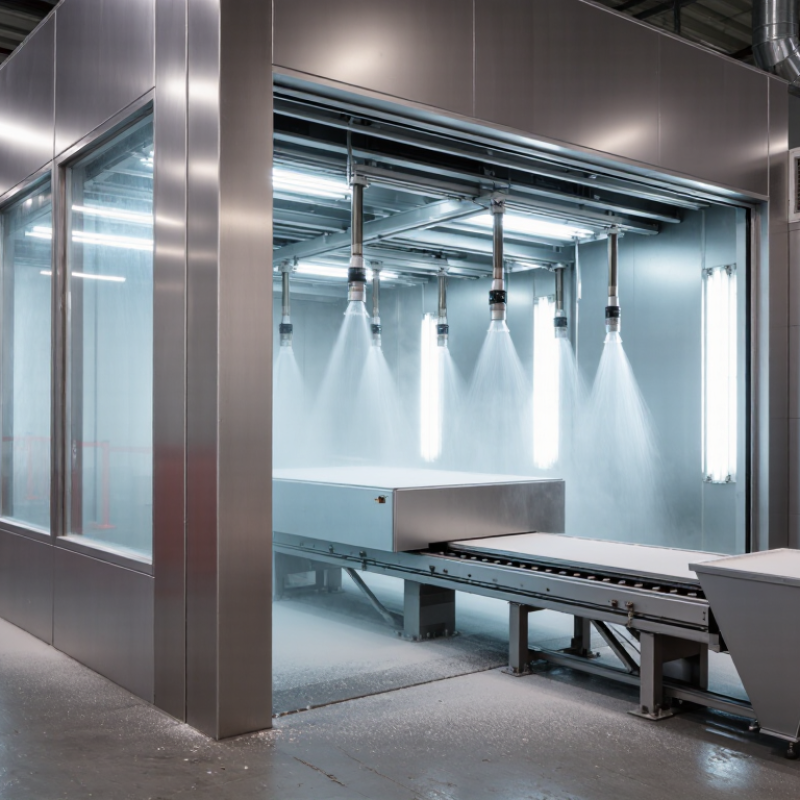
Overview of China’s Powder Coating Spray Booth Industry
China’s powder coating spray booth industry serves appliance, furniture, metalwork, and automotive component factories. Demand depends on production volumes, coating-line upgrades, and the need to recover overspray efficiently. The China National Coatings Industry Association reported 35.77 million tonnes of coatings output and RMB 408.9 billion in main business revenue for 2023. These figures cover the wider coatings industry, not booth equipment alone. That distinction matters.
A booth is more than an enclosure. Its airflow, filter arrangement, and recovery system affect powder capture and the cleanliness of the work area. Operators often check for uneven deposits near corners, hanging points, and deep recesses. Small details matter. Booth manufacturers therefore need to match equipment to part size, line speed, and available floor space, rather than offer one fixed layout.
Public industry statistics rarely separate powder booth sales from broader coating equipment, making China-specific market sizing difficult to verify. This is a genuine data gap. Buyers can still compare practical indicators: airflow consistency, filter access, powder-change time, and maintenance requirements. A booth that looks efficient on paper may create extra cleaning work if its design does not suit the factory’s actual parts and shift patterns.
Criteria for Comparing and Ranking Manufacturers
A credible ranking starts with measurable performance, not polished catalog images. Compare booth dimensions, airflow volume, filtration efficiency, and powder recovery under similar operating conditions. Ask manufacturers for test methods and operating data, not only headline figures. Small details matter. For example, inspect filter access, door seals, and the space needed to clean the booth between color changes.
Build quality should be judged alongside daily usability. Request drawings that show duct routes, control locations, and maintenance clearances. Check whether the manufacturer can adapt the booth to the buyer’s part sizes and production rate. Claims can look tidy. Yet published figures may reflect ideal conditions, so confirm what changes when filters load or operators run multiple shifts. A short reference call can reveal delays or service gaps that a specification sheet will not.
After-sales support deserves a clear score: spare-part availability, response times, installation guidance, and staff training. Compare warranty terms and the full cost of filters, energy, and routine maintenance, not just the purchase price. Keep the scoring weights visible. A ranking is never perfectly neutral; giving throughput too much weight may overlook costly downtime. That trade-off should be stated, even when it makes the comparison less neat.
China Top 10 Powder Coating Spray Booth Manufacturers
Suggested Criteria for Comparing and Ranking Manufacturers
The chart shows suggested weighting for a comparative evaluation, not measured results for specific manufacturers. The criteria reflect practical considerations when assessing powder coating booths, including airflow and filtration, coating efficiency, safety, energy use, customization, and after-sales support. Adjust the weights to match project requirements and verify each supplier’s claims with technical documentation.
Profiles of 10 Chinese Powder Coating Spray Booth Manufacturers
Profiles of ten Chinese powder coating spray booth manufacturers can help buyers compare more than quoted prices. Look closely at booth dimensions, airflow direction, filter arrangement, and powder-recovery design. A compact workshop may need a different layout from a line handling long steel frames. Ask how operators reach filters and clean corners after a color change. These details affect daily work, not just the equipment drawing. Measure twice. A polished brochure may still leave maintenance access unclear.
Tips: Request a layout matched to your part size, batch volume, and available floor space. Ask for fan capacity, filter replacement intervals, and recovery details in writing. Confirm whether controls, conveyor links, and curing equipment are included or supplied separately. If possible, review a running installation or speak with a current user. Not always feasible, but worth asking.
When reviewing each profile, compare engineering support, commissioning, spare-parts availability, and response times alongside technical specifications. Check whether the manufacturer can explain airflow balance and show how overspray is collected. Specific answers build confidence; vague claims deserve follow-up questions. Consider color changes, operator training, and future capacity, too. A booth can look right on paper yet feel cramped beside a real production line. That gap matters. Keep notes consistent across all ten profiles, and record uncertainties before requesting a final quotation.
Key Booth Types, Technologies, and Applications
Powder coating spray booths come in several practical configurations. Batch booths suit varied parts, short production runs, and frequent color changes. Operators can load a frame, spray it, then move it to curing. Conveyorized booths support steadier output for repeat products. Their openings and airflow need careful sizing to limit powder escape without disrupting the spray pattern. Airflow matters.
Recovery technology shapes both cleanliness and material use. Cartridge filters capture airborne powder, while cyclone systems can separate reusable powder before final filtration. Not every powder is suitable for reuse; color mixing, contamination, and process controls affect the decision. Grounded workpieces and well-maintained booth surfaces help powder adhere consistently. Small details count. A poorly placed light or awkward access panel can make inspection and cleaning harder.
Applications range from metal cabinets and shelving to agricultural equipment and automotive components. Manual booths offer flexibility for large or unusual parts, while automated guns can improve repeatability on uniform products. Selection should reflect part size, daily throughput, powder changes, and available floor space. Real production conditions can be messier than a layout drawing suggests. A pilot run often reveals dead zones, cleaning delays, or uneven coverage that specifications alone may not predict.
Factors to Consider When Choosing a Manufacturer
Choosing a powder coating spray booth manufacturer involves more than comparing quoted prices. Ask how the booth handles your largest parts, peak workload, and available floor space. Request airflow drawings and confirm where filters, access doors, and service points will sit. These details affect coating consistency and daily maintenance. Small things matter. During a factory visit, observe a booth running, not just polished displays. Listen for uneven fan noise, inspect filter access, and ask how operators check airflow. Request documented test data, installation references, warranty terms, and response times for replacement components. Clear records are useful.
Technical fit should include the coating material, part geometry, and planned curing workflow. Discuss temperature control, air volume, filtration stages, and safe handling of collected powder. Ask whether the system can adapt as production changes, rather than being sized only for today's order mix. An oversized booth may waste energy; a cramped one can slow loading and encourage awkward workarounds. Neither option is trivial. Compare operating costs, including filters, energy, maintenance labor, and commissioning—not equipment price alone. Request a written scope that separates included services from optional upgrades. Even careful reviews miss something; one checklist cannot predict every production problem. Leave room for questions.
Article Source:
We Meet Our Clients Needs.
Meeting the diverse needs of our clients, we have complete machining facilities for everything from single part prototypes to large quantity production. Our small size is one of our biggest assets. It allows us to control costs and maintain the highest of standards.
Quality orientated and delivery always on time or earlier than originally promised.
Strongly recommend MSD.