
China Top 10 Video Entry Phone Manufacturers?
Choosing among China’s top 10 Video Entry Phone manufacturers requires more than comparing logos or factory photographs. Buyers should examine product reliability, audio clarity, camera performance, software support, and installation experience. A polished brochure cannot reveal how a device performs beside a noisy elevator or under weak corridor lighting.
Bruce Schneier, a respected security technologist, once said, “Security is a process, not a product.” His observation applies directly to Video Entry Phone systems. A dependable manufacturer should provide stable firmware updates, clear documentation, responsive technical support, and practical protection for user data. These details often matter more than a low opening quotation.
This article introduces ten notable Chinese manufacturers and considers their capabilities from a buyer’s perspective. The comparison may include residential intercoms, villa stations, apartment systems, IP doorphones, and integrated access-control platforms. Attention will also be given to manufacturing depth, certifications, customization options, export experience, and after-sales service.
Numbers can mislead.
A company may appear strong online yet struggle with replacement parts or configuration support. Another may have fewer product images but offer better engineering cooperation. That is where evaluation becomes less tidy. Buyers should request samples, test night vision, measure voice delay, and inspect mobile-app stability before making a final decision.
No single manufacturer fits every project. A compact apartment complex needs different priorities than a luxury villa or commercial building. The following list should therefore be treated as a practical starting point, not an absolute verdict. Real site conditions, installer feedback, and long-term service records still deserve careful attention.
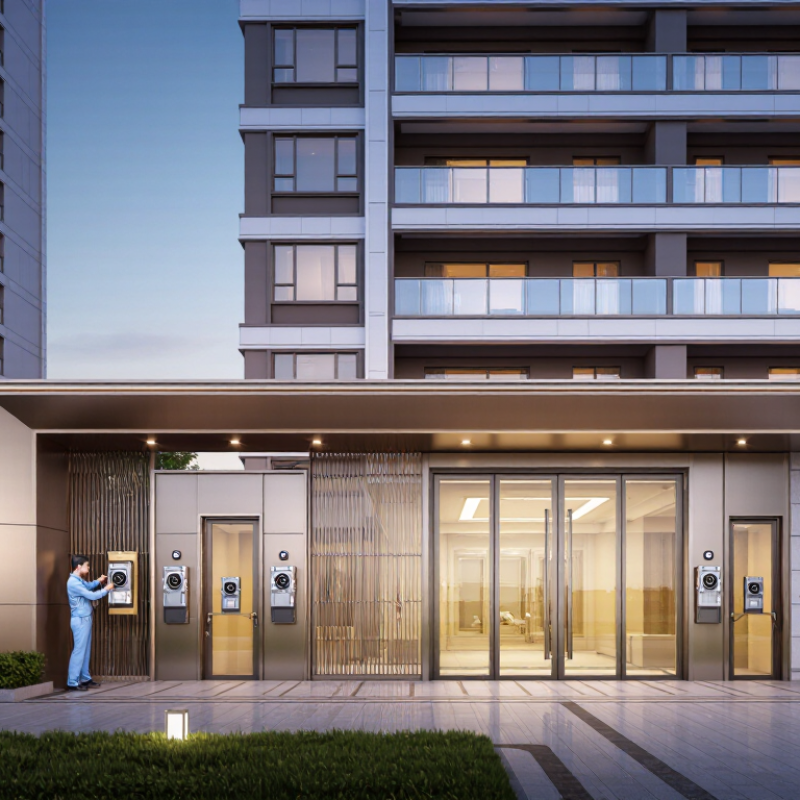
What Is a Video Entry Phone and How Does It Work?
A video entry phone combines a camera, microphone, speaker, call button, and indoor screen. It lets residents see and speak with visitors before opening a door or gate. Some systems use dedicated wiring, while others transmit video through a local network. The visitor presses the button, and the indoor unit receives an alert. The resident can then view the image, talk, and activate an electric lock through a control relay. Clear audio matters as much as sharp video. A bright entrance and a suitable camera angle improve daily use.
In real installations, performance depends on more than the device itself. Cable distance, network stability, night lighting, weather protection, and power backup all affect reliability. I have found that a camera mounted too high often misses faces. Small installation choices create frustrating results. No system is perfect. A brief delay can still occur during busy network periods, so testing at different times is sensible. Access permissions should also be reviewed regularly, especially when several residents share one entrance.
Tips: Test the call button with wet or gloved hands. Check the visitor’s face at night. Keep the lens clean and avoid pointing it toward strong sunlight. Choose equipment with documented specifications, secure account controls, and clear maintenance guidance. Ask installers how faults are diagnosed, not only how the system is sold.
China Top 10 Video Entry Phone Manufacturers? — What Is a Video Entry Phone and How Does It Work?
A video entry phone combines a camera, microphone, speaker, display, door-release control and communication network to let users identify visitors and unlock an entrance remotely. The chart compares standard digital video resolutions by theoretical pixel count, an important factor affecting image detail and bandwidth requirements.
Pixel counts are calculated from the stated horizontal and vertical resolutions: 720p (1280×720), 1080p (1920×1080), 2K (2560×1440), and 4K UHD (3840×2160). Higher resolution can improve facial and visitor identification, but it also requires more storage, processing capacity and network bandwidth.
Key Criteria for Ranking China’s Top Manufacturers
Ranking China’s top video entry phone manufacturers requires more than checking export volume or website claims. A reliable ranking should examine product performance, factory capability, and long-term customer support. I would begin with independently verified production records, engineering staff, and documented quality procedures. Factory visits can reveal details that brochures often hide, such as cable organization, inspection stations, and batch tracking.
Technical performance deserves careful testing. A strong manufacturer should provide clear data for video resolution, night visibility, audio clarity, network stability, and response time. Practical trials matter. Test the door station under bright sunlight, weak network conditions, and repeated daily use. Check weather protection, mounting strength, and resistance to dust or moisture. Compatibility with common access-control systems also shows useful engineering experience. Certifications and laboratory reports add authority, but outdated documents should not receive full credit.
Service quality separates a capable supplier from a temporary seller. Review warranty terms, spare-part availability, firmware update practices, and response times during technical problems. Request production samples, then compare them with later bulk units. They may differ. This risk deserves attention. Financial stability, transparent communication, and traceable materials can improve reliability. However, no ranking is perfect. Public information may be incomplete, and one successful sample cannot represent every production batch. A fair evaluation should combine factory evidence, customer feedback, test results, and careful follow-up over time.
China Top 10 Video Entry Phone Manufacturers? - Key Criteria for Ranking China’s Top Manufacturers
A neutral, evidence-based scorecard for comparing video entry phone manufacturers without displaying company names or brand-specific data.
| No. | Ranking Criterion | Weight | Measurable Evaluation Dimension | Recommended Verification Evidence | Why It Matters |
|---|---|---|---|---|---|
| 01 | Product Reliability | 18% | Failure rate, warranty return rate, operating stability, and documented environmental testing. | Warranty statistics, accelerated life-test reports, incoming inspection records, and product test procedures. | Critical Reliability directly affects installation cost and long-term service performance. |
| 02 | Manufacturing Capability | 15% | Production capacity, assembly control, traceability, process inspection, and capacity to support repeat orders. | Factory audit, process flow documents, production-line photographs, quality-control records, and capacity declarations. | Critical Consistent manufacturing reduces batch-to-batch variation. |
| 03 | Compliance and Certification | 13% | Applicable safety, electromagnetic compatibility, radio, environmental, and market-access compliance. | Valid third-party certificates, declarations of conformity, test reports, and compliance documentation for the target market. | Critical Proper compliance supports legal import, installation, and market access. |
| 04 | System Compatibility | 12% | Support for IP or bus-based architectures, network standards, integration interfaces, and compatibility with access-control systems. | Technical datasheets, API or protocol documentation, integration test records, wiring diagrams, and interoperability demonstrations. | Compatibility lowers project integration risk and simplifies future expansion. |
| 05 | Product and Customization Range | 10% | Indoor monitors, outdoor stations, apartment solutions, multi-tenant systems, accessories, and configurable functions. | Current product catalogue, sample matrix, configurable specification list, and documented engineering-change process. | A broad portfolio helps address residential, commercial, and property-development requirements. |
| 06 | Video and Audio Performance | 9% | Image resolution, low-light performance, viewing angle, echo control, speech clarity, and call stability. | Measured technical specifications, laboratory test results, sample demonstrations, and performance data under low-light conditions. | Clear identification and communication are core functions of a video entry phone system. |
| 07 | Cybersecurity and Data Protection | 8% | Secure access control, password policy, firmware-update process, vulnerability handling, encryption, and user-data protection. | Security policy, update records, vulnerability-response procedure, penetration-test summary, and data-processing documentation. | Connected entry systems can affect building access and require responsible security management. |
| 08 | Supply-Chain and Delivery Performance | 6% | Component availability, standard lead time, forecast handling, minimum order quantity, packaging control, and spare-parts supply. | Production schedule, component-management procedure, delivery records, stock policy, and spare-parts list. | Predictable supply is essential for construction schedules and replacement demand. |
| 09 | Technical Support and Warranty | 5% | Response time, installation guidance, remote troubleshooting, warranty coverage, firmware support, and training resources. | Service-level policy, support workflow, user manuals, training materials, warranty terms, and sample support records. | Effective support reduces downtime and improves installer productivity. |
| 10 | Total Cost of Ownership | 4% | Unit cost, installation effort, licensing, maintenance, energy consumption, replacement parts, and expected service life. | Itemized quotation, installation requirements, maintenance schedule, energy specifications, and lifecycle-cost calculation. | The lowest purchase price does not always represent the lowest project cost. |
Suggested scoring method: rate each criterion from 0 to 10 using independently verifiable evidence, multiply the rating by the listed weight, and rank manufacturers by the resulting weighted score. Certification and compliance requirements should always be checked against the regulations of the destination market.
China’s Top 10 Video Entry Phone Manufacturers
China’s top 10 video entry phone manufacturers are often selected for product reliability, engineering depth, and export experience. A serious shortlist should examine indoor monitors, outdoor stations, access controllers, and management software together. Factory audits can reveal details that brochures miss, such as connector quality, enclosure sealing, and cable testing procedures. These manufacturers commonly support apartment buildings, villas, offices, schools, and controlled commercial facilities.
Professional buyers should compare video clarity, night visibility, two-way audio, relay protection, and network stability. Standards compliance also matters, especially for products shipped across different markets. Ask for sample units and test them with long cable runs, weak network conditions, and repeated door-release cycles. Check warranty terms, firmware updates, spare-part availability, and technical response times. Field performance matters.
No list is perfect. Manufacturing capacity and software quality can change quickly. A supplier may offer excellent hardware but limited documentation. Another may provide polished software but slower customization. That weakness should be recorded, not hidden. Buyers should verify production consistency through inspection reports, batch samples, and reference projects. The strongest manufacturers usually explain limitations clearly and provide measurable test data. This practical approach makes China’s top 10 manufacturer discussion more useful than a simple popularity ranking.
Product Features, Technologies, and Market Differences
China’s top ten video entry phone manufacturers should be compared by engineering depth, not factory scale alone. Product differences appear in camera clarity, night vision, audio balance, and installation design. According to MarketsandMarkets’ 2024 smart doorbell report, the global market is projected to grow at a double-digit CAGR through 2029. This growth raises expectations for sharper images and faster alerts.
Modern systems commonly combine 2MP or 3MP cameras, infrared illumination, wide-angle lenses, and echo cancellation. Some support facial recognition, mobile access, cloud recording, or local storage. However, higher resolution does not guarantee better identification. Poor backlighting can still hide a visitor’s face. Cybersecurity also matters. A 2024 Omdia smart home study identified privacy and data protection as important adoption concerns. Secure boot, encrypted communication, regular firmware updates, and role-based access should be checked during supplier evaluation.
Market differences are equally practical. Chinese manufacturers often offer flexible OEM interfaces, rapid hardware customization, and competitive pricing. European projects may prioritize privacy controls, documentation, and compatibility with established building systems. Middle Eastern and Southeast Asian installations often need heat resistance, dust protection, and stable operation during voltage fluctuations. IP ratings help, but they do not replace field testing. This is where comparisons become less perfect. Datasheets rarely show performance after months of sunlight, condensation, or repeated physical use. A reliable top-ten assessment should therefore include sample testing, installation labor, warranty response, and integration results, not only product features or quoted prices.
How to Choose the Right Chinese Manufacturer for Your Project
Choosing a Chinese video entry phone manufacturer requires more than comparing prices. A capable supplier should show stable test records, clear component traceability, and practical installation support. According to MarketsandMarkets, the global smart home market is projected to grow strongly through 2028, increasing demand for connected access products. This growth also attracts inexperienced factories. Be careful.
Request samples from three to five shortlisted manufacturers. Test image clarity near a bright doorway and inside a dark corridor. Check call delay, microphone quality, relay control, and mobile application stability. Ask for documented testing under temperature, humidity, and power fluctuation conditions.
Industry reports from Grand View Research identify interoperability and cybersecurity as important smart home purchasing factors. Therefore, confirm supported protocols, software update procedures, and data protection responsibilities before signing.
Tips: Compare total project cost, not only unit price. Include tooling, firmware changes, certification, packaging, spare parts, and warranty handling. Ask for a small pilot order before large production. Inspect random units, not only showroom samples. A factory may pass one demonstration and still fail at scale. I would also examine the manufacturer’s response time during a technical dispute. Fast replies matter, but honest replies matter more. One weakness remains: product specifications can look complete while field support stays vague. Put every performance requirement into the contract, with measurable acceptance criteria.
Article Source:
We Meet Our Clients Needs.
Meeting the diverse needs of our clients, we have complete machining facilities for everything from single part prototypes to large quantity production. Our small size is one of our biggest assets. It allows us to control costs and maintain the highest of standards.
Quality orientated and delivery always on time or earlier than originally promised.
Strongly recommend MSD.