
How to Choose a CNC Machining and Manufacturing Partner?
Choosing a CNC machining and manufacturing partner is a technical decision, not a simple purchasing exercise. The wrong supplier can turn a clean CAD model into delayed parts, unstable tolerances, and expensive rework. The right partner protects design intent from quotation through final inspection.
Industry data supports this wider view. Deloitte’s 2024 Global Manufacturing Industry Outlook highlights supply-chain resilience, digital transformation, and workforce capability as major manufacturing priorities. These priorities matter on the shop floor. A supplier may own advanced five-axis equipment, yet still struggle with process control or communication. The 2024 Reshoring Initiative Data Report also reflects continuing pressure to strengthen domestic and regional production capacity. That pressure makes supplier evaluation more important, especially for companies managing lead times, technical risk, and changing demand.
A serious evaluation should examine machining experience, material traceability, inspection methods, and production scalability. Ask whether the supplier uses calibrated CMM equipment, documented first-article inspection, and measurable corrective-action procedures. Request sample inspection reports, not only attractive photographs. Review certifications carefully, including ISO 9001 where relevant, and confirm whether the stated scope matches your product requirements.
Look beyond the quotation. Can the team identify a thin wall that may distort during milling? Can it explain tool wear, surface-finish limits, or datum strategy in plain language? These details reveal practical competence. NIST research on smart manufacturing repeatedly emphasizes connected data, process visibility, and repeatable control. Still, no report replaces direct evidence.
No partner is perfect. Your evaluation should not pretend otherwise. A transparent supplier that admits limitations may be safer than one promising everything. This guide explains how to compare capabilities, communication, quality systems, costs, and long-term manufacturing fit.
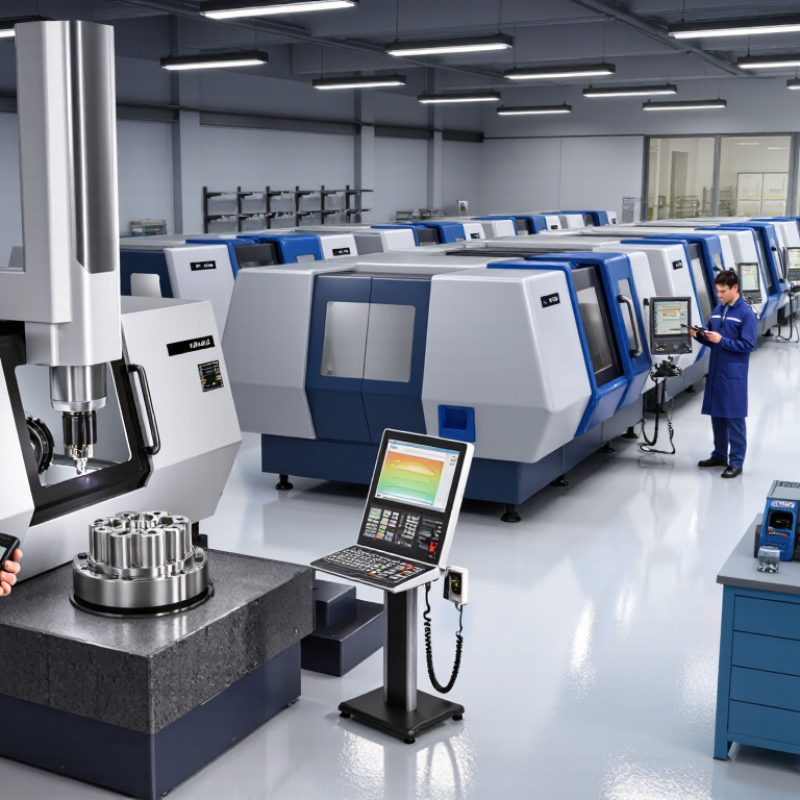
Define Your CNC Machining and Manufacturing Requirements
Choosing a CNC machining partner starts with a clear definition of your requirements. State the part’s function, material, dimensions, tolerances, surface finish, and expected quantity. Include current 3D CAD files and fully dimensioned 2D drawings. Mark critical features clearly. Datums and inspection points should not remain implied.
Be specific about production stages. A prototype may require different tooling than a repeat order. Tell the supplier your target batch size, delivery window, and acceptable cosmetic limits. Explain whether heat treatment, coating, deburring, or special packaging is required. A reliable partner should discuss machine capacity, workholding, cutting strategy, and inspection methods before quoting.
Ask for measurable quality evidence. This may include material certificates, first-article reports, dimensional records, and calibration details for inspection equipment. A 0.02 mm bore tolerance can affect tooling, temperature control, and measurement technique. Small details matter. In practical production work, unclear drawing revisions often create avoidable delays. I have also seen planning fail when packaging space was ignored. That mistake is easy to repeat. Define file naming, revision control, approval steps, and change communication early. Leave room for review when a tolerance is tighter than the part’s actual function requires. That reflection may reduce cost without weakening performance.
| Requirement Category | Key Requirement | Recommended Definition Before Supplier Selection | How to Verify a Partner | Importance |
|---|---|---|---|---|
| Part Design | CAD model and drawing revision | Provide a native 3D CAD file, a neutral STEP file, and a controlled 2D drawing with revision history, tolerances, datums, and material callouts. | Request a drawing review, design-for-manufacturing feedback, and confirmation of file compatibility. | High |
| Material | Material grade and condition | Specify the exact alloy or plastic grade, temper or hardness condition, required material certification, and whether approved substitutions are allowed. | Check material certificates, lot traceability, and the supplier's approved material sourcing process. | High |
| Dimensional Accuracy | Critical tolerances | Identify critical features separately from general tolerances. Use tighter tolerances only where they support fit, function, or performance. | Review inspection reports, measurement equipment capability, and the supplier's process-control records. | High |
| Surface Finish | Surface roughness and visual requirements | Define target roughness values such as Ra, cosmetic zones, tool-mark limits, edge-break requirements, and allowable discoloration. | Request sample parts, surface-finish measurements, and documented finishing procedures. | High |
| Part Size | Maximum envelope and weight | State the finished length, width, height, weight, thin-wall areas, deep cavities, and any fixturing restrictions. | Confirm machine work envelope, spindle access, workholding options, and lifting capacity. | High |
| Production Volume | Prototype, low-volume, or production quantity | Define prototype quantity, expected annual demand, batch size, forecast range, and the required production ramp schedule. | Ask for capacity planning information, typical batch sizes, and a realistic production schedule. | High |
| Lead Time | Delivery milestone | Separate engineering review, material procurement, machining, finishing, inspection, and shipping time. Include the required arrival date. | Request a milestone-based quotation and evidence of on-time delivery controls. | High |
| Machining Process | Required CNC capabilities | List required operations, such as 3-axis or 5-axis milling, turning, live tooling, drilling, tapping, broaching, or in-process probing. | Review available equipment, machine specifications, tooling capability, and comparable process experience. | High |
| Secondary Operations | Finishing and post-machining services | Specify anodizing, plating, painting, heat treatment, passivation, deburring, laser marking, assembly, or outsourced special processes. | Confirm process ownership, approved subcontractors, certificates, and final inspection responsibility. | Medium |
| Inspection | Quality documentation | Define the required inspection level, first-article inspection, dimensional report, material certificate, certificate of conformity, and sampling plan. | Review inspection procedures, calibration records, CMM capability, and sample quality reports. | High |
| Packaging | Protection and identification | Specify corrosion protection, individual wrapping, custom trays, label content, lot identification, and packaging for international transport. | Request packaging photographs or samples and confirm traceability from batch to shipment. | Medium |
| Compliance | Industry and regulatory requirements | State applicable standards, restricted-substance requirements, export documentation, product safety needs, and record-retention expectations. | Review current certificates, compliance declarations, audit results, and documented corrective-action procedures. | High |
| Cost | Total landed cost | Compare piece price, tooling, programming, setup, inspection, finishing, packaging, freight, taxes, and potential engineering changes. | Request an itemized quotation with validity period, payment terms, minimum order quantities, and change-order conditions. | High |
| Communication | Technical and project communication | Define the primary contact, response-time expectations, approval workflow, escalation process, and frequency of progress updates. | Evaluate quotation clarity, technical questions, meeting responsiveness, and sample project reporting. | Medium |
| Supply Continuity | Capacity and risk management | Assess backup equipment, alternative material sources, preventive maintenance, workforce coverage, and business-continuity planning. | Request capacity information, risk controls, supplier-qualification procedures, and contingency plans for critical operations. | Medium |
| Intellectual Property | Confidentiality and data protection | Define ownership of CAD files, drawings, tooling, prototypes, process data, and any design improvements created during production. | Review confidentiality terms, access controls, file-handling procedures, and employee or subcontractor obligations. | High |
Related Posts
-
Top 10 CNC Machining Technology Benefits for Global Buyers?
-
Top 10 CNC Machining and Manufacturing Companies?
-
How to Find CNC Machining and Manufacturing Suppliers?
-

Why Is CNC Machining Precision Essential for Modern Manufacturing?
-
What Is CNC Machining and Manufacturing?
-
Top 10 Benefits of CNC Machining for Modern Manufacturing Techniques?
We Meet Our Clients Needs.
Meeting the diverse needs of our clients, we have complete machining facilities for everything from single part prototypes to large quantity production. Our small size is one of our biggest assets. It allows us to control costs and maintain the highest of standards.
Quality orientated and delivery always on time or earlier than originally promised.
Strongly recommend MSD.