
Why Choose a CNC Turning Center for Precision Machining?

In the world of precision machining, a CNC Turning Center stands out. This advanced tool combines efficiency and accuracy for various manufacturing needs. Many industries, including aerospace and automotive, rely on CNC Turning Centers for creating intricate parts. They offer versatility in handling different materials, from steel to plastic.

However, choosing a CNC Turning Center is not without challenges. Operators must ensure they understand the machine's capabilities and limitations. Selecting the right tool requires careful consideration of the production volume and part complexity. Many manufacturers still struggle to fully utilize these machines, leading to lost opportunities.

The benefits of CNC Turning Centers are clear. They improve productivity and reduce human error in machining. Yet, companies must invest time in training operators. Embracing this technology can result in superior quality and precision. A CNC Turning Center can transform production processes. Investing in it may be the key to staying competitive.
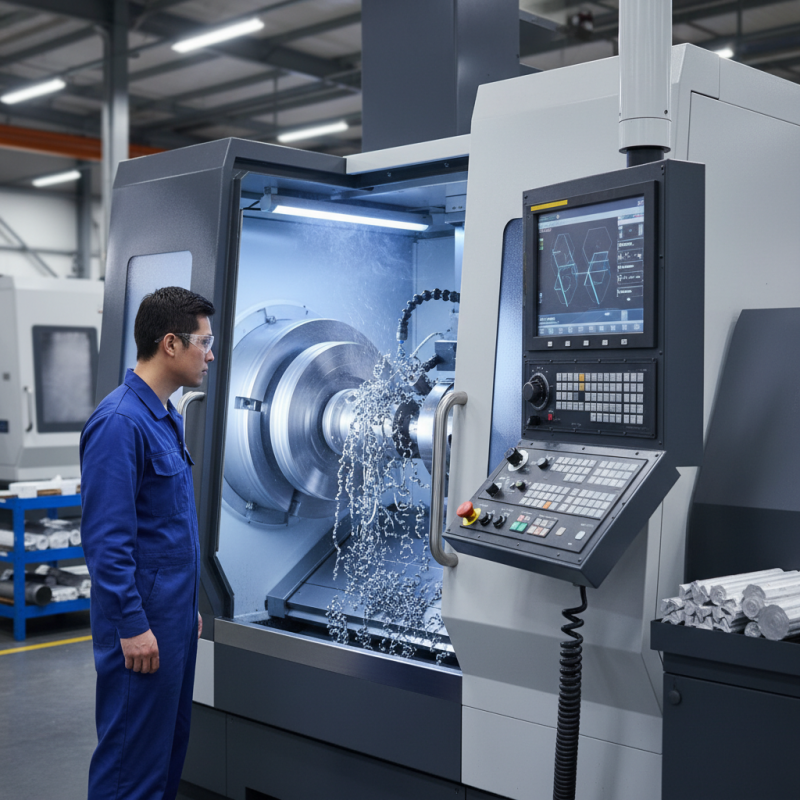
Why Choose a CNC Turning Center for Precision Machining?

Understanding CNC Turning Centers: A Brief Overview

CNC turning centers are essential for precision machining. They automate the turning process, which enhances productivity and accuracy. According to a recent industry report, the CNC machining market is expected to grow at a CAGR of 6.9% from 2021 to 2028. This growth highlights the increasing reliance on CNC technology.

One key feature of CNC turning centers is their ability to produce complex shapes. They use multi-axis capabilities to achieve intricate designs that traditional methods can't. A study by the Manufacturing Technology Association found that businesses using CNC machines had a 20% increase in efficiency. This shows the significant benefits of adopting CNC technology.

Tip: Regular maintenance is crucial for optimal performance. Scheduled checks reduce downtime and extend machine life.

CNC turning centers also contribute to cost-effectiveness. They minimize material waste through precise cutting. A 2020 report indicated that companies could save up to 30% on material costs by using CNC machines. Yet, operators should be aware of the learning curve that comes with new technologies.

Tip: Invest time in training operators to maximize the benefits of CNC equipment. Knowledgeable staff can make a meaningful difference in productivity.

Key Advantages of CNC Turning Centers for Precision Machining

CNC turning centers have emerged as essential tools in the precision machining sector. According to industry reports, about 60% of companies experience cost reduction when using CNC technology. These machines offer unmatched accuracy, often achieving tolerances of ±0.0005 inches or better. This level of precision is critical for industries like aerospace and medical device manufacturing.

One significant advantage of CNC turning centers is their versatility. They can produce complex geometries that traditional methods struggle to achieve. This flexibility reduces the need for multiple setups and tooling changes, which can be time-consuming and costly. A recent survey indicated that manufacturers using CNC turning centers notice a 30% increase in productivity. However, initial setup costs can be high, and the learning curve for operators is steep.

Moreover, while CNC turning centers enhance production rates, they can lead to over-reliance on automation. Some technicians express concerns over a potential skills gap in the workforce. For precision machining to thrive, human oversight remains crucial. Data shows that companies with a balanced approach to automation and skilled labor are more successful in maintaining quality and efficiency over time.

Benefits of CNC Turning Centers for Precision Machining

Comparative Analysis: CNC Turning Centers vs. Traditional Machining Methods

CNC turning centers offer a high level of precision that can be hard to achieve with traditional machining methods. These modern machines utilize computer-controlled processes. This minimizes human error and increases production speed. Components produced can be exceptionally intricate. Perfect for industries demanding tight tolerances, these machines excel in crafting parts. However, they are not without challenges. Initial setup costs can be high, and programming requires skilled operators.

Traditional machining methods, like manual lathes, have their benefits. They allow for greater flexibility in customization. Experienced machinists can make quick adjustments on the fly. Yet, this often comes at the cost of consistency and efficiency. Human error can lead to variations in product quality. Over time, cycle times can also increase, making them less competitive.

In contrast, achieving similar precision with traditional machines might necessitate multiple setups and tools. Operators often take longer to troubleshoot issues. Not all parts fit perfectly every time. In essence, while CNC turning centers stand out in precision, traditional methods provide valuable crafting skills. Each approach has strengths and weaknesses, prompting discussions about which strategy to adopt.

Applications of CNC Turning Centers in Various Industries

CNC turning centers are increasingly vital across diverse industries. In aerospace, they create precise components like turbine blades. A report from the Aerospace Industries Association states the sector is expected to grow by 4% annually. Precision is crucial here, where even a slight error can lead to catastrophic failures.

In the automotive industry, CNC turning centers produce intricate parts such as wheel hubs and engine blocks. According to industry analysis, over 60% of automotive manufacturing now relies on CNC technology. This shift highlights the importance of accuracy and efficiency. However, the high cost of CNC machines may deter small manufacturers, creating a disparity in access.

Medical device manufacturing also benefits greatly. CNC turning centers produce components like surgical instruments and implants. A study from the Medical Device Manufacturers Association indicates that the market is projected to reach $600 billion by 2024. Ensuring high standards in these applications is non-negotiable. Yet, maintaining consistent quality remains a challenge, as human oversight is still necessary in complex processes.

Technological Innovations Enhancing CNC Turning Center Performance

CNC turning centers have transformed precision machining with cutting-edge technologies. These innovations enhance speed, accuracy, and versatility. Advanced software algorithms optimize tool paths, enabling faster cycle times. This results in significant production efficiency. New materials and coatings extend tool life and improve performance. Manufacturers witness better surface finishes and tighter tolerances.

However, these technologies aren't flawless. Operators must undergo extensive training to maximize capabilities. Misalignment can occur during setup, leading to scrap parts. Regular maintenance is essential to keep machines running smoothly. Dust and debris can negatively impact precision. Each challenge highlights the need for constant improvement in processes.

Despite their advantages, CNC turning centers require careful implementation. The technologies improve productivity, but overreliance can lead to issues. Skilled operators should monitor machines closely. Continuous evaluation of performance metrics is crucial. Only then can manufacturers truly leverage the full potential of CNC turning centers.

We Meet Our Clients Needs.

Meeting the diverse needs of our clients, we have complete machining facilities for everything from single part prototypes to large quantity production. Our small size is one of our biggest assets. It allows us to control costs and maintain the highest of standards.

Quality orientated  and delivery always on time or earlier than originally promised.

Strongly recommend MSD.