How to Choose the Right CNC Machine Tool?

Choosing the right CNC machine tool begins with the part, not the machine’s impressive brochure. A compact three-axis mill may handle aluminum brackets efficiently, while hardened steel components often demand greater rigidity, torque, and thermal stability. Workpiece dimensions matter too. A machine with a small table can quickly become restrictive when fixtures, clamps, and tool clearance are included.

Experienced manufacturers usually compare spindle speed, motor power, positioning accuracy, repeatability, control features, and available tooling. These specifications should match real production conditions, not imagined possibilities. For example, a workshop producing stainless steel housings may value stable low-speed cutting more than extreme spindle speed. The best tool cnc machine also fits the operator’s skill level, maintenance resources, floor space, and expected workload.

Cost requires honest calculation. Purchase price is only one part of ownership. Installation, programming, coolant, tooling, electricity, repairs, and operator training can reshape the budget. A cheaper machine may create longer cycle times or inconsistent finishes. That assumption can be wrong.

Reliable selection also depends on evidence. Request sample cuts, inspect finished surfaces, review service response times, and speak with current users. Check whether the supplier provides practical training and accessible replacement parts. This guide cannot remove every uncertainty. However, it can help buyers compare machines with clearer priorities, realistic production data, and greater confidence in long-term performance. The right choice is rarely the most powerful model. It is the machine that repeatedly produces acceptable parts, safely and profitably, under everyday workshop conditions.
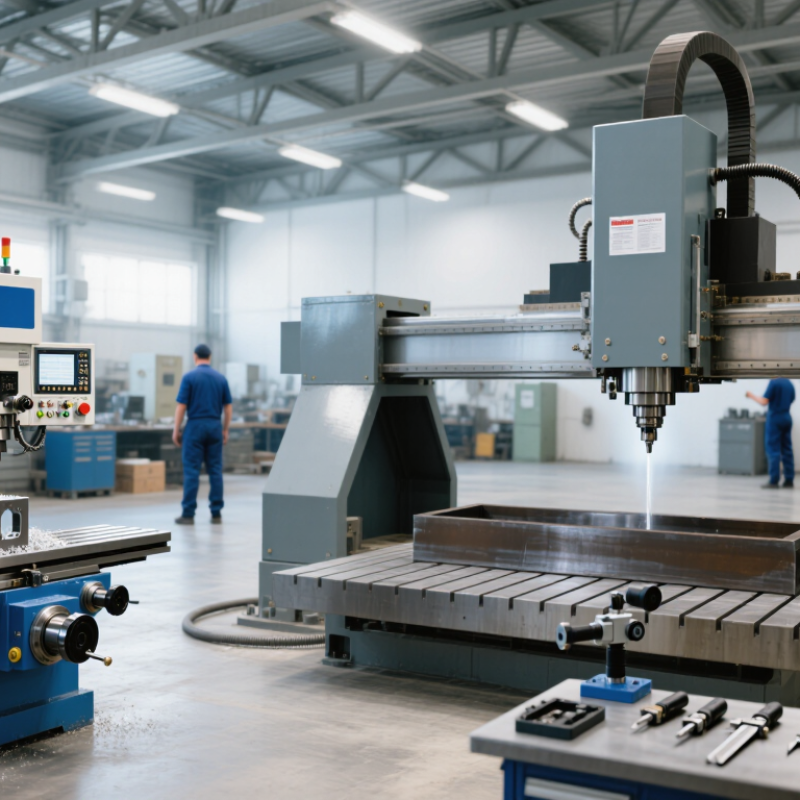
How to Choose the Right CNC Machine Tool?

Define the Machining Requirements and Production Goals

Choosing the right CNC machine tool begins with a clear definition of machining requirements. Record the material, part dimensions, tolerances, surface finish, and expected batch size. A small aluminum component may need high spindle speed, while hardened steel often demands higher torque and stable cutting conditions. Review the drawing carefully. Tiny tolerances can change the entire machine selection.

Production goals also need measurable details. Estimate monthly volume, cycle time, setup frequency, and acceptable downtime. If operators change fixtures several times daily, quick workholding may matter more than maximum spindle power. Check axis travel against the largest planned workpiece, including tool clearance and fixture height. Do not ignore chip removal, coolant capacity, floor space, electrical supply, or operator access. These details often decide whether a machine performs well after installation.

I once focused too heavily on purchase price and underestimated setup time. The machine met the specifications, but production moved slowly between batches. That experience changed my evaluation process. I now request a sample-part test, review maintenance records, and verify tolerance stability during extended operation. Ask how accuracy is measured and how service support handles urgent faults. A realistic acceptance test should examine cutting performance, repeatability, surface quality, and tool life. Some plans still fail because demand forecasts are optimistic. Leave practical capacity for inspections, tool changes, training, and unexpected rework.

Compare CNC Machine Types and Their Capabilities

Choosing a CNC machine tool starts with the part, not the machine’s advertised speed. A three-axis milling machine suits flat plates, pockets, and simple fixtures. It is often easier to program and cheaper to maintain. However, angled features may require extra setups. That hidden labor matters. A four- or five-axis mill reaches multiple faces with fewer repositioning steps. This can improve alignment, but programming and inspection become more demanding. Use it when complex surfaces or tight positional tolerances justify the added cost.

CNC lathes excel at shafts, bushings, threads, and other rotational parts. Live tooling can add milling operations, reducing transfers between machines. A turn-mill center offers flexibility, yet its setup is less forgiving. A small workholding error can distort every feature. For sheet components, a CNC router handles large panels quickly. A laser or plasma cutter suits profile cutting. Cut quality depends on material, thickness, heat, and extraction.

When comparing machines, check spindle power, travel, tool capacity, control usability, and service access. Do not judge capacity from table size alone. A large envelope may still lack rigidity for deep cuts. Review sample cuts using your actual material and tooling. Ask how operators will load parts, measure tools, and recover from alarms. I would rather choose a slower machine with stable repeatability than chase a peak feed rate. That preference can be wrong for high-volume work. Production data should challenge it.

Evaluate Accuracy, Work Envelope, and Tooling Options

Choosing a CNC machine tool starts with the part, not the brochure. Define the required tolerance, surface finish, material, and production volume. A machine rated for ±0.005 mm may not hold that accuracy on a hot shop floor. Thermal growth, vibration, fixturing, and operator habits can change the result. ISO 230-2 provides a recognized method for testing positioning accuracy and repeatability. Ask for measured test results, not only catalog claims.

Work envelope deserves equal attention. Measure the largest part, then add space for fixtures, probes, chip clearance, and tool changes. A 500 mm axis range can become restrictive when a vise and long tool occupy valuable travel. Check spindle speed, torque, table load, and axis acceleration together. They define practical cutting capacity. The 2024 Deloitte Smart Manufacturing and Operations Survey found that 86% of manufacturers viewed smart manufacturing as important for competitiveness. That supports machines with accessible data, alarms, and condition monitoring.

Tooling options often decide whether a machine earns its floor space. Evaluate taper size, magazine capacity, automatic tool measurement, coolant delivery, and support for specialized cutters. Standard interfaces reduce future restrictions. Fit matters. In real workshops, I have seen buyers overvalue speed and underestimate tool access. That is a costly mistake. My own judgment is not perfect; material behavior and setup skill can outweigh impressive specifications. Run a sample part with your actual material, fixture, and tooling before approval. Record cycle time, dimensional drift, tool wear, and operator adjustments. Data exposes uncomfortable assumptions.

How to Choose the Right CNC Machine Tool?

Evaluate Accuracy, Work Envelope, and Tooling Options
Typical CNC machine selection ranges and evaluation criteria
Machine Type Typical Positioning Accuracy* Typical Repeatability* Representative Work Envelope Tooling Options Best-Suited Materials Key Selection Considerations
3-Axis Vertical Machining Center ±0.005–0.020 mm
After proper calibration and thermal stabilization
±0.003–0.010 mm X: 500–1,500 mm
Y: 300–700 mm
Z: 400–700 mm
20–60 tool automatic tool changer; CAT, BT, HSK, or equivalent spindle interfaces; coolant-through tools may be available Aluminum, steel, stainless steel, cast iron, engineering plastics Choose when most features are accessible from three directions. Check table load, spindle power, rapid-traverse speed, and chip evacuation.
5-Axis Machining Center ±0.005–0.015 mm
Linear-axis performance; volumetric accuracy depends on calibration
±0.003–0.008 mm Common ranges: X 500–1,000 mm; Y 400–800 mm; Z 400–700 mm; rotary table or trunnion typically 300–800 mm diameter 30–120 tool automatic tool changer; HSK, CAT, BT, or equivalent; rotary-axis probing and angle-head options may be available Aluminum, titanium, steel, nickel alloys, composites Best for complex surfaces, impellers, molds, and fewer setups. Evaluate rotary-axis travel, collision clearance, pivot-point accuracy, and postprocessor support.
CNC Turning Center ±0.005–0.015 mm
Typical linear-axis positioning range
±0.002–0.008 mm Swing over bed: 500–900 mm
Turning diameter: 200–500 mm
Turning length: 300–1,000 mm
8–24 station turret; static holders, driven tools, boring bars, grooving tools, and optional bar feeder Steel, stainless steel, aluminum, brass, titanium, plastics Choose for rotational parts. Confirm maximum bar capacity, chuck size, spindle bore, turret indexing time, tailstock support, and part-length capacity.
Mill-Turn Center ±0.005–0.015 mm
Typical linear-axis positioning range
±0.002–0.008 mm Turning diameter: 200–800 mm
Turning length: 300–1,500 mm
Optional Y-axis travel commonly 100–300 mm
12–80 tool turret or magazine; live tooling; sub-spindle; bar feeder; B-axis milling head on advanced configurations Steel, stainless steel, aluminum, nickel alloys, titanium Suitable for complete machining in one setup. Assess spindle and sub-spindle synchronization, tool capacity, Y-axis range, part transfer, and programming complexity.
Swiss-Type CNC Automatic Lathe ±0.003–0.010 mm
Typical axis positioning range
±0.001–0.005 mm Bar diameter commonly 3–32 mm
Machining length per stroke: approximately 100–320 mm
Multiple gang-tool positions; guide-bushing system; cross and back-working tools; driven tooling; optional sub-spindle Stainless steel, brass, titanium, aluminum, medical and engineering alloys Ideal for small, slender, high-volume parts. Check bar-feeding system, guide-bushing compatibility, tool accessibility, setup time, and material waste.
CNC Router ±0.020–0.100 mm
Depending on frame rigidity, drive system, and calibration
±0.010–0.050 mm X: 1,000–3,000 mm
Y: 1,000–6,000 mm
Z: 100–300 mm
ER collet spindle; single-tool or automatic tool changer; vacuum table; compression, upcut, and downcut router bits Wood, plastics, composites, aluminum, foam, and non-ferrous sheet materials Select for large-format cutting and lower-force materials. Prioritize frame rigidity, vacuum zoning, spindle speed range, dust extraction, and usable Z clearance.
CNC Electrical Discharge Machine ±0.005–0.020 mm
Typical positioning range
±0.003–0.010 mm Work tank or travel commonly supports parts from 300 × 200 × 150 mm to 1,000 × 600 × 300 mm Electrode holders; graphite or copper electrodes; automatic electrode and wire-management systems depending on process Hardened steel, carbide, tool steel, conductive alloys Use for hard materials, deep cavities, sharp internal corners, and fine features. Consider dielectric filtration, electrode wear, surface finish, and cycle time.
Evaluation note: Accuracy and repeatability values are representative industry ranges, not guaranteed machine specifications. Actual performance varies with machine size, thermal conditions, calibration, fixturing, cutting parameters, material, and the applicable test standard. Confirm certified inspection results and the supplier’s stated working envelope before purchase.

Practical selection rule: Choose a work envelope at least 10–20% larger than the largest part and fixture combination, then verify spindle load, axis travel, tool reach, chip clearance, and access for inspection and maintenance.

Assess Software, Automation, Maintenance, and Operator Needs

How to Choose the Right CNC Machine Tool?

Software should match the operator, not impress the purchasing team. A clear interface, offline programming, and verified tool libraries reduce setup mistakes. On the shop floor, watch an operator load a program, inspect a toolpath, and recover from an alarm. If these steps feel confusing, training costs will grow.

The World Economic Forum’s Future of Jobs Report 2023 estimates that 44% of workers’ skills may be disrupted by 2027. Choose controls that support learning, simulation, and guided troubleshooting.

Automation deserves a practical test. Ask whether pallet loading, probing, and tool measurement fit your real production mix. A flexible system may outperform a faster one when product batches change frequently.

Deloitte’s 2024 Smart Manufacturing and Operations Survey found that 86% of executives expect smart manufacturing to drive competitiveness within three years. That expectation is strong, but not every factory needs maximum connectivity.

I would not pay for unused features. Start with measurable tasks, such as reducing setup time or preventing repeated offsets.

Maintenance planning should begin before installation. Check spare-part access, diagnostic detail, service training, and data ownership. A machine that reports vibration but gives unclear actions still wastes valuable time.

The U.S. Department of Energy links predictive maintenance with lower downtime and improved productivity, but results depend on disciplined data collection.

Review the maintenance screen with a technician. It may reveal weaknesses that a polished sales demonstration hides.

Calculate Total Cost, Supplier Support, and Long-Term Value

How to Choose the Right CNC Machine Tool?

Calculate Total Cost, Supplier Support, and Long-Term Value

Choosing the right CNC machine tool starts with more than spindle speed or table size. In my experience, the purchase price can hide expensive gaps. Calculate the total cost across five years. Include installation, tooling, software, training, energy, maintenance, downtime, and financing. Ask for realistic figures, not optimistic estimates. A machine that saves two minutes per part may still lose value if setup takes an hour. Measure your actual production mix. Small details matter.

Supplier support should be tested before signing. Request response times, technician coverage, spare-parts availability, and training details in writing. Speak with users running similar materials and batch sizes. Their workshops reveal problems that brochures rarely mention. Ask how remote diagnostics work and who pays for travel. Also check documentation quality. Clear maintenance schedules reduce avoidable mistakes. I once underestimated operator training, and early errors erased part of the expected savings. That calculation needed more honesty.

Long-term value depends on flexibility. Confirm whether the control system can handle future software, automation, inspection, and safety updates. Review service history, expected component life, resale value, and upgrade costs. Compare cost per productive hour, not only hourly depreciation. Build a spreadsheet with best-case, normal, and failure scenarios. Leave room for surprises. No forecast is perfect. A cheaper machine may suit stable, low-volume work, while stronger support may protect a demanding production line.

We Meet Our Clients Needs.

Meeting the diverse needs of our clients, we have complete machining facilities for everything from single part prototypes to large quantity production. Our small size is one of our biggest assets. It allows us to control costs and maintain the highest of standards.

Quality orientated  and delivery always on time or earlier than originally promised.

Strongly recommend MSD.