
How to Choose 10G BiDi SFP Transceivers in 2026?
Choosing a 10g Bidi Sfp in 2026 requires more than comparing prices and advertised reach. Bidirectional optics use two wavelengths over one fiber strand, making them valuable where dark fiber is limited. That sounds simple. It is not.
Cisco’s Annual Internet Report projected 29.3 billion networked devices worldwide by 2023, alongside 5.3 billion internet users. This expanding connected environment increases pressure on existing fiber infrastructure, especially in campuses, access networks, and smaller data centers. The Ethernet Alliance’s Ethernet Roadmap also shows continuing migration toward higher bandwidth, yet many operational links still depend on dependable 10GbE equipment. These reports do not measure BiDi demand directly. That limitation matters.
A practical selection should begin with the fiber type, link distance, connector, and switch compatibility. Check whether the module uses 1270/1330 nm or 1330/1270 nm wavelengths. The pair must be complementary. One wrong wavelength can leave the link dark. Verify SFP+ support, digital diagnostics, operating temperature, and vendor coding before installation. The IEEE 802.3 standard defines 10GbE transmission requirements, but it does not guarantee universal compatibility between every commercial transceiver and switch.
Field experience suggests that optical budget deserves more attention than headline distance. A 20-kilometer rating may become unrealistic after connectors, splices, aging, and dirty end faces are included. Clean the fiber. Measure the loss. Keep the test records.
Reliable vendors should provide insertion-loss limits, receiver sensitivity, warranty terms, and documented compliance. Still, specifications can be incomplete. Engineers should validate a sample pair under real traffic before buying hundreds. That cautious step may feel slow, but replacing mismatched optics costs more.
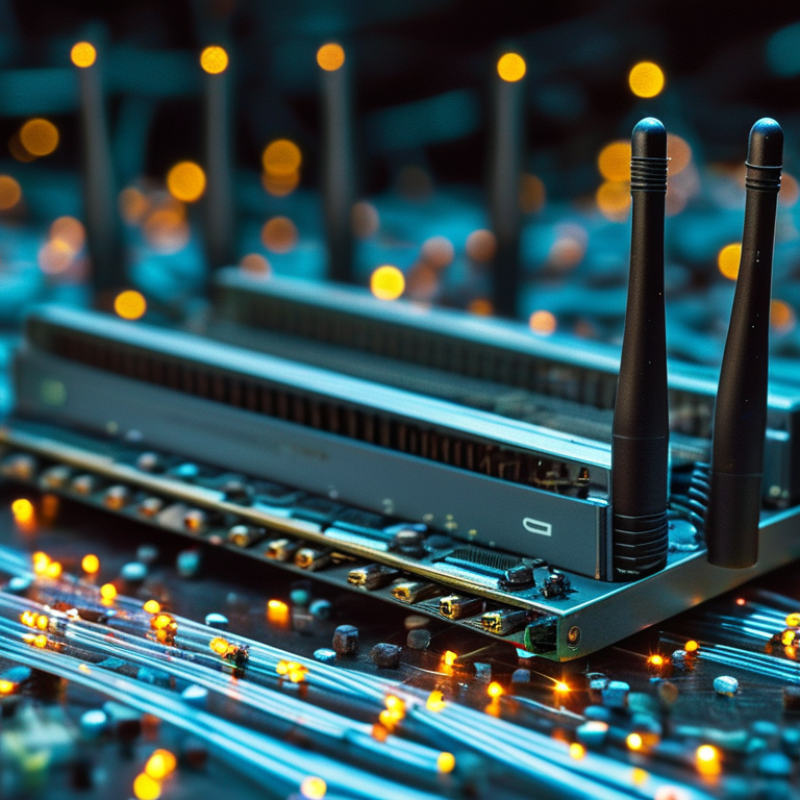
What 10G BiDi SFP Transceivers Are and How They Work
A 10G BiDi SFP transceiver is a compact optical module for 10-gigabit network links. Unlike standard duplex optics, it sends and receives data through one single-mode fiber. This saves fiber strands and can simplify upgrades in crowded cable routes. The module uses two different wavelengths. One wavelength carries outgoing traffic, while the other carries incoming traffic. Both ends need matching wavelength pairs. Otherwise, the link may stay dark.
In practical installations, the module connects to an SFP+ port and usually uses a simplex LC connector. Its transmission distance depends on optical power, fiber quality, and connector cleanliness. Always check the host device’s supported data rate, coding, temperature range, and digital monitoring features. A small mismatch can cause intermittent errors instead of a complete failure. That makes troubleshooting harder. I have seen technicians replace modules first, although a dusty connector caused the real problem. This is an easy assumption to question.
Tips: Confirm the Tx and Rx wavelengths at both ends. Select a reach rating above the actual cable distance, but avoid paying for unnecessary distance. Check the fiber type and optical budget carefully. Record module temperature and received power during testing. Compatibility lists help, but real equipment testing remains more reliable. Also, leave a clear label near each fiber pair. Future maintenance may depend on it.
Identify Fiber Type, Transmission Distance, and Wavelength Requirements
Choosing a 10G BiDi SFP transceiver in 2026 starts with the fiber already installed. BiDi modules use one optical strand for sending and receiving data. They normally require complementary wavelengths at each end. A common mistake is matching speed while ignoring fiber type. For stable 10Gbps links, single-mode OS2 fiber is usually the practical choice for longer distances. Multimode fiber may appear cheaper, but it is generally unsuitable for many BiDi applications.
Distance claims need careful checking. A module rated for 10 kilometers may not reach that distance in a crowded duct with multiple splices. Measure the actual route, not the building plan. Include connector loss, splice loss, patch-panel loss, and a safety margin in the link budget. I have seen short links fail because dirty connectors consumed the available power margin. Clean optics matter.
Wavelength requirements deserve equal attention. One end may transmit near 1270 nanometers, while the opposite end transmits near 1330 nanometers. These wavelengths must match as a pair, or the link will remain down. Check the transceiver datasheet, switch compatibility list, operating temperature, and digital monitoring support. DOM readings can reveal weak receive power before users report errors. Still, monitoring is not proof of perfect performance. Field measurements with an optical power meter are more dependable. A neat specification sheet can mislead. Recheck polarity, connector type, and real attenuation before ordering.
Match BiDi Wavelength Pairs with Compatible Network Equipment
How to Choose 10G BiDi SFP Transceivers in 2026?
A 10G BiDi link uses one fiber strand for both transmission and reception. The two transceivers must use opposite wavelength directions. For example, one side may transmit at 1270 nm and receive at 1330 nm. The remote module must reverse those values. Never match modules by appearance alone. Check the exact Tx and Rx wavelengths on every datasheet.
Equipment compatibility involves more than wavelength pairing. Confirm 10Gbps support, SFP+ port compatibility, connector type, fiber mode, and transmission distance. Single-mode fiber is normally required for long BiDi links. Also compare the optical power budget with measured fiber loss, connector loss, and splice loss. A spreadsheet helps.
But it is not enough.
In practical network checks, incorrect pairing often causes a link to remain down, even when both modules appear genuine and correctly inserted. Check port coding requirements, operating temperature, digital monitoring support, and alarm thresholds. After installation, inspect both ends and test received optical power. Leave some margin; field conditions change. A dusty connector or aging splice can reduce performance unexpectedly. I sometimes treat vendor tables as final answers, but installation records and live measurements deserve equal attention. Recheck the wavelength direction before replacing hardware. That small step can prevent a long troubleshooting session.
Compare Optical Power, Temperature Range, and Reliability Ratings
How to Choose 10G BiDi SFP Transceivers in 2026?
Optical power deserves careful attention in every 10G BiDi SFP selection. Check the transmitter output, receiver sensitivity, and total link budget together. A stronger signal is not always safer. Excessive power can overload the receiver, especially across short fiber runs. Review values in dBm, then compare them with actual fiber loss, connector loss, and aging margins. Digital optical monitoring can reveal unstable readings during temperature changes. This small check often exposes problems before packet errors appear.
Temperature ratings should match the real installation, not the server room label. Commercial modules commonly support 0°C to 70°C. Extended-temperature models may cover -40°C to 85°C. Outdoor cabinets need more than a wider datasheet range. Consider airflow, sunlight, dust, and repeated thermal cycling. Measure the enclosure temperature during its hottest operating period. I would not rely on an air-conditioner setting alone.
Reliability ratings require careful interpretation. MTBF is a statistical estimate, not a promise for one module. Look for documented burn-in procedures, optical component testing, firmware compatibility, and clear failure analysis records. Verify the module’s wavelength pair and fiber type before installation. A mismatch can look like a power problem. It is easy to blame the transceiver too quickly. In practice, dirty connectors, poor bends, and unstable power supplies can create similar symptoms. Keep test results, temperature logs, and replacement dates. That evidence makes future decisions more accurate.
Verify Standards, Vendor Compatibility, and Long-Term Support
Choosing a 10G BiDi SFP transceiver in 2026 requires more than matching speed and fiber type. Verify the standard first. Look for 10GbE compliance under IEEE 802.3ae and monitoring support under SFF-8472. Confirm single-mode fiber support, reach, connector type, and temperature range.
BiDi modules work as a matched pair. One side transmits at 1270 nm and receives at 1330 nm; the opposite side reverses those functions. Check this carefully.
Compatibility is less obvious. A module may fit physically but fail during startup because its EEPROM coding differs from the switch’s expectations. Ask for a compatibility matrix, coding details, and test evidence for your exact platform.
During lab checks, I compare vendor data with DOM readings for bias current, temperature, and received power. If readings drift sharply, inspect fiber cleanliness, polarity, and optical budget. Small losses become expensive across many links. Avoid relying on a product photograph.
Long-term support deserves a written answer, not a sales promise. Confirm revision control, firmware policy, warranty length, replacement procedures, and availability forecasts. A reliable supplier should provide traceable lot information and updated safety documentation.
Request aging-test results or lifecycle notices for deployments expected to run beyond five years. I have sometimes accepted a lower price too quickly. That decision made later troubleshooting harder. Leave room for doubt when specifications look unusually perfect.
Article Source:
We Meet Our Clients Needs.
Meeting the diverse needs of our clients, we have complete machining facilities for everything from single part prototypes to large quantity production. Our small size is one of our biggest assets. It allows us to control costs and maintain the highest of standards.
Quality orientated and delivery always on time or earlier than originally promised.
Strongly recommend MSD.