
How to Choose a Sock Making Machine in 2026?
Choosing the right Sock Making Machine in 2026 requires more than comparing prices and production speeds. A reliable decision starts with your actual products, yarn types, order volumes, and available workshop space. A machine designed for athletic socks may perform poorly with delicate compression yarns. That difference appears quickly during sampling.
Experienced manufacturers usually examine cylinder size, needle count, gauge, knitting speed, and pattern flexibility. They also check automatic toe closing, software compatibility, power consumption, and maintenance access. Small details matter. A poorly positioned control panel can slow daily operations. Difficult needle replacement can increase downtime.
This guide explains how to evaluate machines with practical factory conditions in mind. It considers production efficiency, operator training, spare-part availability, and supplier support. A trustworthy supplier should provide clear specifications, sample testing, warranty terms, and technical assistance. Ask for verifiable performance data, not only attractive catalog images.
Do not trust every number.
Advertised output may depend on simple patterns, stable yarn, and experienced operators. Your results may differ. Testing your own yarn before purchase remains essential. Compare several samples, inspect stitch consistency, and measure production waste. Energy efficiency and recognized safety requirements also deserve attention during selection. The cheapest machine may become expensive after repeated repairs, training delays, or limited product options. A careful buyer should balance current needs with realistic future growth, without paying for features that will remain unused.
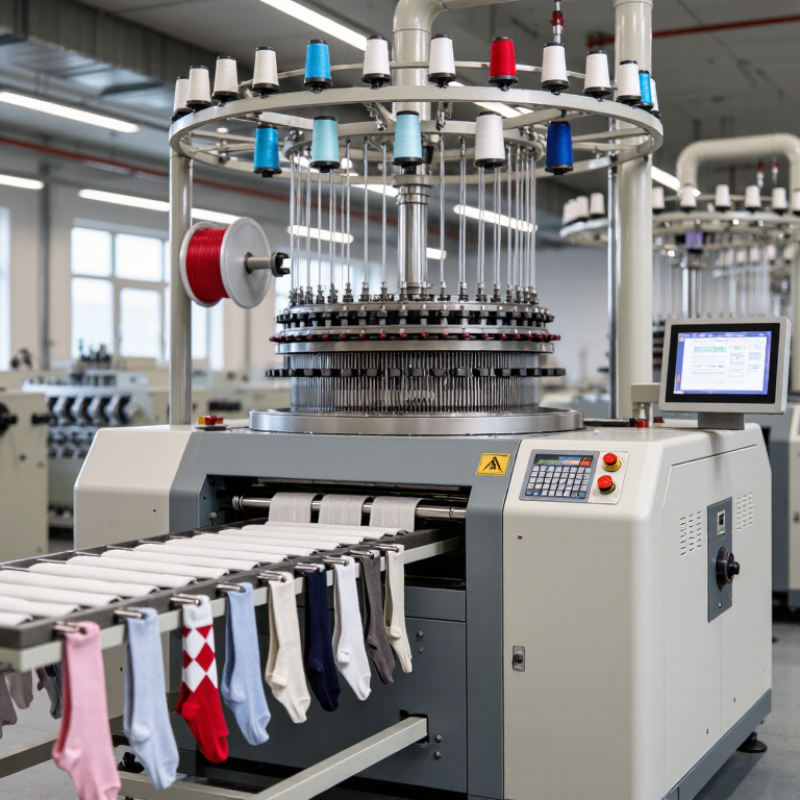
Define Your Sock Production Needs and Machine Goals
Before choosing a sock making machine in 2026, define your production needs clearly. Decide the sock types, sizes, patterns, and materials you will produce. A machine for basic cotton socks may not suit compression designs or thick winter styles. List your target daily output and expected order changes. Include sample quantities, not only monthly averages.
Review yarn compatibility, cylinder options, knitting speed, and automatic functions. Also consider operator skill, available floor space, power supply, and maintenance access. In my experience, production estimates are often too optimistic. My early calculations ignored setup time, yarn changes, cleaning, and rejected pairs. Measure these details during a small trial. Ask for technical documents, training information, safety features, and realistic output data before making a decision.
Tips: Create a simple production sheet before comparing machines. Record sock styles, yarn weights, sizes, daily targets, and quality tolerances. Leave room for future designs, but avoid paying for features you cannot use. A machine with advanced controls may still perform poorly without trained operators. Check whether spare parts and qualified service support are available in your region. Test several sample runs, inspect heel shape and stitch consistency, and document every adjustment. Your goal should be dependable production, not the fastest machine on paper.
How to Choose a Sock Making Machine in 2026? — Define Your Sock Production Needs and Machine Goals
Compare estimated output targets by production scale before selecting a machine. These are planning ranges—not guaranteed machine specifications; actual output varies with sock design, machine settings, operator experience, and downtime.
Use your required daily volume, product mix, and shift schedule to set a target. Confirm rated output, compatible yarns, changeover time, and service requirements with each supplier.
Compare Sock Machine Types and Their Best Applications
How to Choose a Sock Making Machine in 2026?
Compare Sock Machine Types and Their Best Applications
Circular single-cylinder machines are a practical choice for everyday crew, ankle, and athletic socks. Their rotating needles form the tube, while programmed changes create heels and toes. Double-cylinder machines can produce more complex rib structures and shaped heels, making them useful for dress socks and products needing close fit. Flat knitting machines suit selected specialty constructions, but they are not a direct substitute for high-volume circular production. Match the machine to the sock, not the other way around.
Material compatibility matters. Textile Exchange’s Materials Market Report 2024 estimates global fiber production reached 124 million tonnes in 2023, with polyester accounting for about 57 percent. That scale signals why buyers should test machines with their intended yarns: elastic blends, fine yarns, and textured fibers can behave differently at the needles. Ask for a sample run using your own yarn, then inspect toe closure, stitch consistency, and run time. One demonstration is not enough.
Tips: Confirm needle-cylinder options, gauge, hourly output, and changeover time against your product plan. Check whether the machine handles the yarn count and sock sizes you actually sell. A faster rating can look impressive; real output may fall after setup, maintenance, and rejected pairs. I would leave room for uncertainty in production forecasts.
Evaluate Key Technical Features, Materials, and Output Capacity
How to Choose a Sock Making Machine in 2026?
A sock machine should match the fabric, stitch patterns, and daily volume you actually need. Check the number of needles and cylinder size, since these affect gauge, fit, and the range of sock sizes. Ask for sample socks made with your yarn, not just a polished demonstration piece. Inspect heel and toe options, pattern controls, and how easily operators can adjust settings. A fast cycle is useful, but only if quality stays consistent across a full shift.
Tips: Test several yarn types, including the thickest yarn you expect to use. Confirm which materials the machine can handle and whether its feeder suits them. Request a short production trial, then check stitch uniformity, seam comfort, and rejected pairs. Also compare rated output with realistic output after setup changes and routine stops. Small differences add up.
Consider maintenance access and operator training as part of capacity. A machine that produces many pairs per hour may still slow down if needles are hard to replace or settings are unclear. Review spare-part availability, cleaning steps, and support response times. I would leave room in the budget for setup and training; these costs are easy to underestimate. And be cautious with impressive output claims. Real results depend on yarn, sock design, and operator experience.
Check Automation, Maintenance, Safety, and Operator Requirements
A sock-making machine should fit the work your team actually does, not just the output listed on a specification sheet. Check whether automation covers yarn feeding, stitch changes, and routine machine stops. Ask to see a complete production cycle, including a style change. Small delays at the control panel can add up across a shift. Record cycle time and rejected pairs during a trial, then compare them with your current process.
Tips: Inspect the guards, emergency stops, and access points in person. Ask how often filters, needles, and other wear parts need attention. Keep a simple maintenance log; it can reveal problems before they become downtime.
Operator requirements matter too. A clear interface, readable alarms, and accessible adjustment points can shorten training and reduce avoidable errors. Confirm what skills the machine requires and whether one operator can safely supervise several units. Request practical training with the actual yarn and sock patterns you plan to use. A short demonstration is useful, but it may not reflect a full shift. I would also allow time for operators to flag awkward steps; their feedback can challenge assumptions in the purchase plan.
| Evaluation area | What to check | Useful evidence or questions | Why it matters |
|---|---|---|---|
| Product and machine fit | Confirm the machine can make the required sock types, sizes, patterns, and construction details. | Ask for sample production using your intended yarns and representative designs. Check heel and toe construction, rib, terry, and pattern capabilities as applicable. | A machine’s suitability depends on its configuration and the product range, not just its advertised output. |
| Gauge and needle configuration | Match the needle count and machine gauge to the intended fabric weight, yarn, and design. | Request the machine specifications and test the actual yarn and fabric combination. Verify which gauges or needle sets are included. | Gauge and needle setup affect stitch density, fabric appearance, and which products can be produced reliably. |
| Automation and controls | Review automatic functions, program setup, fault alerts, and how easily operators can change styles. | Ask for a live demonstration of style changeover, program selection, alarm handling, and production monitoring. Clarify which tasks remain manual. | Automation can reduce repetitive intervention, but it does not eliminate setup, inspection, or troubleshooting work. |
| Production performance | Assess output under realistic operating conditions, including setup time, stoppages, and product quality. | Request a trial run on your product. Record acceptable pieces, rejects, downtime, and changeover time; compare like-for-like products and operating conditions. | Quoted maximum speed alone does not show saleable output or day-to-day productivity. |
| Maintenance access | Check access to routine service points, cleaning areas, needles, and wear components. | Review the maintenance schedule and operator manual. Ask which tasks require a qualified technician and how long common service tasks take. | Easy access and clear procedures can reduce avoidable downtime and maintenance errors. |
| Spare parts and technical support | Verify parts availability, delivery arrangements, documentation, and support coverage for the installation location. | Request a recommended spare-parts list, parts lead-time estimates, service contact details, and training options before purchase. | A machine’s operating cost and uptime depend partly on how quickly essential parts and expertise can be obtained. |
| Machine guarding and safety | Inspect guards, access doors, emergency stops, warning labels, and procedures for isolating energy during service. | Review the risk assessment and safety instructions. Confirm the equipment meets applicable local requirements and that operators can reach emergency stops. | Rotating and moving components can present mechanical hazards; safe access and training are essential. |
| Operator skill and training | Determine the skills needed for threading, setup, inspection, basic fault recovery, and routine care. | Ask for a training plan, language options for manuals, and a list of tasks operators should be qualified to perform. | The required staffing and training should match the machine’s controls, product mix, and maintenance demands. |
| Utilities and installation | Check electrical supply, compressed-air needs if applicable, floor space, ventilation, and installation requirements. | Obtain written utility and site specifications. Confirm the factory layout, delivery access, commissioning, and acceptance-test requirements. | A machine cannot be commissioned as planned if the facility is not prepared for its electrical, spatial, or installation needs. |
| Total cost and acceptance | Compare purchase, installation, training, tooling, energy, maintenance, and expected operating costs. | Set written acceptance criteria for product quality, trial output, included accessories, documentation, and handover before placing the order. | A consistent scope and measurable acceptance test make competing offers easier to compare. |
Calculate Total Costs and Select the Right Machine in 2026
Choosing a sock machine in 2026 means comparing total ownership costs, not just purchase prices. Include installation, operator training, needles, cylinders, yarn waste, maintenance, energy, and downtime. Textile Exchange’s Materials Market Report 2024 estimates global fibre production reached 124 million tonnes in 2023, with growth expected by 2030. That scale does not guarantee affordable sock yarn; confirm local prices and minimum order quantities before committing. Small detail, big impact.
Build a simple cost model using supplier quotes and your own production plan. For example, a machine drawing 1.5 kW and running 16 hours daily for 250 days uses about 6,000 kWh annually. At an assumed electricity rate of $0.12 per kWh, that is $720, excluding ancillary equipment. Treat this as an illustration, not a forecast.
Add annual service, replacement parts, financing, and expected downtime, then divide by saleable pairs—not theoretical output. Ask suppliers for tested output using your intended yarn and sock construction. A quoted speed can look excellent on paper. It may not reflect changeovers, rejected pairs, or operator experience. Compare cost per saleable pair across realistic production volumes, and leave room for assumptions to be wrong.
Article Source:
We Meet Our Clients Needs.
Meeting the diverse needs of our clients, we have complete machining facilities for everything from single part prototypes to large quantity production. Our small size is one of our biggest assets. It allows us to control costs and maintain the highest of standards.
Quality orientated and delivery always on time or earlier than originally promised.
Strongly recommend MSD.