
How to Choose Large Outdoor Ceramic Flower Pots in 2026
Choosing large outdoor ceramic flower pots in 2026 means balancing appearance with weight, drainage, and weather exposure. A tall glazed planter can brighten a patio, but its size and finish alone do not guarantee a good fit. The right pot should suit the plant’s mature roots, the available space, and the conditions where it will sit. Wind matters, too. A lightweight plant in a broad pot may still tip in an exposed corner.
When comparing ceramic flower pots large outdoor, check the dimensions, drainage holes, and care guidance from the maker. Ceramic varies: some pots are designed for outdoor use, while others may be vulnerable to cracking in freezing, wet conditions. Look for clear frost-resistance information if winters are cold, and avoid letting water collect beneath the pot. Heavy when filled. That detail is easy to overlook. Consider where the planter will live before adding soil, since moving it later can be difficult.
This guide explores how to match pot size and shape to plants, assess construction and finishes, and choose a suitable location. It also considers practical details such as saucers, liners, and safe placement on decks or balconies. No single pot suits every garden. A choice that looks perfect in a showroom may feel oversized on a narrow path, or too small once roots grow. A little measuring—and a second look at local weather—can prevent an expensive mismatch.
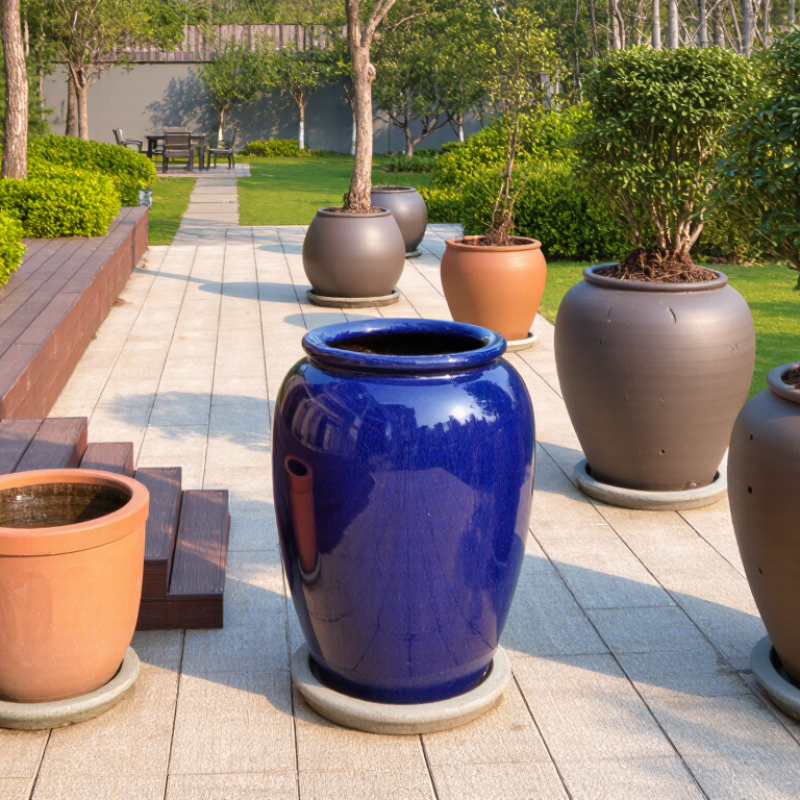
Assess Your Outdoor Space, Climate, and Planting Needs
Measure the planting area before choosing a pot: note its width, overhead cover, and the route you will carry the filled container. A large ceramic pot can be difficult to move once wet soil is inside. Check how many hours of direct sun reach the spot, then match that exposure to the plant’s needs. USDA’s 2023 Plant Hardiness Zone Map uses 30-year averages of annual extreme minimum temperatures; use your zone as a cold-risk guide, not a guarantee for one exposed patio. NOAA’s 1991–2020 Climate Normals offer local temperature and precipitation records that help you judge heat, rain, and seasonal swings.
Climate changes the pot choice. In freeze-prone areas, look for ceramic rated for outdoor freeze-thaw conditions, and keep drainage holes clear; trapped water can expand as it freezes. For hot, sunny locations, check soil moisture more often, since small root volumes can dry quickly. Match pot depth to the plant’s mature root system, and leave room for a saucer or runoff that will not stain paving. I would not rely on appearance alone. A beautiful pot can still be impractical in a windy corner or on a narrow balcony.
Tips: Measure twice. Check the pot’s empty weight, drainage, and placement before filling it. If unsure, test the site with a smaller container for a week.
Compare Ceramic Types, Glazes, and Weather Resistance
Large outdoor ceramic pots differ in how they handle water and temperature. Terracotta is porous, so damp soil can dry more quickly, but moisture may also enter the clay and expand during freezing weather. Dense stoneware often absorbs less water, though quality and firing vary. Porcelain can be very dense, but a thin-walled pot may still crack if its base sits in standing water. Check the maker’s care details, not just the material name.
Glaze affects both appearance and performance. A smooth, well-fired glaze can limit water absorption, while hairline cracks or unglazed areas may let moisture seep in. I would not treat a glossy finish as a weather guarantee; that assumption is easy to make. Look closely at the rim, drainage hole, and foot for chips or uneven glaze. Small defects matter outdoors.
Climate and placement matter, too. In freeze-thaw regions, choose pots described as frost-resistant, ensure drainage holes stay clear, and raise the pot slightly on feet so water can escape. In milder climates, porous clay may be perfectly practical. Heavy pots are stable in wind, but awkward to move once filled with wet soil. I’ve learned that the hard way. If winter conditions are uncertain, move the pot under cover or keep it empty and dry; even a sturdy ceramic pot has limits.
Select the Pot Size, Shape, and Drainage Design
For a large outdoor ceramic pot, size it to the root ball and expected growth, not just the plant’s canopy. For many established plants, an inside diameter about 2–4 inches wider than the root ball offers room for growth without leaving excess wet soil. Check depth as well: shallow-rooted herbs suit broad, low pots, while small trees need deeper containers for root space and stability. Measure the planting spot first. Heavy pots are awkward to move.
Shape affects both appearance and balance. A tall, narrow pot can suit upright plants, but may tip more easily in strong wind. Broad, heavier bases offer better stability for shrubs with wide foliage. Look for a rim wide enough to make planting and watering practical. This is easy to misjudge from a product photo, so compare the pot’s listed dimensions with a tape measure.
Drainage matters. Water needs an exit. Choose a pot with one or more open drainage holes, and raise it slightly on pot feet if it sits on a patio. A saucer can protect paving, but empty standing water after rain. Use a free-draining potting mix suited to the plant; adding gravel at the bottom is not a reliable substitute for drainage holes. In freeze-prone areas, consider whether the ceramic and drainage design can handle winter exposure. The right choice depends on local weather, and that part is easy to overlook.
Check Weight, Stability, and Placement Requirements
A large ceramic pot can look steady in a showroom and feel surprisingly awkward on a porch. Check its weight before adding soil, because damp potting mix and water can make it much heavier. Ask for the empty-pot weight, then consider whether two people can safely move it. Weight matters. Also measure doorways, steps, and narrow garden paths before bringing it home.
Stability depends on more than size. A wide base usually sits more securely than a tall, narrow shape, especially where wind funnels between buildings. Set the pot on level ground, and check that it does not rock when gently nudged. Wind changes things. For exposed patios, a heavier pot may help, but avoid placing it where falling branches or strong gusts could make it unsafe. Drainage holes should remain clear; standing water can add weight and stress the ceramic in cold weather.
Think about the final placement before filling the pot. Ceramic can chip if dragged across concrete, so use a suitable plant caddy only when its wheels lock and the surface is smooth. On balconies or raised decks, confirm the surface can support the combined load; do not guess from appearance. Check the route. I have found that planning the position first saves a difficult lift later, though a pot that seems perfect on paper may still feel too bulky in the space. A little uncertainty is useful: test the footprint with cardboard before committing.
Compare Costs, Sustainability, and Long-Term Care
Large outdoor ceramic pots cost more than many lightweight planters, but the purchase price is only part of the comparison. Include delivery, pot feet, suitable compost, and the effort needed to move a waterlogged container. A broad, stable base helps in exposed gardens, while a drainage hole prevents water pooling around roots. Check the pot’s weight before filling it. I would not treat “heavy” as synonymous with “durable.”
Sustainability is not automatic. Ceramic firing uses energy, and a heavy pot takes more fuel to transport. Still, a well-made pot can remain in use for years if it survives local weather. The U.S. EPA’s 2018 materials report recorded 35.7 million tons of plastic waste generated, with 8.7% recycled; these figures cover all plastic waste, not plant pots specifically. They are useful context, not proof that every ceramic pot has a lower footprint. Repairing a chipped rim or reusing the pot matters, too.
Long-term care can determine whether the upfront cost pays off. Unglazed ceramic absorbs water, so repeated freezing and thawing may cause cracks. Raise the pot on feet, keep its drainage hole clear, and avoid leaving water in the saucer. Glazed surfaces resist moisture better, but trapped water can still damage a pot in cold weather. I still misjudge how heavy a filled container gets. Move it before planting, not after the roots settle.
Article Source:
We Meet Our Clients Needs.
Meeting the diverse needs of our clients, we have complete machining facilities for everything from single part prototypes to large quantity production. Our small size is one of our biggest assets. It allows us to control costs and maintain the highest of standards.
Quality orientated and delivery always on time or earlier than originally promised.
Strongly recommend MSD.