How to Choose the Best Robotic Machine for Your Business?
Choosing the right robotic machine for your business can transform operations. Experts suggest that understanding your specific needs is crucial. Dr. Emily Chen, a leading authority in automation technology, emphasizes, “Investing in the right robotic machine is key to achieving efficiency.” Her insights highlight an essential starting point.
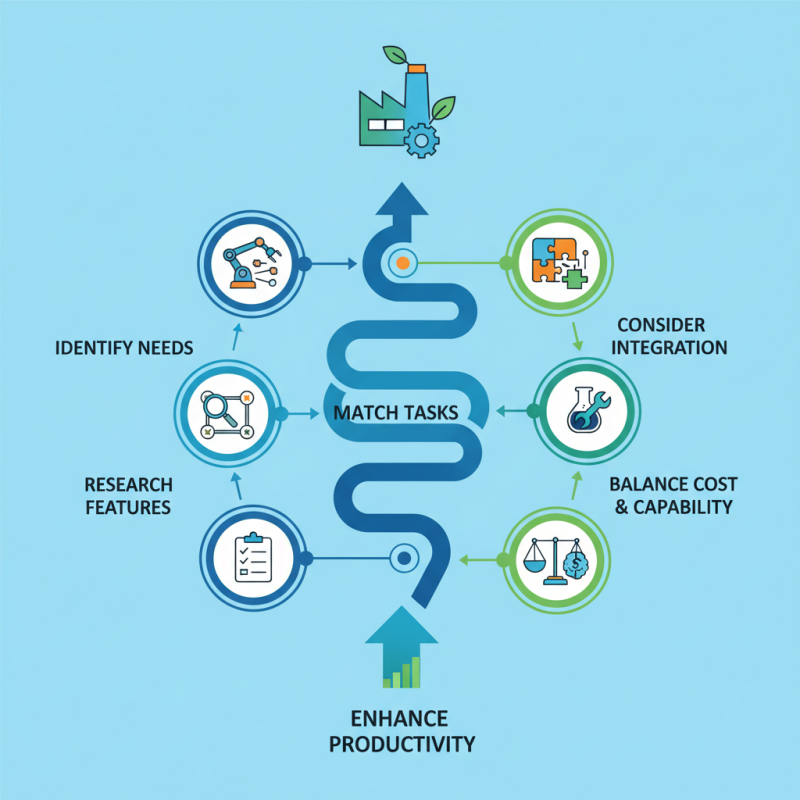
When selecting a robotic machine, consider the specific tasks it will perform. Look for features that match your operational goals. A machine designed for precision assembly might not suit packaging needs. Each industry has unique requirements, and not all machines excel in every aspect.
Reflect on the challenges and complexities of robotic integration. Understand that no machine is perfect. Trial and error may lead you to the best fit. Ultimately, the decision is influenced by balancing cost and capability. Choosing wisely, you can enhance productivity while navigating the robotic machine landscape.
Understand Your Business Needs and Objectives
Understanding your business needs and objectives is paramount when selecting a robotic machine. A report from the International Federation of Robotics (IFR) indicates that around 70% of companies that implement robotics see a direct increase in productivity. Yet, not every robotic solution fits every business.
Identifying specific tasks that automation can handle is crucial. For instance, if your operations involve high-volume production, consider robots designed for speed and precision.
Evaluate the types of tasks where robots could alleviate challenges. Data from McKinsey suggests that 45% of current work activities could be automated by adapting existing technologies. This means you have options. However, it's vital to align robotic capabilities with your strategic goals. What are your growth targets? How do you measure efficiency? Choosing the right machine can either streamline operations or create bottlenecks if mismatched.
In many cases, businesses overlook the importance of training and integration. The transition to robotics often requires a cultural shift within the workforce. A study from Deloitte highlights that 39% of organizations struggle with employee adaptation. Identifying training needs early can help mitigate disruptions. Recognizing potential obstacles upfront can lead to a smoother implementation. It’s a complex process, but understanding your objectives will guide you toward the best robotic solutions.
Evaluate Different Types of Robotic Machines Available
When evaluating different types of robotic machines, consider your specific business needs. There are various categories of robots: industrial, service, and collaborative. Each type has unique features tailored to specific tasks. Industrial robots excel in manufacturing settings. They are designed for speed and precision. Service robots can assist in logistics, cleaning, and customer interaction.
Collaborative robots, or cobots, work alongside human operators. They are often safer to use and can handle tasks requiring flexibility. Assessing the workspace layout is crucial. Some robots require dedicated areas, while others can operate in shared environments.
Additionally, think about the ease of integration. Some machines demand extensive programming. Others are more user-friendly and can adapt quickly. Determine your team's technical expertise, as this impacts operational efficiency. Remember, investing in the right technology can boost productivity but requires thoughtful consideration. Examine how each type aligns with your business goals. It’s essential to weigh the potential return on investment against the functionality you need.
How to Choose the Best Robotic Machine for Your Business?
| Type of Robotic Machine | Key Features | Best Suited For | Price Range | Maintenance Level |
|---|---|---|---|---|
| Industrial Robots | High precision, programmable, capable of complex tasks. | Manufacturing, assembly lines. | $50,000 - $150,000 | High |
| Service Robots | Autonomous navigation, interaction capabilities. | Hospitality, healthcare. | $10,000 - $50,000 | Medium |
| Collaborative Robots | Safe for human interaction, easy programming. | Small and medium-sized enterprises. | $20,000 - $80,000 | Low |
| Agricultural Robots | Field mapping, crop monitoring, automated planting. | Farming, agriculture. | $30,000 - $200,000 | Medium |
| Logistics Robots | Autonomous delivery, inventory management. | Warehouses, distribution centers. | $15,000 - $100,000 | Low |
Assess Budget and Cost-Effectiveness of Robotics Solutions
When assessing the budget for robotic solutions, it's crucial to evaluate both upfront costs and long-term benefits. A report by the International Federation of Robotics (IFR) highlights that industrial robots can deliver a return on investment (ROI) in as little as three to five years. This timeframe may vary significantly depending on the application and industry.
Consider the hidden costs associated with robotics. Maintenance, training for staff, and potential downtime must be factored into the budget. A survey by McKinsey indicates that companies often underestimate these costs by up to 25%. For a business contemplating a $100,000 investment, hidden expenses could swell the budget considerably. Each of these factors plays a pivotal role in determining the overall cost-effectiveness of robotics solutions.
Moreover, investigate financing options. Many companies find leasing technologies more manageable than purchasing outright. According to a study from Deloitte, a growing number of businesses prefer leasing to reduce capital expenditure risks. However, always ensure that the chosen payment structure aligns with the company's cash flow and long-term strategic goals. This decision significantly affects the financial health of the organization.
Research Supplier Reputation and Technical Support Services
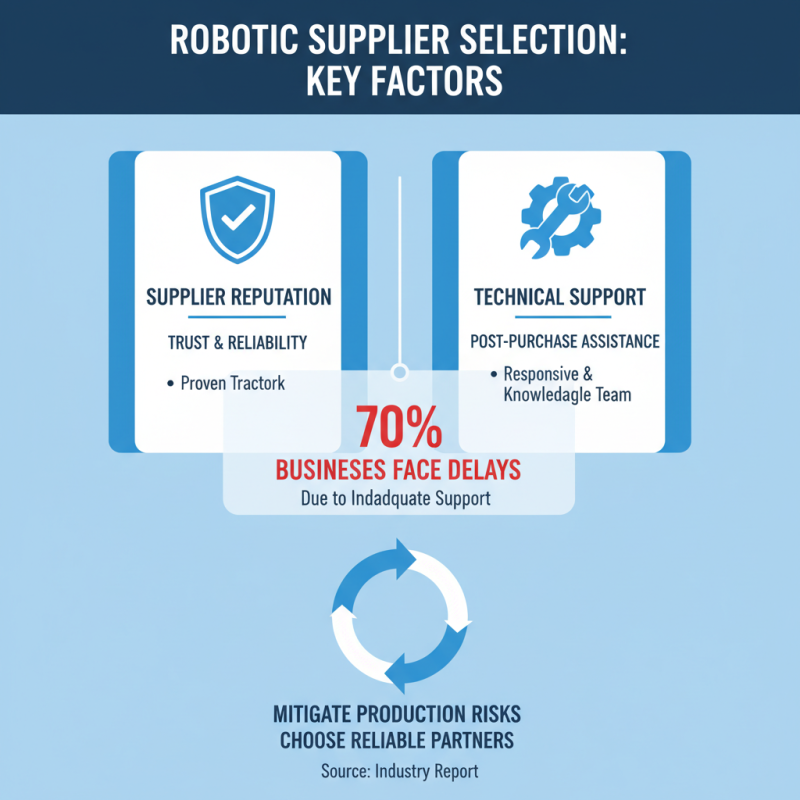
When selecting a robotic machine, the supplier's reputation and their technical support services are crucial considerations. According to a recent industry report, nearly 70% of businesses face production delays due to inadequate technical support. Choosing a reliable supplier can significantly mitigate this risk.
Researching a supplier’s history can reveal their stability and expertise in the field. Look into customer reviews and case studies. A supplier with a strong track record is more likely to deliver quality machines and support. An established provider usually invests in customer training and troubleshooting resources, leading to a smoother operational process.
Tips: Always ask for support response times. This can vary greatly among suppliers. Some may promise immediate assistance, but reality often differs. Consider their approach to warranties and after-sales care, too. A well-defined warranty can protect your investment.
Ensuring the supplier provides ongoing technical training is also essential. Businesses need clarity on post-purchase support. Some suppliers might overlook this, leading to reliance on outdated practices. Regular updates and training sessions enhance efficiency and ensure optimal machine performance.
Plan for Integration and Future Scalability of Robotics Systems
When planning for the integration of robotic systems, businesses must consider their current and future needs. Start by evaluating existing workflows. Identify bottlenecks that robots could address. This analysis lays the groundwork for effective integration. It also highlights areas where automation could offer the most significant improvements.
Scalability is crucial in the long term. As your business grows, so will your demands on robotic systems. Implementing tools that allow easy upgrades is vital. Consider modular designs that allow for expansion. This adaptability ensures that your investment remains relevant.
It's also essential to involve your team in this process. Gather input from operators and managers. Their experience can provide insights into potential challenges. Regularly review these systems to identify areas needing improvement. Robotics integration is not a one-time event. It's a journey that requires ongoing reflection and adjustment.
Investment in Robotic Machines by Industry
Related Posts
-
Top Machining Equipment Trends to Watch in 2026?
-
10 Essential Tips for Choosing the Right Tool CNC Machine
-
What is CNC Machining Manufacturing and How Does It Benefit Your Business
-
Top Benefits of Precision Machining in Modern Manufacturing Processes
-
What is the Best Tool CNC Machine for Beginners?
-

10 Essential Tips for Effective CNC Machine Design Strategies?
We Meet Our Clients Needs.
Meeting the diverse needs of our clients, we have complete machining facilities for everything from single part prototypes to large quantity production. Our small size is one of our biggest assets. It allows us to control costs and maintain the highest of standards.
Quality orientated and delivery always on time or earlier than originally promised.
Strongly recommend MSD.