
How to Choose the Best Steel Cable Tray from China?

Choosing the right Steel Cable Tray from China requires more than comparing prices or checking photographs. The tray must match your cable load, span length, corrosion environment, installation method, and project standards. A factory may offer galvanized steel, hot-dip galvanized steel, stainless steel, or powder-coated finishes. Each option behaves differently beside coastal air, chemical vapors, dust, and standing water.

Electrical educator Mike Holt often emphasizes, “Safety is not optional.” That principle matters when reviewing tray thickness, side-rail strength, rung spacing, bonding points, and load-test records. Ask for material certificates, production drawings, inspection reports, and evidence of compliance with recognized standards such as IEC 61537 or NEMA VE 1. Do not accept vague claims. Request measurable details.

Look closely at the factory, too. Are welds even? Are cut edges protected? Do connectors fit without force? Small details become large problems during installation. A reliable Chinese manufacturer should explain its steel grade, coating thickness, tolerance control, packaging, and testing process clearly. Factory experience matters, but it should be supported by documents and samples.

Cost still matters. However, the cheapest Steel Cable Tray may bring weak coatings, difficult assembly, or early replacement. I have seen buyers focus on unit price and overlook shipping damage, accessories, and labor. That approach is understandable, but incomplete. Compare the complete delivered system, not one tray section alone. Your final choice should balance strength, service life, certification, customization, and dependable after-sales communication.
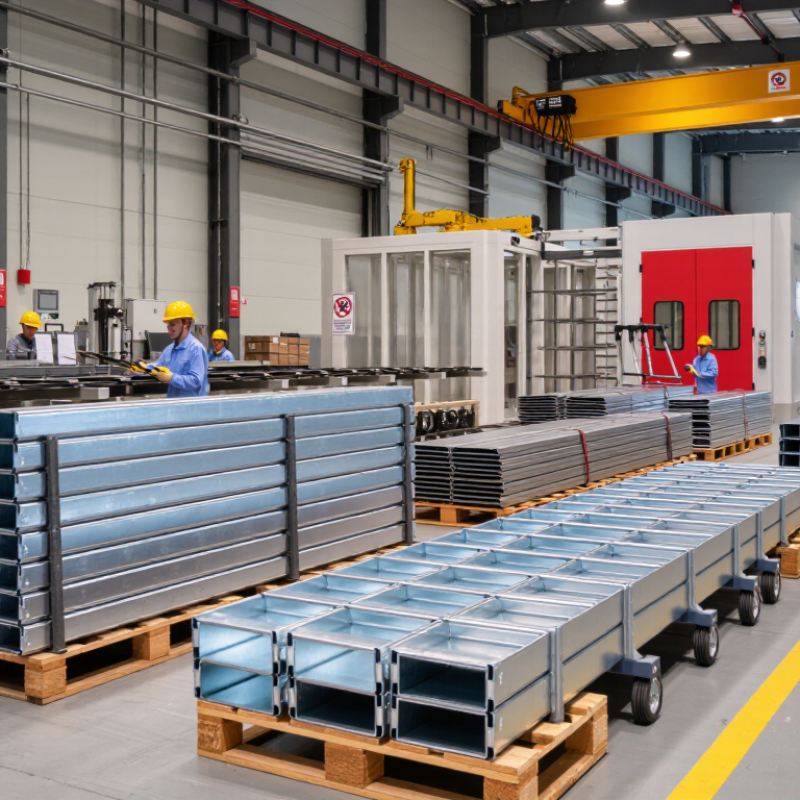
How to Choose the Best Steel Cable Tray from China?

Steel Cable Tray Basics and Key Selection Criteria

How to Choose the Best Steel Cable Tray from China?

Steel Cable Tray Basics and Key Selection Criteria

A steel cable tray supports power, control, and communication cables in industrial and commercial buildings. Its basic parts include side rails, rungs, couplers, covers, and mounting brackets. The tray width should match the cable load, not just today’s installation. Leave practical space for heat release and future cables. Looks can mislead. A thick tray may still bend if its joints are weak or poorly aligned. Check the working load, span rating, steel thickness, and deflection data before ordering.

Material protection matters in real project conditions. Pre-galvanized steel suits many indoor environments with moderate humidity. Hot-dip galvanized steel offers stronger protection for outdoor or damp locations. Stainless steel may be more suitable near salt, chemicals, or frequent washing. Select perforations carefully. Small openings improve support, while larger openings reduce weight and may affect cable stability. Confirm edge finishing, cover fit, and grounding provisions through drawings and samples.

When sourcing from China, request material certificates, coating thickness records, load-test reports, and dimensional inspection results. A dependable manufacturer should explain tolerances clearly and provide installation guidance. Ask for a sample coupler, because connection quality often reveals production accuracy. Packaging also deserves attention; bent side rails create expensive delays. I have seen projects focus on unit price and overlook brackets, freight volume, and replacement parts. That approach often costs more later. Recheck every assumption against the site environment, cable weight, support spacing, and applicable project standards.

How to Define Your Project’s Cable Tray Requirements

How to Choose the Best Steel Cable Tray from China?

How to Define Your Project’s Cable Tray Requirements

Define the tray around the cables, not the other way around. Record every cable’s outside diameter, weight, quantity, voltage, and bending radius. Include future circuits, because expansion becomes expensive after installation. A practical design often reserves 20–25% space, but local codes must control the final figure.

Measure twice.

Next, calculate the tray’s working load and support span. Include cable weight, covers, water, maintenance access, and possible snow or wind exposure. NEMA VE 1-2017 provides guidance for metal cable tray construction, loading, and testing. IEC 61537:2023 addresses mechanical performance and electrical continuity. These references help compare technical offers from Chinese manufacturers without relying on attractive prices alone.

Environmental details can change the specification completely. Specify indoor, coastal, chemical, underground, or high-temperature service. Ask for steel grade, coating thickness, salt-spray evidence, weld quality, and dimensional tolerances. NFPA 70, 2023, Article 392 establishes cable-tray installation and fill requirements in applicable installations. However, a code reference is not a complete design. A neat spreadsheet may still miss thermal grouping, sharp edges, or difficult access. That mistake is common. Request drawings, load calculations, test records, and sample inspections before approving production. Slightly excessive tray width may be wiser than a crowded route, but excessive steel also increases cost and support demands.

How to Compare Steel Types, Finishes, and Structural Designs

How to Choose the Best Steel Cable Tray from China?

Steel type sets the tray’s basic strength, durability, and maintenance needs. Carbon steel suits indoor projects with controlled humidity. For coastal or chemically exposed areas, stainless steel offers stronger corrosion resistance. However, it costs more and may complicate fabrication. Ask the supplier for material certificates, thickness records, and independent test data. Do not rely only on attractive product photos.

The finish must match the actual environment. Hot-dip galvanizing creates a thick zinc layer and works well outdoors. Electro-galvanizing provides a smoother surface, but its protection may be weaker after cutting or scratching. Powder coating adds color and surface protection, yet damaged areas can expose the steel. Check coating thickness, adhesion results, and repair instructions. I once saw a tray rust early because the cut edges received no treatment. Small details matter.

Structural design affects installation speed and long-term safety. Ladder trays improve ventilation and suit many power cables. Perforated trays provide extra support and flexible fixing points. Solid-bottom trays protect smaller control cables from falling dust, but they retain more heat. Compare load capacity at the required span, not at a shorter test span. Review deflection limits, rung spacing, splice strength, and earthing provisions. A heavier tray is not automatically better. Poorly planned supports can still cause bending. Leave room for cable expansion and future additions. Some specifications remain unclear until a real sample is inspected.

How to Evaluate Chinese Manufacturers and Product Quality

Choosing the best steel cable tray from China begins with evaluating the manufacturer, not only the product price. Visit the factory virtually or in person, and inspect cutting, welding, galvanizing, and packing areas. Reliable suppliers should provide material certificates, dimensional drawings, load-test records, and traceable batch numbers. Ask whether production follows recognized standards such as IEC 61537 or project-specific requirements. Clear answers matter more than impressive brochures.

Tips: Request a sample before placing a large order. Check weld continuity, edge smoothness, hole alignment, coating thickness, and actual tray dimensions. Ask for recent inspection reports, not generic templates. A third-party inspection can verify steel grade, finish, loading capacity, and packing condition before shipment.

I once focused too heavily on coating appearance and missed weak weld points under the tray. That mistake changed my inspection method. Now, I compare samples with technical drawings and apply the specified load gradually. Ask how the factory handles rejected parts and corrective actions. A dependable manufacturer should explain its process without avoiding difficult questions. Production photos are useful, but dated evidence is stronger. No checklist is perfect. Leave room for independent testing, especially when trays will support heavy cables, humid environments, or long installation spans.

How to Choose the Best Steel Cable Tray from China?

The chart presents a practical 100-point evaluation model for comparing Chinese steel cable tray manufacturers without relying on brand names. Product performance and corrosion protection receive the highest weighting because they directly affect service life, safety, and installation reliability.

The criteria are aligned with common cable tray evaluation practices, including material verification, load testing, dimensional inspection, protective coating assessment, quality-system documentation, and production traceability. Relevant references may include IEC 61537, ISO 1461, ASTM A123/A123M, and ISO 9001.

How to Verify Compliance, Pricing, and Delivery Terms

Choosing a steel cable tray from China requires evidence, not attractive photographs. Ask for drawings, material grades, load-span tables, and test reports against IEC 61537. Verify coating thickness, corrosion resistance, grounding continuity, and deflection limits. An ISO 9001 certificate supports process control, but it does not prove product compliance. Check the certificate scope, issuing body, and production site. Request a recent batch report with traceable heat numbers. Small details matter.

Pricing should be compared by a complete bill of materials. Include tray thickness, steel grade, surface finish, covers, bends, fasteners, packaging, and inspection fees. The World Steel Association reported 1.019 billion tonnes of crude steel production in China during 2023, nearly 54% of global output. That scale can improve sourcing efficiency, but it does not guarantee a low quotation. Ask whether the price is fixed, indexed, or valid for only a few days. I have seen “cheap” offers become expensive after accessories and export packing were added.

Delivery terms need equal scrutiny. Under Incoterms, clarify who pays inland transport, export clearance, insurance, and destination charges. UNCTAD’s Review of Maritime Transport 2024 states that ships carry over 80% of global merchandise trade by volume. Port congestion can still disrupt a carefully planned shipment. Request a production schedule, inspection date, packing photographs, and a document list before dispatch. Build a realistic buffer. My earlier mistake was trusting a promised sailing date without confirming cargo readiness. That assumption was avoidable.

How to Choose the Best Steel Cable Tray from China? - How to Verify Compliance, Pricing, and Delivery Terms
Evaluation Dimension What to Verify Reliable Evidence or Standard Practical Acceptance Benchmark Commercial Impact Buyer Decision
Product standard Confirm that the tray system is designed, tested, and marked according to the required market standard. IEC 61537 or EN 61537 test report covering cable tray, ladder, fittings, joints, and supports. The report must identify the tested construction, dimensions, material, finish, load class, and test laboratory. Missing or mismatched reports can cause redesign, retesting, or site rejection. Pass only with matching evidence
Base steel grade Check steel grade, thickness, yield strength, and traceability for each production batch. Mill test certificate, heat number, purchase specification, and dimensional inspection record. Common commercial thicknesses are approximately 1.5–2.5 mm; the final value must follow the approved load calculation. Thinner steel may reduce price but can lower load capacity, stiffness, and impact resistance. Match the approved drawing
Surface protection Distinguish pre-galvanized steel, hot-dip galvanized steel, electro-galvanized steel, stainless steel, and painted finishes. ISO 1461 for hot-dip galvanized coatings; ASTM A123/A123M where specified; coating certificate and visual inspection. For hot-dip galvanizing, coating thickness and appearance must comply with the agreed standard and product category; do not accept a generic “galvanized” statement. Hot-dip galvanizing generally costs more than pre-galvanized sheet but is more suitable for harsher exposure. Specify coating before quotation
Load capacity Verify safe working load at the proposed support span, including joint and fitting performance. IEC/EN 61537 load test data, approved span layout, deflection limits, and support spacing. Compare products only at the same width, depth, thickness, support span, load type, and deflection criterion. A low unit price is not economical if additional supports are required on site. Reject unverified load claims
Dimensions and tolerances Check width, side-wall height, length, hole pattern, bend radius, and connection compatibility. Approved shop drawing, dimensional inspection report, sample measurement, and packing list. Typical straight sections are supplied in lengths such as 2 m or 3 m, but the purchase order must define the exact length and tolerance. Incorrect dimensions increase field cutting, waste, labor, and installation delays. Approve drawing before production
Indicative pricing structure Separate material, fabrication, finishing, packaging, documentation, inland transport, freight, insurance, and destination charges. Itemized quotation with currency, unit, quantity, tooling charge, validity period, and Incoterm. For comparison, calculate total landed cost per meter or per complete system rather than comparing tray-only prices. A quotation excluding fittings, supports, export packing, or destination fees is not directly comparable. Compare like-for-like totals
Payment terms Confirm deposit percentage, balance timing, payment method, inspection condition, and bank-charge responsibility. Signed proforma invoice or sales contract with clearly stated payment milestones. A common structure is a deposit at order placement and balance before shipment, subject to negotiated inspection and risk controls. Large upfront payments increase buyer exposure before production and inspection are completed. Link balance to inspection
Incoterms and freight Identify the exact delivery term, named place, export responsibility, freight payer, insurance party, and import-clearance responsibility. Incoterms® 2020 wording, commercial invoice, packing list, bill of lading, and freight quotation. “FOB” and “CIF” are incomplete without the named port; “DAP” and “DDP” require a named destination. Unclear terms can transfer unexpected customs, tax, unloading, or demurrage costs to the buyer. Write the named place in contract
Production lead time Confirm whether lead time starts after deposit, drawing approval, sample approval, or receipt of all technical information. Manufacturing schedule, approved drawings, production milestone dates, and factory capacity confirmation. Standard items may be faster than custom bends, special coatings, tooling, or mixed-container orders; obtain a written calendar. Late approval or custom tooling can extend the schedule beyond the quoted production period. Use milestone dates
Pre-shipment inspection Inspect quantity, dimensions, finish, accessories, labels, packaging, and document completeness before shipment. Inspection checklist, photographs, sampling plan, nonconformity report, and third-party inspection report where required. Inspection criteria must be agreed before production and must reference the approved drawing and purchase order. Early detection is less expensive than destination sorting, rework, or replacement freight. Recommended before balance payment
Packaging and container loading Verify corrosion protection, edge protection, bundle identification, moisture control, and loading stability. Packing specification, loading photos, package marks, gross/net weight, and container loading plan. Bundles should be protected from deformation and abrasion; quantities and bundle marks must match the packing list. Poor packing can cause bent sections, coating damage, moisture staining, and unloading losses. Approve packing method
Technical documentation Collect drawings, installation instructions, load tables, material certificates, coating records, and inspection reports. Controlled document register with revision numbers and document-to-product traceability. Every document must correspond to the purchased model, dimensions, finish, and project revision. Incomplete documentation can delay approval, installation, handover, and future maintenance. Make documents contractual
Total-cost score Evaluate technical compliance, landed cost, schedule reliability, inspection risk, installation cost, and after-sales support together. Weighted bid evaluation sheet approved by engineering, procurement, quality, and logistics teams. A balanced scorecard is safer than selecting solely on the lowest tray price. The lowest initial quotation may produce the highest total cost after freight, supports, rework, delays, and claims. Select the lowest compliant total cost
Recommended comparison formula: Total landed cost = product price + fittings and supports + packaging + inland transport + international freight + insurance + import duty and tax + destination handling + inspection and installation costs.

We Meet Our Clients Needs.

Meeting the diverse needs of our clients, we have complete machining facilities for everything from single part prototypes to large quantity production. Our small size is one of our biggest assets. It allows us to control costs and maintain the highest of standards.

Quality orientated  and delivery always on time or earlier than originally promised.

Strongly recommend MSD.