
How to Choose an Automatic Price Labelling Machine?
Choosing an Automatic Price Labelling Machine is more than comparing speed, price, and appearance. It is a practical decision shaped by product size, packaging materials, production volume, and operator skills. A machine that works well for small boxes may struggle with round bottles or flexible bags. The label must remain straight, readable, and firmly attached from the production line to the customer’s hands.
Real operating conditions matter. Measure the product width, label gap, conveyor height, and available floor space before contacting suppliers. Check whether the machine can handle your smallest and largest packages without frequent adjustments. Print quality also deserves close attention. Barcodes should scan under normal store lighting, not only during a supplier demonstration. Ask for sample tests using your own products, labels, and packaging surfaces.
Speed is important.
However, speed alone can mislead. A fast machine may create waste when its sensors lose accuracy or its applicator needs constant correction. Reliable selection requires evidence, including test results, maintenance records, training support, warranty terms, and spare-part availability. Experienced technicians often notice practical details that brochures omit, such as difficult cleaning points or slow format changes. Still, no supplier can predict every factory condition. Your team should record trial results honestly and question optimistic claims. The best Automatic Price Labelling Machine is not necessarily the most advanced model. It is the one that delivers consistent labelling, manageable upkeep, and dependable performance within your real workflow. A careful choice today can reduce rework, product returns, and avoidable downtime later.
What Is an Automatic Price Labelling Machine?
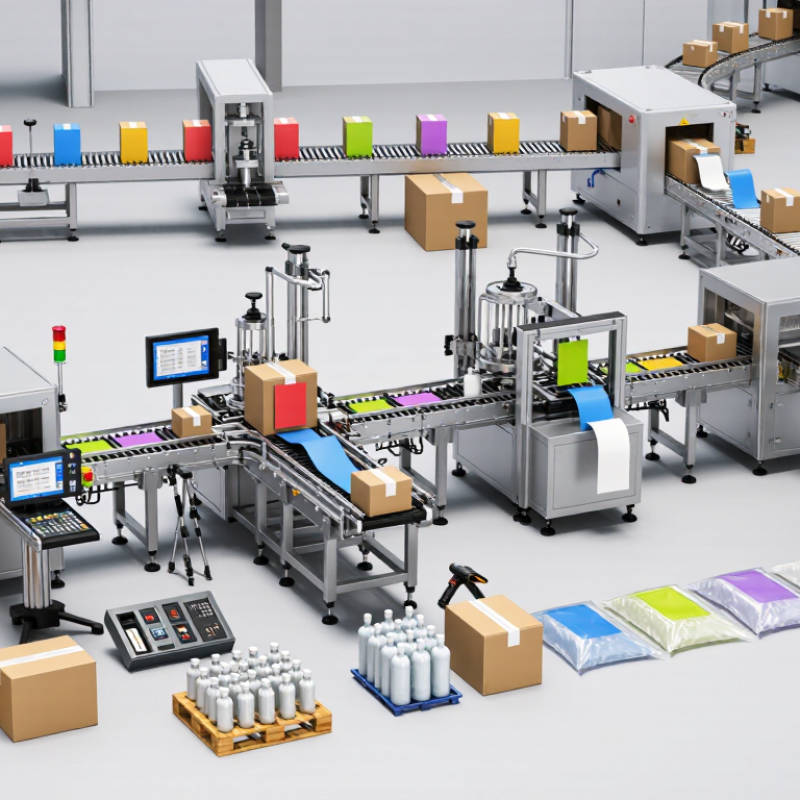
An automatic price labelling machine prints and applies product labels with limited manual handling. It usually combines a product sensor, label printer, control software, and applicator. The system reads an SKU, retrieves the correct price, and places the label on a defined surface. Some models also verify barcodes, weights, dates, or batch information.
The word “automatic” can mislead. A machine is not intelligent by itself. It depends on accurate product data, stable network connections, and carefully adjusted sensors. The 2024 MHI Annual Industry Report states that 55% of supply-chain leaders expect to adopt robotics and automation within one to two years. This supports growing interest in automated labelling, but price accuracy still depends on human oversight. One wrong database entry can produce thousands of incorrect labels.
When choosing equipment, examine label placement accuracy, changeover time, printer resolution, and compatibility with existing inventory software. A practical test should include glossy packaging, uneven containers, and rapidly changing prices. According to Grand View Research’s 2024 labeling machinery analysis, the global labeling machinery market exceeds 3 billion US dollars, reflecting broad industrial demand. However, market size does not prove suitability. A compact retailer may need a simple thermal printer and applicator, while a high-volume facility may require vision inspection and automatic rejection. Test real products before purchase. That step is often skipped.
Which Products and Labels Must the Machine Handle?
How to Choose an Automatic Price Labelling Machine?
The right machine must match the products you actually sell. Rigid cartons, plastic trays, glass jars, and flexible pouches behave differently during labelling. A flat carton usually needs simple top or side application. A curved jar may require controlled wrapping pressure. Produce creates another challenge because its surface can be uneven, damp, or delicate.
Check the label requirements in detail. The machine should handle your label width, length, roll core, and backing material. It should also print clear prices, barcodes, weights, dates, or batch information when needed. Adhesive performance matters greatly. Cold storage, condensation, dust, and rough packaging can weaken an unsuitable label. Test labels on real products, not only clean samples. Small differences can cause large production problems.
Speed should never replace accuracy. Ask whether the applicator can detect gaps, missing products, and skewed labels. Adjustable sensors are valuable when product sizes change during a shift. In my experience, operators often focus on maximum output and overlook changeover time. That is a mistake. A machine running quickly is not useful if staff must constantly clean rollers or correct label positions. Leave room for imperfect conditions, because packaging lines rarely stay perfect.
How to Choose an Automatic Price Labelling Machine?
The machine should support the product categories you process and the label formats required for pricing, weighing, traceability, and barcode scanning. The chart shows common retail label dimensions used for different product applications.
Fresh produce and bakery products often use compact labels, while meat, seafood, deli, and prepared foods commonly require larger labels for weight, price, allergens, ingredients, use-by dates, and barcodes. Before selecting a machine, confirm product dimensions, surface shape, label width and height, roll-core size, application speed, and barcode requirements.
How to Compare Labelling Speed, Accuracy, and Capacity
How to Choose an Automatic Price Labelling Machine?
When comparing labelling speed, measure the complete cycle, not the advertised peak rate. Include feeding, weighing, printing, application, and product spacing. A machine rated for 80 labels per minute may produce fewer during frequent product changes. Speed is not everything. Measure the whole cycle.
Accuracy depends on more than print quality. Check weight readings, price calculations, label position, and barcode clarity under real operating conditions. A reliable machine should detect missing labels and reject incorrect products. Ask for test results using your smallest and largest packages. Small errors become expensive when repeated throughout a shift.
Capacity should match your daily workload and product range. Review the maximum product size, label roll length, printer memory, and hopper space. Consider how quickly operators can reload materials. A large capacity sounds useful, but it may increase cleaning and adjustment time. That gap matters. Choose controls that show faults clearly and support quick calibration. Inspect sample labels after temperature, dust, and repeated handling. A machine can perform well during a short demonstration yet struggle during a long production run. Leave room for future volume, but avoid paying for capacity your facility cannot use.
What Features Improve Operation, Flexibility, and Maintenance?
Choosing an automatic price labelling machine starts with the operator, not the brochure. In daily production, clear prompts, stable label placement, and fast changeovers matter most. A tool-free roll holder reduces awkward handling. Stored recipes should recall label size, print data, speed, and product spacing. That detail prevents repeated setup errors. It is not glamorous.
Flexibility means more than accepting different label widths. Look for adjustable conveyors, modular applicators, barcode verification, and communication with scales or production software.
The 2024 State of Smart Manufacturing Report found that 98% of manufacturers were investing in smart manufacturing technology.
The International Federation of Robotics reported 541,302 industrial robots installed worldwide in 2023, a 10% annual increase.
These figures support connected equipment, but connectivity must serve the shift. Operators still need manual overrides and readable fault messages. I have seen advanced systems lose time because a sensor sat behind a guard.
Maintenance features decide whether a machine remains useful after installation. Choose accessible belts, diagnostic screens, replaceable wear parts, and suitable protection against dust or moisture. Preventive alerts should track printhead condition, label-roll status, and application errors. Access control and secure updates also deserve attention. No machine is perfect. Test changeovers with small labels, cold hands, and a rushed operator; demonstrations can look unrealistically smooth. Require documented uptime methods, spare-part lead times, and technician training before purchase.
How to Assess Costs, Safety, and Supplier Support
How to Choose an Automatic Price Labelling Machine?
Cost assessment should begin with total ownership, not the purchase price. Include installation, operator training, labels, ribbons, electricity, maintenance, and rejected packs. Cheap is not cheap. A machine running at high speed may waste materials when sensors drift or labels wrinkle. Request a sample-based test using your actual products, package shapes, and label sizes. Measure application accuracy, changeover time, and output during a full shift. My first estimate was too optimistic because it ignored cleaning and daily adjustments.
Safety deserves practical inspection. Look for guarded moving parts, accessible emergency stops, stable frames, and clear isolation procedures. Check whether operators can remove jammed products without reaching near rollers or cutters. Ask how the machine behaves when a label roll ends or a sensor fails. A safe system should stop predictably, not simply display an error message. Training records, risk assessments, and maintenance instructions should be easy to understand. Ask for evidence.
Supplier support often decides whether the machine remains productive after installation. Confirm response times, spare-part availability, warranty exclusions, software assistance, and technician coverage. Request references from facilities with similar volumes and packaging conditions. A supplier should explain realistic limits, not promise perfect performance. That matters. Also test communication before purchasing: send a technical question and assess the clarity of the reply. If support depends on one specialist, consider the risk of holidays, turnover, or delayed parts. Supplier claims still require verification.
We Meet Our Clients Needs.
Meeting the diverse needs of our clients, we have complete machining facilities for everything from single part prototypes to large quantity production. Our small size is one of our biggest assets. It allows us to control costs and maintain the highest of standards.
Quality orientated and delivery always on time or earlier than originally promised.
Strongly recommend MSD.