What Is CNC Machining in Manufacturing?
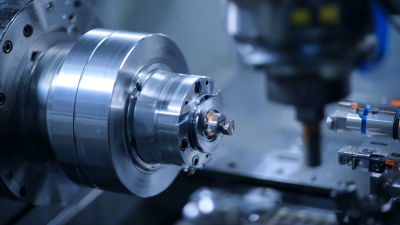
CNC machining manufacturing turns digital designs into accurate physical parts through programmed cutting tools. A machinist loads a workpiece, selects the tool path, and checks dimensions against the drawing. The machine then removes material in controlled steps. Think of an aluminum block becoming a bracket, with each pocket and hole positioned to a defined tolerance. The process is repeatable, but not automatic in every sense. Tool wear, fixture setup, and measurement still matter.
The broader shift toward automated production is clear. The International Federation of Robotics reported 4.28 million industrial robots operating in factories worldwide in 2023. That figure describes industrial robots, not CNC machines, so it should not be mistaken for a CNC adoption count. It does show how digital control is reshaping factory work. CNC machining fits into this change by connecting design data with predictable cutting operations, from one-off prototypes to production batches. Yet “precision” is not a magic setting. A poor drawing or unstable setup can produce consistently wrong parts. That point is easy to overlook. This guide explains what CNC machining is, how the process works, common machine types, materials, and the factors that influence accuracy, cost, and production time. It also considers where CNC excels—and where another manufacturing method may be a better choice.
Definition and Role of CNC Machining in Manufacturing
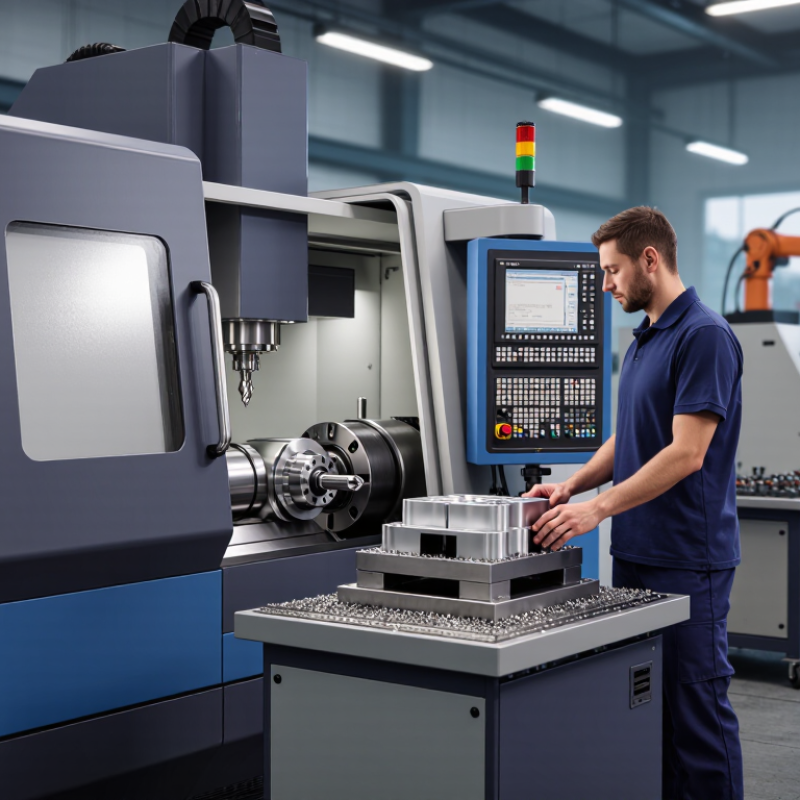
CNC machining in manufacturing is a subtractive process controlled by a computer program. Cutting tools remove material from a solid workpiece to create a specified shape. The machine may mill, turn, drill, or perform several operations in sequence. Common materials include aluminum, steel, plastics, and other machinable substances. The program guides tool movement, speed, and cutting depth, while operators prepare the setup and check the result.
Its role is to produce parts with repeatable dimensions and detailed features, from early prototypes to production components. A milled housing, for example, may need flat mounting faces, accurately placed holes, and a clean internal cavity. CNC equipment can make these features consistently when the workpiece, tooling, and program are properly managed. But the machine does not guarantee a good part on its own. Tool wear, heat, poor clamping, or an incorrect setup can affect dimensions and surface finish. Careful inspection still matters. So does judgment. Choosing a suitable process often involves trade-offs between material use, machining time, and the tolerances a part truly needs. It is easy to over-specify a drawing; that can add cost without improving how the component works.
How CNC Machines Convert Designs into Manufactured Parts
CNC machining turns a digital design into a physical part through controlled, repeatable movement. The process begins with a CAD model, which defines dimensions, holes, curves, and tolerances. CAM software then converts that model into toolpaths. These paths become machine instructions, often called G-code. The controller reads each command and moves cutting tools along precise X, Y, and Z axes.
A machinist still matters. They select the material, secure the workpiece, choose cutting tools, and check speeds and feeds. A metal block may sit beneath a rotating cutter, while chips fall into a tray. The machine removes material layer by layer. After machining, gauges or coordinate-measuring equipment verify critical dimensions. A small setup error can make an accurate program produce a poor part.
Deloitte’s 2023 Smart Manufacturing and Operations Survey found that 86% of manufacturers expect smart manufacturing to become a major competitiveness factor within five years. CNC machining supports that shift through repeatable digital instructions and recorded process data. Yet automation is not flawless. Tool wear, vibration, heat, and incorrect workholding can still damage results. The World Economic Forum’s Future of Jobs Report 2023 also estimated that 44% of workers’ core skills could change by 2027. That finding matters on the shop floor. Operators need software knowledge, measurement skills, and practical judgment, not button-pressing habits. Mistakes remain useful teachers, although scrap is an expensive instructor.
Key Components of a CNC Machining System
CNC machining is manufacturing controlled by programmed instructions rather than constant manual movement. Its accuracy depends on several connected components. The controller reads G-code and converts it into coordinated electrical signals. Servo motors then move the machine along X, Y, and Z axes. Feedback sensors check position and correct small errors. Without that feedback, a tool may drift by a few microns during long production runs.
The spindle holds and rotates the cutting tool. Its speed must match the material, tool diameter, and cutting depth. The tool holder transfers torque while maintaining rigidity. A weak connection can create vibration, poor surface finish, and early tool failure. The workholding system, including fixtures or chucks, keeps the material stable. Coolant delivery reduces heat and clears chips from the cutting zone. The machine frame absorbs force. It is easy to overlook this part. A rigid frame often matters more than a faster spindle.
Tips: Check the whole system, not only the controller. Deloitte’s 2024 Smart Manufacturing and Operations Survey found that 86% of manufacturers expect smart manufacturing to become a major competitiveness driver within three years. That expectation makes data collection valuable. Record spindle load, tool life, inspection results, and downtime. NIST research on smart manufacturing also emphasizes interoperable data and reliable measurement. Still, digital monitoring is not magic. Poor sensor calibration can produce confident but incorrect decisions. Operators should verify software readings with physical inspections, especially after setup changes or unusual vibration.
Common CNC Machining Operations and Materials
What Is CNC Machining in Manufacturing?
Common CNC Machining Operations and Materials
CNC machining removes material from a solid workpiece using programmed cutting tools. Milling rotates a cutter while the workpiece is secured, making slots, pockets, and flat faces. Turning spins the workpiece against a cutting tool, producing round features such as shafts and bushings. Drilling creates holes, while tapping adds internal threads. Some parts need several operations. A milled aluminum housing, for example, may be drilled and tapped before its edges are deburred. Small details matter.
Material choice affects cutting speed, tool wear, finish, and cost. Aluminum is relatively light and easy to machine, making it useful for housings and brackets. Steel offers strength, though harder grades can wear tools faster. Brass cuts cleanly and suits fittings or small precision parts. Engineering plastics, such as acetal, are lightweight but may deform under excess heat or clamping pressure. Titanium can provide high strength at low weight, but it demands careful heat management and slower cutting.
In a workshop, operators watch chips, sound, and surface finish for signs that settings need adjustment. A sharp, continuous chip may be normal; discoloration or chatter deserves attention. There is no single best material or operation. Even a sound process can leave a finish rougher than expected, so prototypes and inspection help reveal what a drawing cannot. A little uncertainty remains.
Industrial Applications and Factors Affecting Part Quality
What Is CNC Machining in Manufacturing?
Computer numerical control machining removes material through programmed cutting movements. It produces accurate parts for automotive systems, industrial equipment, medical instruments, and aerospace assemblies. In a real production cell, a metal block becomes a housing, bracket, or shaft within minutes. The machine follows digital instructions, but skilled supervision still matters.
Part quality depends on more than machine accuracy. Tool wear can leave burrs, rough walls, or incorrect dimensions. Cutting speed, feed rate, depth, and coolant flow must suit the material. Small changes matter. A loose fixture may shift a workpiece during milling. Heat can also expand the part and distort measurements. Careful operators check critical features with gauges, probes, or coordinate measuring equipment.
Programming errors create another risk. A perfect drawing cannot rescue poor toolpaths. Production teams should review simulations, secure the workpiece, and inspect the first completed part. They should monitor vibration and listen for unusual cutting sounds. No setup is perfect. A smooth surface may still hide an internal dimensional problem. It is tempting to trust automated inspection completely, yet measurement methods also require calibration and judgment. Consistent records help identify drift before rejected parts fill a production tray.
What Is CNC Machining in Manufacturing? — Industrial Applications and Factors Affecting Part Quality
CNC machining is a subtractive manufacturing process in which computer-controlled tools remove material from a workpiece to produce a specified geometry. The examples below summarize common industrial uses and practical factors that influence part quality.
| Industrial Application | Typical Parts | Common Materials | Relevant CNC Processes | Quality Considerations |
|---|---|---|---|---|
| Aerospace | Structural brackets, housings, fittings, and precision components | Aluminum alloys, titanium alloys, stainless steel | Multi-axis milling, turning, drilling, and boring | Dimensional traceability, stable fixturing, tool condition, and inspection of critical features are important. Thin walls can distort during cutting. |
| Automotive and transportation | Engine and transmission components, shafts, manifolds, and prototypes | Aluminum, steel, cast iron, engineering plastics | CNC turning, milling, drilling, tapping, and production machining | Repeatability, cycle-to-cycle process control, correct datum selection, and control of burrs affect fit and assembly. |
| Medical equipment | Instrument components, equipment housings, and non-implantable device parts | Stainless steel, titanium, aluminum, medical-grade polymers | Precision milling, turning, and small-feature machining | Material documentation, surface finish, edge condition, cleaning requirements, and feature inspection depend on the device design and applicable requirements. |
| Industrial machinery | Fixtures, pump components, gears, housings, and machine components | Carbon steel, alloy steel, aluminum, bronze, cast iron | Milling, turning, boring, threading, and reaming | Alignment of functional surfaces, hole position, thread quality, and adequate rigidity during machining influence assembly and operation. |
| Electronics and instrumentation | Enclosures, heat sinks, sensor mounts, and connector features | Aluminum, copper, stainless steel, engineering plastics | Fine milling, drilling, tapping, and pocket machining | Small features, thin sections, surface finish, and chip removal require suitable tooling and careful workholding. |
| Energy and fluid systems | Valve bodies, fittings, pump parts, and turbine-related components | Stainless steel, alloy steel, nickel alloys, copper alloys | Turning, milling, deep-hole drilling, and boring | Material machinability, tool wear, sealing surfaces, and inspection of internal passages can affect performance and service life. |
Factors affecting part quality: material properties and condition, machine and tool accuracy, tool wear, cutting parameters, workholding rigidity, thermal effects, part geometry, programming, and measurement methods all contribute. Achievable tolerances and surface finishes vary with the material, feature size, process, equipment, and inspection plan; specify requirements on the engineering drawing.
Related Posts
-
Revolutionizing Industries: The Impact of CNC Machining and Manufacturing on Modern Technology
-
What is CNC Machining Equipment and How Does It Work Explained
-
Why Is CNC Machining Precision Essential for Modern Manufacturing?
-
Top 10 Benefits of CNC Machining for Modern Manufacturing Techniques?
-
How to Choose the Best CNC Machining Equipment for Your Needs?
-
Top 10 Benefits of CNC Machining and Manufacturing for Businesses?
We Meet Our Clients Needs.
Meeting the diverse needs of our clients, we have complete machining facilities for everything from single part prototypes to large quantity production. Our small size is one of our biggest assets. It allows us to control costs and maintain the highest of standards.
Quality orientated and delivery always on time or earlier than originally promised.
Strongly recommend MSD.