
7 Digital Crimper Buying Tips for Global Buyers?
Buying a Digital Crimper for international production requires more than comparing prices. Buyers must examine crimp force, cycle speed, terminal compatibility, control accuracy, and service support. A machine may perform perfectly in a showroom but struggle beside a dusty assembly line. Real production conditions reveal the truth.
Cable-processing consultant Dr. Elena Fischer explains, “A reliable Digital Crimper should make quality visible, repeatable, and easy to verify.” Her advice highlights a practical concern. Digital displays are useful, but recorded data matters more. Ask whether the machine stores force curves, detects incomplete crimps, and supports traceable quality checks. Confirm the available tooling range before placing an order. A beautiful specification sheet cannot replace suitable dies.
Global buyers also need to consider operator training, replacement parts, calibration procedures, electrical requirements, and technical response times. Regional support can prevent a minor sensor fault from stopping an entire shift. Ask for sample crimps using your actual terminals and wire sizes. Inspect pull-test results, crimp height, insulation support, and consistency across repeated cycles.
The cheapest option can look attractive. It may become expensive after downtime, tooling changes, or delayed support. Import duties, packaging standards, warranty terms, and delivery conditions deserve careful review. No buying checklist is perfect. Some suppliers provide excellent documents but limited practical guidance. Others offer strong machines with weak communication. This guide presents seven focused Digital Crimper buying tips, helping global buyers compare performance, reliability, documentation, and long-term operating value with clearer judgment.
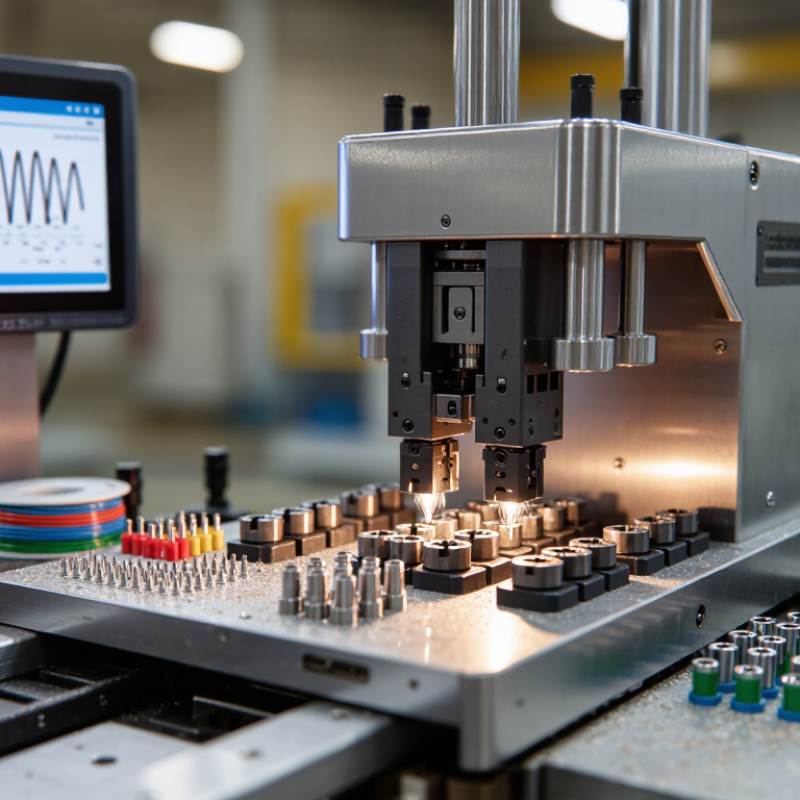
Understanding Digital Crimper Types and Global Applications
Digital crimpers differ by force, control, and working environment. Handheld models suit occasional repairs and low-volume assembly. Bench-top units provide steadier pressure for repeated terminal work. Hydraulic crimpers handle thicker cables, while pneumatic models support faster production. Programmable digital crimpers can record force, cycle counts, and error signals. These functions help factories monitor quality across different shifts.
Tip: Match the crimper to the terminal material, cable size, and expected daily workload. A tool rated for large conductors may perform poorly on small signal wires. Check the die range carefully. Some tools accept interchangeable dies, but changing them can slow production. In solar installations, outdoor controls matter. Look for sealed displays, stable readings, and corrosion-resistant parts. In automotive workshops, compact designs and clear status lights are often more useful than maximum force.
Global applications require practical checking beyond the product page. Confirm voltage compatibility, plug format, language options, spare dies, and service support. Request calibration records and test samples before large orders. A reliable supplier should explain force accuracy and inspection methods without vague claims. I have found that a beautiful digital screen does not guarantee a consistent crimp. Poorly adjusted dies still create loose connections.
Tip: Inspect sample crimps under magnification and perform a gentle pull test. Document the result. Small differences may reveal operator training needs, worn dies, or an unsuitable crimper type.
Evaluating Crimping Performance, Accuracy, and Compatibility
7 Digital Crimper Buying Tips for Global Buyers?
A digital crimper should deliver consistent force, not merely display attractive numbers. Check its force range, sensor resolution, and repeatability across several test cycles. A reliable model records each crimp and flags abnormal pressure or incomplete compression. Small differences matter when terminals must withstand vibration, heat, and repeated flexing.
Confirm the crimper’s accuracy with traceable calibration documents. Ask whether calibration remains stable after thousands of operations. Its display should be readable in a busy workshop, even when operators wear gloves. Data export is useful for audits, production records, and supplier checks. However, software features can distract from weak mechanical performance.
Compatibility requires careful inspection. Match the tool with terminal materials, wire sizes, die profiles, and regional electrical standards. Verify whether replacement dies are available locally and clearly marked. Check input voltage, charging options, language settings, and technical support before importing equipment. A tool that performs well in one factory may fail with another terminal design.
Do not trust one sample crimp.
Request test pieces and inspect cross-sections when possible. Measure pull-out strength, compression height, and conductor damage. A perfect first result can hide inconsistent pressure later. I would also question vague claims about “high precision.” They need measurable limits and test conditions. Even experienced buyers can overlook maintenance intervals, because production speed often receives more attention. That oversight can reduce accuracy before anyone notices.
7 Digital Crimper Buying Tips for Global Buyers
Evaluating crimping performance, accuracy, and compatibility
The chart shows practical purchasing benchmarks across common wire sizes. As conductor size increases, the required pull-out force generally rises, while a reliable digital crimper should maintain consistent crimp height, repeatability, cycle control, and die compatibility throughout its stated operating range. Buyers should verify these values against applicable connector and wiring standards before purchase.
Checking Power Requirements, Certifications, and Regional Standards
For global buyers, a digital crimper must match the local power system.
Check input voltage and frequency before comparing features. A 110-volt tool may fail on a 220-volt circuit. Confirm rated current, plug type, fuse needs, and duty cycle. Ask whether the display stays accurate during voltage changes. Small mismatches can damage equipment. I learned this after an otherwise suitable tool required an unexpected transformer.
Certification claims need clear evidence.
Request certificate numbers, laboratory test reports, and declarations of conformity. Check whether approval covers the complete crimper, not only its power adapter. Regional standards can differ across Europe, North America, Australia, and other markets. A familiar certification mark is not enough. Verify the issuing body and test scope. Keep translated manuals and safety instructions available for local operators. Good documentation supports safer installation and more reliable purchasing decisions.
Use seven practical checks.
Check voltage. Confirm frequency. Match the plug.
Review current limits. Verify certifications. Compare regional standards.
Inspect the technical file.
Ask about replacement parts and calibration support, too. That detail is often overlooked. A supplier may provide accurate documents, yet shipment versions can differ. Request photos of the rating plate before payment. No checklist is perfect. Recheck the final specification against the destination country, warehouse circuit, and planned workload.
Comparing Build Quality, Controls, Maintenance, and Total Cost
7 Digital Crimper Buying Tips for Global Buyers
Build quality should be judged beyond a polished metal cover. Inspect the frame, guide rails, die holders, and cable feed path. A rigid frame reduces vibration during repeated crimping. Feel the frame. Ask for cycle-test records and sample crimps from your own terminals. Burrs, uneven pressure, or loose dies can signal weak machining. In one evaluation, the display looked advanced, but the feed rollers slipped after several hours. Appearance was misleading.
Controls should support operators with different skill levels and languages. A clear touchscreen, physical emergency stop, password access, and saved programs can reduce setup errors. Check whether settings are measured in familiar units. Confirm voltage, frequency, plug type, and software support before shipment. Small mismatches create expensive delays. Request an operating video, not only a product brochure.
Maintenance affects the real purchase price. Look for accessible lubrication points, replaceable blades, standard sensors, and written maintenance intervals. Ask how quickly technical support responds across time zones. Keep spare dies and wear parts available locally when possible. Measure the waste. A machine that rejects two percent of terminals may cost more than one with a higher purchase price. Calculate energy use, labor, downtime, freight, training, and service fees over three years. My own comparisons are imperfect because production volumes change, but that uncertainty should be recorded rather than ignored. A low quote is only one line in the cost sheet.
7 Digital Crimper Buying Tips for Global Buyers? - Comparing Build Quality, Controls, Maintenance, and Total Cost
| No. | Buying Tip | Key Data to Compare | Practical Benchmark | Global Buyer Checklist | Total-Cost Effect |
|---|---|---|---|---|---|
| 1 | Assess Build Quality | Frame material, platen alignment, tooling hardness, moving-part rigidity, and enclosure protection. | A rigid steel frame, accurately guided platen, replaceable wear parts, and guarding around pinch points are preferable for repeated production use. | Request frame drawings, tooling material details, safety-guard information, and photos of the internal mechanism. | Higher purchase price can reduce alignment problems, premature wear, and unplanned downtime. |
| 2 | Match Capacity to the Cable | Compatible conductor cross-section, terminal range, crimping force, die size, and allowable cable insulation diameter. | Select a machine whose rated range covers the smallest and largest terminals used in production, without operating continuously at its limit. | Verify conductor material, terminal geometry, die availability, sample-crimp results, and applicable wire-processing standards. | Correct sizing lowers scrap, tooling changes, rejected connections, and the need to purchase a second machine. |
| 3 | Compare Digital Controls | Display readability, force or position adjustment, password protection, recipe storage, cycle counter, alarms, and data output. | A clear digital interface with repeatable settings, fault messages, and stored recipes is more useful than a display that only shows a basic cycle value. | Check language options, metric/imperial settings, user-access levels, calibration records, and whether settings can be backed up. | Better controls improve setup consistency and traceability, potentially reducing operator error and rework. |
| 4 | Check Electrical Compatibility | Rated voltage, frequency, phase, plug type, power consumption, grounding requirements, and protection against voltage variation. | Machines should be ordered for the destination supply, such as 100–120 V or 220–240 V systems and the local 50/60 Hz frequency, where applicable. | Confirm the nameplate, wiring diagram, plug configuration, required circuit protection, import documentation, and local electrical compliance. | Correct specification avoids transformer costs, installation delays, electrical damage, and warranty disputes. |
| 5 | Evaluate Maintenance Needs | Lubrication points, cleaning frequency, calibration interval, wear-part replacement, fault diagnosis, and service access. | Prefer tool-free or clearly documented access to dies, sensors, guards, and routine cleaning areas; follow the supplier's service schedule. | Request a maintenance manual, spare-parts list, recommended lubricants, calibration procedure, and remote-support response time. | Simple maintenance reduces labor hours and the risk of extended downtime caused by unavailable technicians. |
| 6 | Verify Safety and Quality Control | Two-hand or guarded operation, emergency stop, overload protection, crimp-height control, inspection method, and documentation. | The machine should prevent or limit unsafe access to the crimping zone and support consistent inspection using approved gauges or test procedures. | Ask for risk-assessment documents, conformity declarations where required, factory test records, and sample crimp pull-test results. | Strong safety and quality controls can reduce accidents, product returns, liability exposure, and inspection costs. |
| 7 | Calculate Total Cost of Ownership | Purchase price, tooling, freight, duties, installation, training, electricity, spare parts, labor, downtime, and resale value. | Compare the five-year cost rather than the machine price alone: purchase and logistics + operating cost + maintenance + expected downtime. | Obtain a delivered-cost quotation, warranty terms, spare-part lead times, training inclusions, and estimated annual service requirements. | The lowest initial price may cost more if it requires frequent tooling replacement, specialist service, or longer downtime. |
Purchasing note: Performance figures should be confirmed with production samples, technical drawings, and a written quotation because capacity, cycle rate, tooling life, and service costs vary by cable, terminal, operating conditions, and configuration.
Verifying Suppliers, Warranty Coverage, Shipping, and After-Sales Support
A reliable digital crimper supplier should provide more than attractive product photos. Request business registration, factory evidence, test records, and a live demonstration using your cable size. Ask for serial-number tracking and calibration details. Ask for evidence.
Warranty wording deserves careful inspection.
Confirm coverage length, included parts, labor, battery performance, and repair limits. Clarify who pays return freight and whether replacement jaws are stocked locally. The warranty should state response times, not simply “technical support available.”
I once treated a long warranty as proof of quality; that was a weak assumption. Service conditions mattered more.
Shipping can quietly increase the final cost.
The World Bank’s 2023 Logistics Performance Index reported that only about 60% of shipments reached destinations within expected timeframes.
Request a written delivery schedule, shipping term, insurance responsibility, tracking method, and customs documents.
The 2024 DHL E-Commerce Trends Report found that 81% of shoppers may abandon purchases without preferred delivery options, showing how strongly delivery expectations influence buying decisions.
For industrial tools, ask about shock-resistant packaging and moisture protection. After-sales support should include digital manuals, troubleshooting videos, spare-jaw availability, and a named contact across time zones. Test the support channel before payment. A fast pre-sale reply may not predict post-sale service.
Article Source:
We Meet Our Clients Needs.
Meeting the diverse needs of our clients, we have complete machining facilities for everything from single part prototypes to large quantity production. Our small size is one of our biggest assets. It allows us to control costs and maintain the highest of standards.
Quality orientated and delivery always on time or earlier than originally promised.
Strongly recommend MSD.