Top Heat Lamination Machine Price Guide for Global Buyers
Buying a heat lamination machine across borders can feel simple until quotations start arriving. The advertised heat lamination machine price rarely tells the complete purchasing story. A supplier may list a compact desktop model at $1,200, while an industrial roll machine exceeds $20,000. Capacity, film width, heating zones, automation, and certification can change the final figure sharply. Freight, insurance, installation, spare rollers, and local taxes also deserve a place in the budget.
Small details matter. A machine rated for 330 millimeters cannot replace a 1,600-millimeter production line. This guide compares price ranges through practical buying experience and measurable specifications. It considers equipment for print shops, packaging plants, schools, and commercial finishing departments. Reliable evaluation begins with the application, not the cheapest quotation. Buyers should record daily output, substrate thickness, film type, working width, and available power. They should also request test samples before approving a purchase.
A glossy brochure cannot reveal every operating limitation. Supplier reputation, warranty response, training, and parts availability can protect production after delivery. Independent certifications may support confidence, but their scope should be checked carefully. Prices in this guide are indicative because exchange rates and regional logistics change continuously. Some estimates may remain imperfect. That is worth admitting. Use verified quotes, landed-cost calculations, and written service terms before making a final decision. The right machine is not always the lowest-priced machine. It is the one that delivers consistent output without creating hidden downtime.
Classify Hot Laminators by Format, Throughput, and 25–250 µm Film
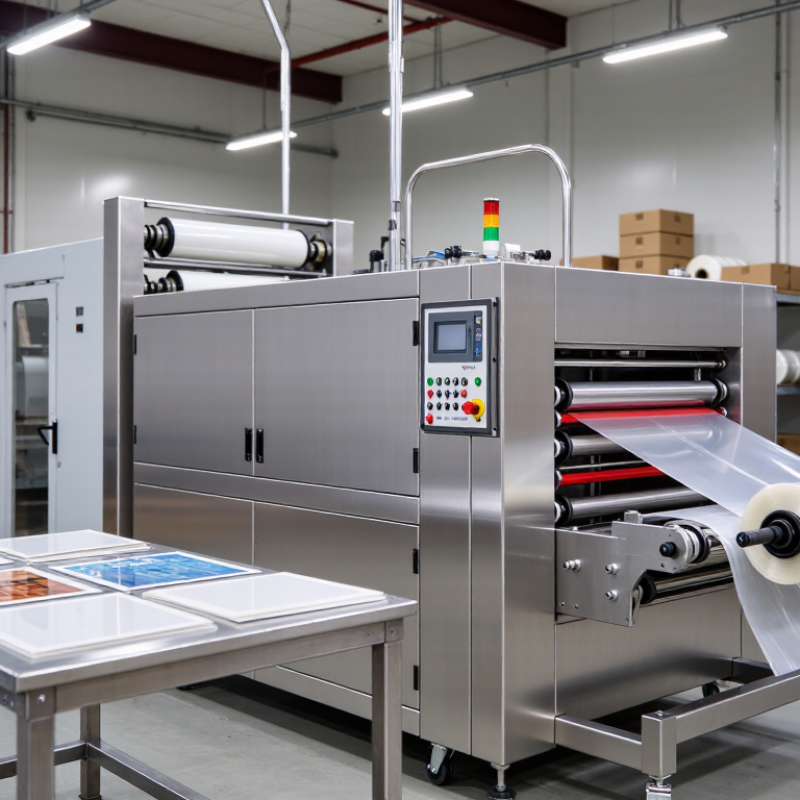
Global buyers should classify hot laminators by format before comparing prices. Desktop A3 machines suit short runs, menus, certificates, and small packaging samples. Wide-format units handle posters, boards, and signage up to roughly 1.6 metres. Industrial systems often exceed two metres and support continuous production. Smithers projects the flexible packaging market will surpass US$300 billion by 2028, increasing demand for stable film finishing and reliable heat control.
Throughput changes the investment sharply. Entry machines usually run around 1–5 metres per minute. Mid-range systems commonly reach 5–20 metres per minute. High-output lines may exceed 20 metres per minute, but only with consistent feeding and tension control.
Film thickness also matters. For 25–75 µm film, precise temperature control prevents wrinkles and edge curl. Films from 80–150 µm need stronger nip pressure. Materials from 151–250 µm may require slower speeds and longer heating zones. The technical sheet deserves more attention than the headline price.
Public procurement benchmarks often place compact hot laminators near US$1,500–4,000. Wide-format equipment may range from US$8,000–30,000, while industrial systems can exceed US$50,000. PMMI’s packaging machinery research repeatedly highlights labour efficiency and automation as major buying drivers. Still, these figures are imperfect. Installation, voltage, spare rollers, ventilation, and operator training can alter the final cost considerably. A cheap machine can become expensive after one difficult production month.
Set Price Bands: $100–$1,000 Pouch Units vs. $1,000+ Roll Systems
Heat lamination machine prices divide sharply into two practical bands: $100–$1,000 for pouch units, and $1,000+ for roll systems. Entry-level pouch machines usually suit offices, schools, small print shops, and short production runs. A $180–$400 unit may handle A4 or A3 pouches, with simple temperature controls and modest cycle speeds. Higher-priced pouch models often add wider openings, stronger rollers, and faster warm-up times. They still require manual feeding.
Roll systems demand more capital. Basic models above $1,000 can laminate continuous film for menus, posters, labels, and short packaging runs. Prices rise with working width, automatic feeding, digital controls, cooling rollers, and motorized rewinding. PMMI’s recent packaging machinery outlook identifies labor reduction, automation, and total ownership cost as major buying factors. Those factors matter more than the purchase price alone.
Industry reports also show why demand remains active. Smithers’ flexible packaging forecasts project continued growth through 2028, supported by lightweight formats and improved material efficiency. Grand View Research valued the global flexible packaging market at over $260 billion in 2023. That figure does not equal lamination-machine sales, but it signals a large operating environment. Buyers should calculate film waste, electricity, maintenance, and operator time. A cheap pouch unit can become expensive when jams repeat. I have seen buyers underestimate that detail. Capacity claims also deserve testing with actual film, not only supplier samples.
Top Heat Lamination Machine Price Guide for Global Buyers
Indicative new-equipment price bands in USD, comparing pouch laminators with roll-fed systems. Prices exclude freight, taxes, installation, and optional accessories.
Pouch units generally suit occasional or small-format work and typically cost between $100 and $1,000. Roll systems begin around $1,000 and rise with working width, automation, heating control, and production throughput.
Calculate Total Cost from 80–250 µm Film, Energy, Labor, and Maintenance
A realistic lamination budget starts with the film, not the machine price. Film thickness usually ranges from 80 to 250 µm, and thicker film raises material cost and heating time. Record the film price per square meter, then multiply it by the daily laminated area. Add a waste allowance of 3–8% for trimming, setup, wrinkles, and rejected sheets. The percentage is not fixed.
Energy costs need measurement. A machine may use more power during warm-up than during steady production. Place a meter on the equipment, record kilowatt-hours for one complete shift, and divide the result by finished square meters. Include idle heating, compressor use, and unexpected stops. Small gaps become expensive over several months.
Labor should include loading, alignment, inspection, cleaning, and roll changes. A slower machine can create higher labor costs, even when its purchase price looks attractive. Maintenance includes rollers, temperature sensors, belts, cleaning materials, and planned service time. Keep a replacement reserve for parts with uncertain lifespans. My practical costing sheet uses this formula: film plus energy plus labor plus maintenance plus waste, divided by saleable output. Machine depreciation should be added separately over its expected working years. Initial estimates are often too optimistic. A short trial with 80 µm and 250 µm film can reveal real heating delays, output loss, and operator effort before a large purchase.
Compare 80–160°C Heat, 1–30 m/min Speed, and Working Width
Heat lamination machine prices depend heavily on temperature, line speed, and working width. A practical comparison starts with the operating range: 80–160°C supports common film, paper, and foil structures. However, higher heat does not automatically improve bonding. Excessive temperature can curl thin films, distort printed layers, or increase energy use.
Speed changes the investment sharply. Entry-level systems may run near 1–5 m/min, while production models can reach 30 m/min. Real output is usually lower after warm-up, roll changes, and quality checks. PMMI’s 2024 State of the Industry report identifies labor pressure, automation, and energy efficiency as key packaging equipment purchasing factors. These issues make stable speed more valuable than a headline maximum. Measure twice.
Working width also affects price, floor space, and material waste. A 600 mm machine may suit narrow packaging work, while 1,300–1,600 mm equipment supports wider sheets and flexible webs. Wider rollers require stronger frames and more precise pressure control. Smithers’ 2024 flexible packaging forecast indicates continued global growth, near 3% annually in several market segments, increasing demand for adaptable converting equipment. My first price comparison was too shallow; I focused on speed and ignored usable width. That mistake can create expensive trim waste. Buyers should compare effective working width, not only the advertised roller width, and request energy data at their target temperature and speed. Real conditions matter.
Top Heat Lamination Machine Price Guide for Global Buyers - Compare 80–160°C Heat, 1–30 m/min Speed, and Working Width | Machine Configuration | Typical Heating Range | Operating Speed | Working Width | Suitable Materials | Typical Power Input | Indicative Price Range (USD) | Common Buyer Segment |
| Compact Manual Laminator | 80–120°C | 1–5 m/min | 320 mm | Documents, menus, photographs, small prints | 0.8–1.5 kW | $250–$900 | Offices, copy shops, schools |
| Entry-Level Roll Laminator | 90–130°C | 2–7 m/min | 650 mm | Posters, labels, short-run graphics | 1.5–2.5 kW | $700–$2,000 | Small print businesses |
| Light-Duty Commercial Laminator | 80–140°C | 3–10 m/min | 1,100 mm | Digital prints, signage, packaging samples | 2.5–4.0 kW | $1,800–$4,500 | Digital printing and sign shops |
| Mid-Range Hot Roll Laminator | 100–150°C | 5–15 m/min | 1,300 mm | Paper, synthetic paper, PVC and PET films | 4.0–7.0 kW | $3,500–$9,000 | Commercial print production |
| Wide-Format Production Laminator | 120–160°C | 10–20 m/min | 1,600 mm | Outdoor graphics, photographic prints, flexible media | 6.0–10.0 kW | $7,000–$18,000 | Signage and graphics manufacturers |
| High-Speed Industrial Laminator | 120–160°C | 15–25 m/min | 1,650 mm | Printed films, decorative sheets and technical textiles | 8.0–14.0 kW | $12,000–$28,000 | Medium-volume converters |
| Heavy-Duty Automatic Laminator | 120–160°C | 20–30 m/min | 1,800 mm | Continuous web materials and high-volume graphics | 12.0–20.0 kW | $22,000–$50,000 | Large print and converting plants |
| Extra-Wide Production Line | 130–160°C | 10–30 m/min | 2,000–2,600 mm | Industrial films, textiles, boards and composite laminates | 18.0–35.0 kW | $35,000–$80,000 | Industrial manufacturers and converters |
| Price ranges are indicative international market estimates for new machines in 2026, quoted in USD on an ex-works basis. Final pricing varies according to roller diameter, automatic feeding and rewinding, pressure control, control system, voltage, safety features, customization, freight, installation, import duties and taxes. |
Assess Global Costs: Voltage, Freight, Duties, Warranty, and ROI
When buyers compare a heat lamination machine, the listed price rarely shows the full investment. Voltage is a practical cost driver. A 220–240V machine may need electrical upgrades in a 110V facility. Check phase requirements, plug design, frequency, and power consumption before ordering. A local electrician should verify compatibility.
Freight quotes can look attractive until packing, insurance, port fees, and inland delivery appear. A wooden crate may protect the rollers, but it also increases chargeable weight. Import duties depend on classification, declared value, and destination rules. Ask for a commercial invoice, packing list, and estimated customs charges. These figures need confirmation from a qualified customs broker.
Warranty terms affect risk more than many buyers expect. Check coverage for heaters, rollers, motors, labor, replacement parts, and return shipping. Ask how technical support handles a failure during peak production. For ROI, measure daily output, labor savings, energy use, material waste, and expected downtime. Divide the complete landed cost by realistic annual savings. My first estimates often looked too optimistic because they ignored training and delayed spare parts. A spreadsheet helps, but it cannot predict every production problem. Use sample testing and a written quotation before making the final decision.
