
How to Choose Door Cabinet Hinges in 2026?
Choosing Door Cabinet Hinges in 2026 requires more than matching a finish to a cabinet door. Hinge performance affects alignment, opening force, noise, storage access, and long-term maintenance. A polished kitchen can still feel poorly made when doors scrape, sag, or stop closing evenly.
Recent industry research supports this practical view. Grand View Research’s Cabinet Hardware Market report identifies concealed designs, soft-close mechanisms, and durable materials as important market directions. The National Kitchen & Bath Association’s 2025 Kitchen Trends Report also emphasizes efficient storage, user comfort, and lasting functionality. These findings matter at the cabinet itself. A hinge must suit the door overlay, panel weight, opening angle, and cabinet construction. Stainless steel may help in humid rooms, while adjustable soft-close models can protect painted edges from repeated impact.
Philipp Blum, managing partner of Blum, has stated, “The needs of people are always the focus of our work.” That principle is useful here. The best Door Cabinet Hinges are not necessarily the most expensive. They are the ones that quietly support real daily habits, including rushed mornings and overloaded shelves. Still, no checklist is perfect. A hinge rated for a heavy door may perform poorly when installed with weak screws or inaccurate drilling. That detail is easy to miss. This guide examines hinge types, measurements, materials, adjustment systems, and installation risks, helping buyers compare specifications with actual cabinet conditions. Report conclusions can guide decisions, but hands-on testing remains valuable. A door should open smoothly, hold its position, and close without a sharp click. Small hardware deserves serious attention.
Understanding Door Cabinet Hinge Types and Their Functions
How to Choose Door Cabinet Hinges in 2026?
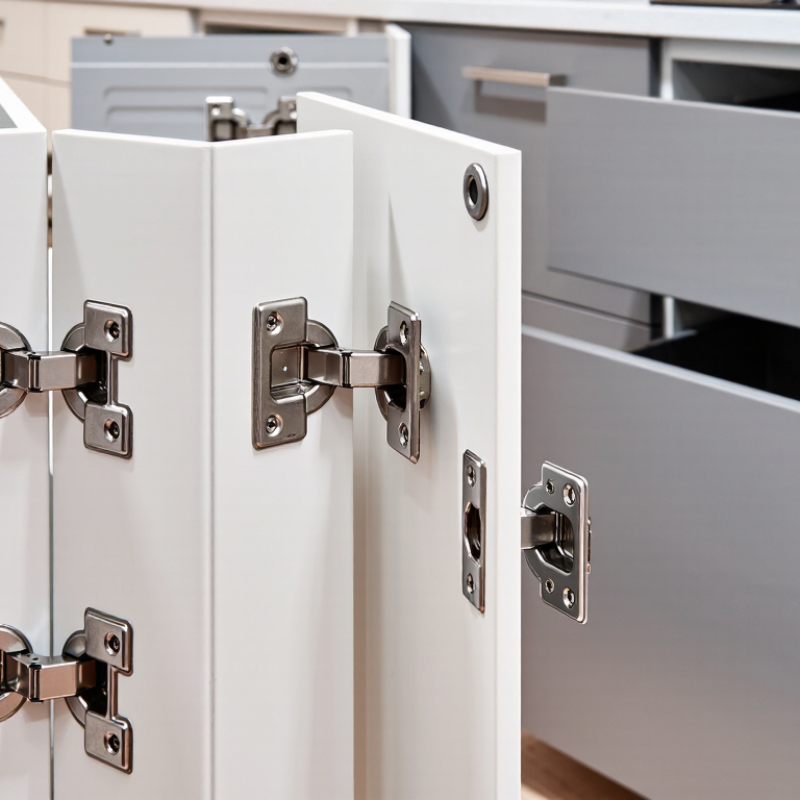
Understanding hinge types makes cabinet selection far less confusing. Overlay hinges sit on the cabinet frame and cover part of its front edge. They suit common kitchen layouts and allow simple door removal. Inset hinges fit inside the frame, so the door rests flush with the cabinet surface. Their appearance is clean, but installation needs careful spacing. Half-overlay hinges share the frame with another door. They work well where two doors meet on one narrow divider.
Concealed hinges hide behind the door when closed. Many versions offer three-way adjustment for height, depth, and side alignment. This helps correct small gaps after seasonal movement or repeated use. Soft-close hinges slow the door before impact, reducing noise and stress on the cabinet box. Self-closing hinges pull the door shut, although weak models may not hold heavier doors reliably. Fit matters more. Match the hinge to the door thickness, opening angle, and overlay measurement.
During installation, I check screw placement and test the door several times. A hinge can look suitable yet bind against a thick shelf. Measure twice. I once underestimated a door’s weight and chose a light-duty hinge; the alignment drifted within weeks. That mistake reinforced an important lesson: hinge choice depends on real load, not appearance alone. For humid rooms, corrosion-resistant materials deserve attention, but surface labels are not enough. Inspect the finish, mounting strength, adjustment range, and replacement availability before buying.
Measuring Door Size, Weight, and Opening Requirements
Choosing door cabinet hinges in 2026 starts with accurate measurements, not appearance. Measure the door’s height, width, thickness, and overlay with a steel tape. Record the results twice. Small errors can cause uneven gaps.
Weight matters more than many installers expect. Weigh the finished door, including glass, handles, and attached trim. A wide solid-wood door may need additional hinges because its weight creates leverage. Check the hinge’s stated load capacity, then allow a safety margin. Real doors move, sag, and receive repeated impact. My own measurements have sometimes underestimated hardware weight, especially after adding decorative panels.
Opening requirements also affect hinge selection. Confirm whether the door needs a 90-, 110-, or wider opening. Check nearby walls, shelves, drawers, and handles. A hinge that opens fully in an empty cabinet may strike a wall in a narrow kitchen. Test the movement with temporary spacers before drilling. It is slower, but cheaper than repairing misplaced holes.
Tips: Measure the opening, not only the door. Leave practical clearance for seasonal swelling and slight frame movement. Use three hinges when the door is tall or heavy, but follow the hinge maker’s installation guidance. Mark every screw position carefully. If the door feels unstable during a dry fit, stop and reassess the size, weight, and hinge spacing.
Matching Hinge Materials, Finishes, and Load Ratings
How to Choose Door Cabinet Hinges in 2026?
Choosing cabinet hinges requires more than matching hole patterns. Material, finish, and load rating determine how the door performs after years of opening and closing. Steel hinges suit heavy doors and frequent use. Stainless steel performs better near sinks, laundry rooms, and coastal humidity. Zinc alloy can offer a clean appearance, but its strength varies by design and manufacturing quality.
The finish should match the cabinet environment, not only the handle color. Brushed surfaces hide fingerprints and small scratches. Polished finishes look sharper but demand more cleaning. For damp rooms, select a corrosion-resistant finish and inspect the hinge edges carefully. A beautiful coating cannot compensate for weak base material.
Load ratings deserve practical attention. Calculate the door weight, then add a safety margin for movement and stored items. A tall wooden door may need three hinges instead of two. Check whether the rating applies per hinge or to the complete set. That detail is easy to miss. During installation, test the door at several angles and listen for creaking. Small alignment errors can increase stress quickly. I have seen well-finished hinges fail early because the screws were too short. Longer screws may improve support, but only when they fit the cabinet structure safely. Specifications help, yet real conditions still require judgment.
How to Choose Door Cabinet Hinges in 2026?
Matching Hinge Materials, Finishes, and Load Ratings
The chart shows typical planning limits for cabinet-door mass based on the number of concealed hinges installed. These indicative values reflect common installation ranges and should not replace the load rating supplied for a specific hinge model.
For humid or frequently cleaned areas, stainless steel is generally the safest material choice. Nickel-plated steel suits most indoor cabinets, while brass and decorative black finishes are selected mainly for appearance and normal indoor conditions. Add hinges or choose a higher-rated model when the door is wide, thick, or fitted with heavy glass, mirrors, or hardware.
| Hinge material | Common finish | Typical application |
|---|---|---|
| Nickel-plated steel | Brushed or polished nickel | General indoor cabinetry |
| Stainless steel | Brushed stainless | Kitchens, bathrooms, and humid environments |
| Brass | Polished or antique brass | Decorative furniture and traditional interiors |
| Steel or zinc alloy | Black coated finish | Modern indoor cabinetry with dark hardware |
Choosing the Right Overlay, Inset, or Concealed Hinge
Choosing cabinet hinges in 2026 starts with the door position, not the finish. Measure the cabinet opening and door thickness carefully. Overlay hinges sit on the cabinet front and cover part or all of its edge. They are practical for modern storage units and simpler to install. Full overlay doors need hinges with greater opening clearance. Half overlay hinges suit shared cabinet sides. Check the gap. A small measurement error can make two doors rub.
Inset hinges place the door inside the cabinet frame, creating a flush, furniture-like appearance. They demand accurate drilling and consistent door gaps. Even a two-millimeter variation can become obvious across a long cabinet run. I have found that solid frames often need stronger hinge plates than lightweight panels. That detail is easy to miss. Door weight, thickness, and opening angle should guide the load rating. A hinge that feels smooth during testing may still sag after repeated use.
Concealed hinges hide behind the closed door and keep the exterior visually clean. Many offer three-way adjustment for height, depth, and side alignment. These adjustments help correct minor installation mistakes, but they cannot fix a twisted cabinet box. Soft-closing mechanisms reduce noise and protect door edges, especially in busy kitchens. Check the adjustment screws after installation. They can loosen over time. Choose corrosion-resistant hardware for humid rooms, and test several open-close cycles before final tightening.
Checking Installation Features, Adjustability, and Durability
How to Choose Door Cabinet Hinges in 2026?
Choosing cabinet hinges in 2026 requires more than checking their appearance. Installation features, adjustability, and durability affect daily performance. Measure the door thickness, overlay, and cabinet frame before ordering. A hinge that fits poorly can leave uneven gaps or cause rubbing.
Look for clear mounting plates, accurate screw holes, and soft-close mechanisms that remain accessible after installation. Clip-on designs can speed up repairs, while traditional screw-mounted hinges may provide stronger control. During installation, I use a level and a narrow gap card to check alignment. Small adjustments matter. A door should open smoothly without scraping the neighboring panel.
Adjustable hinges allow changes in height, depth, and side position. This flexibility helps when wood shifts slightly with seasonal humidity. However, adjustment screws can loosen over time. Check them after several weeks of use. I once trusted factory settings and ignored a slight corner drop. The problem became worse, so careful checking should never be skipped.
Durability depends on metal thickness, joint design, corrosion resistance, and cycle testing. Hinges near sinks or cooking areas face moisture, heat, and frequent movement. Choose materials suited to that environment, and avoid forcing a stiff door. Clean dust from the hinge cup and tighten loose screws gently. Even a well-made hinge can fail when the cabinet material is weak or the screws are too short.
How to Choose Door Cabinet Hinges in 2026? — Checking Installation Features, Adjustability, and Durability
| Hinge Type | Best Door Application | Typical Installation Features | Adjustment Range | Opening Angle | Door Thickness Guidance | Durability Factors | Selection Rating |
|---|---|---|---|---|---|---|---|
| Full-Overlay Concealed Hinge | Doors covering the full cabinet side panel | Commonly uses a 35 mm cup hole; cup depth is usually about 11–13 mm. Requires accurate drilling and a mounting plate. | Usually provides side-to-side, height, and depth adjustment. Typical adjustment is approximately ±2 mm per direction, depending on the hinge design. | Commonly 100°–110° | Often suitable for approximately 15–24 mm doors; confirm the hinge cup and screw clearances. | Steel construction, plated surfaces, secure screw fixing, and a tested soft-close mechanism improve service life. | ★★★★★ |
| Half-Overlay Concealed Hinge | Two doors sharing one cabinet partition | Uses a 35 mm cup hole and a special crank or offset arm to reduce the overlay on the center partition. | Generally offers three-way adjustment, but the available overlay range depends on the crank and mounting plate combination. | Commonly 100°–110° | Typically used with standard cabinet door thicknesses of about 15–24 mm. | Check the load rating per pair and the strength of the center-partition fixing points. | ★★★★☆ |
| Inset Concealed Hinge | Doors fitted inside the cabinet opening | Needs precise door and cabinet alignment. A 35 mm cup hole is common, although compact models may use different drilling dimensions. | Three-way adjustment is highly desirable because small errors are visible around the door gap. Typical movement is about ±2 mm per direction. | Commonly 95°–110° | Usually suitable for approximately 15–24 mm doors; verify the hinge arm geometry and door-edge clearance. | Precise installation, a rigid cabinet box, and stable mounting plates are essential for maintaining even reveals. | ★★★★☆ |
| Compact Concealed Hinge | Small doors, narrow frames, and lightweight furniture | May use a smaller cup or a screw-on construction. Installation is easier when drilling depth is limited. | Adjustment may be limited to two directions; some compact models provide only basic position correction. | Commonly 95°–110° | Often intended for lighter doors or thinner panels; check the stated door-weight limit before use. | Best for low-to-medium duty. Avoid exceeding the manufacturer’s load rating or using one hinge on a tall door. | ★★★☆☆ |
| Wide-Angle Concealed Hinge | Corner cabinets and doors requiring broad access | Uses a 35 mm cup in many designs, but the extended arm requires adequate clearance from adjacent doors and walls. | Usually includes three-way adjustment; depth and side adjustment are especially important for preventing door interference. | Commonly 155°–170° | Often suitable for standard 15–24 mm cabinet doors, subject to the selected mounting plate and overlay. | High opening angles increase mechanical movement, so robust arms, accurate fixing, and suitable door support are important. | ★★★★☆ |
| Soft-Closing Concealed Hinge | Kitchens, bathrooms, bedrooms, and other noise-sensitive interiors | Available in full-overlay, half-overlay, and inset configurations. The damper may be integrated or attached to the hinge body. | Normally offers the same three-way adjustment as the corresponding concealed hinge type. Some dampers include an on/off switch. | Commonly 100°–110° | Usually fits approximately 15–24 mm doors, but the closing force must match the door size and weight. | Look for corrosion-resistant finishes, a replaceable or protected damper, and documented cycle testing. Cycle claims vary by model. | ★★★★★ |
| Piano or Continuous Hinge | Long, narrow, lightweight doors and utility cabinets | Surface-mounted along most or all of the door height. Does not require a 35 mm cup hole, but accurate screw spacing is important. | Offers little built-in adjustment after installation; alignment depends mainly on the mounting position and cabinet construction. | Commonly about 180° | Useful when the door edge can accept a continuous hinge leaf; confirm the leaf width and screw clearance. | Continuous support distributes the load along the door edge, while corrosion resistance and screw quality determine long-term performance. | ★★★☆☆ |
| Surface-Mount Butt Hinge | Traditional furniture, face-frame cabinets, and visible-hardware designs | Mounted directly to the door and cabinet surface or in shallow mortises. Does not require concealed cup drilling. | Limited adjustment after installation; shims, elongated holes, or repositioning may be needed to correct alignment. | Commonly 90°–180°, depending on the leaf and stop design | Suitable for a broad range of door thicknesses when the leaf size and screw length are correctly selected. | Thick steel or stainless-steel leaves resist deformation. Proper screw engagement is critical for heavier doors. | ★★★☆☆ |
Practical 2026 checklist: Confirm the overlay or inset requirement, door thickness, cup-hole diameter and depth, mounting-plate compatibility, opening-angle clearance, door weight, corrosion resistance, and documented cycle-test results. The dimensions and ranges shown are common industry design values; always verify the specific hinge specification before drilling or ordering.
Article Source:
We Meet Our Clients Needs.
Meeting the diverse needs of our clients, we have complete machining facilities for everything from single part prototypes to large quantity production. Our small size is one of our biggest assets. It allows us to control costs and maintain the highest of standards.
Quality orientated and delivery always on time or earlier than originally promised.
Strongly recommend MSD.