
China Top Shower Glass Manufacturers How to Choose?

Choosing among China’s top Shower Glass manufacturers requires more than comparing prices, thicknesses, or polished product photos. A reliable supplier should show real production evidence, including tempering records, edge-finishing samples, inspection reports, and packaging tests. The National Glass Association emphasizes that safety glazing must meet defined performance requirements, not merely appear strong. Glass safety consultant Mark Meshulam states, “Safety glass is not optional; it is the starting point.”

Market research supports careful evaluation. Grand View Research and Fortune Business Insights identify continuing growth in shower enclosures, bathroom renovation, and architectural glass demand. However, their market boundaries differ. Their figures should guide decisions, not replace factory verification. This is often overlooked.

For Chinese manufacturers, buyers should examine glass thickness, hole placement, flatness, fragmentation results, and hardware compatibility. Common specifications include 6, 8, and 10 millimeters, but thicker glass is not automatically better. Tempered glass should be tested against relevant requirements, such as ANSI Z97.1, CPSC 16 CFR 1201, or EN 12150, depending on the destination market. Confirm the actual certificate holder and test scope.

A capable manufacturer also explains lead times, replacement procedures, corrosion resistance, and installation tolerances. Ask for a factory video call. Request a sample corner. Touch the polished edge.

Price still matters. It is not the whole decision.

This guide compares China’s leading Shower Glass manufacturers through quality control, customization, certification, communication, and after-sales reliability. Some supplier rankings may change as factories expand or subcontract. That limitation deserves attention. Reliable purchasing depends on evidence, not confident promises.
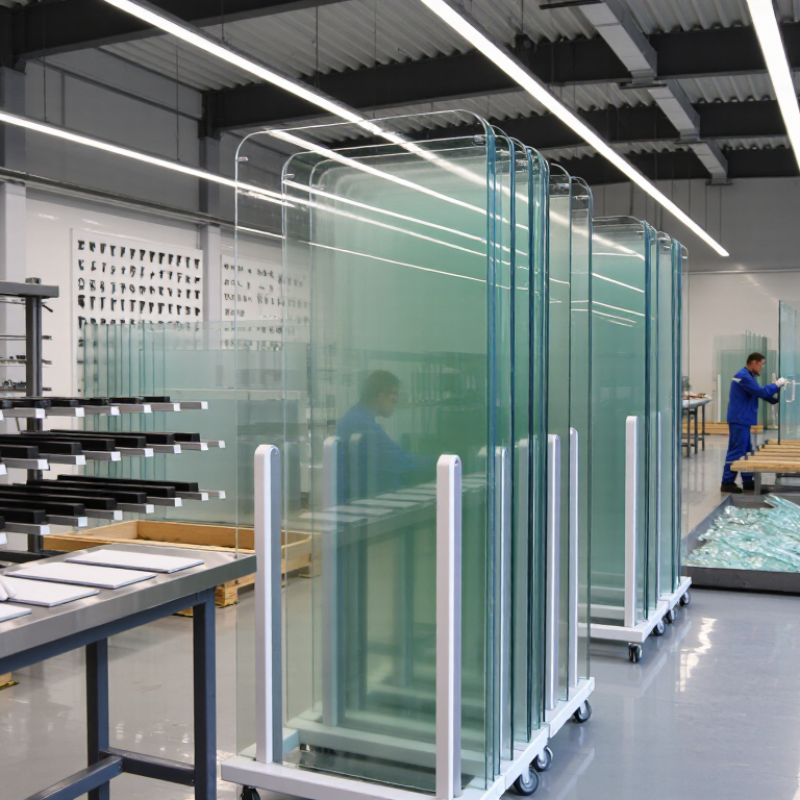
China Top Shower Glass Manufacturers How to Choose?

Understanding China’s Shower Glass Manufacturing Industry

China’s shower glass industry is part of a much larger processing network. The National Bureau of Statistics reported more than one billion weight cases of flat glass production in 2023. This scale supports strong supply chains for tempered glass, fittings, coatings, and packaging. However, volume does not prove quality.

When choosing a manufacturer, inspect its production controls, not only its showroom. Ask for heat-soak testing records, edge-processing standards, and batch traceability. GB 15763.2 defines safety requirements for tempered building glass in China. Reliable factories should also explain their inspection frequency and rejection rates. The China Building Materials Federation has repeatedly highlighted energy efficiency and capacity adjustment as major industry concerns. These issues affect production stability and pricing. In factory audits, I check furnace temperature records and corner finishing by hand. A polished sample can still hide weak process control. I have learned that delivery promises are often less reliable than documented capacity.

Tips: Request three recent test reports. Match each report with its production batch. Confirm glass thickness, tolerance, coating performance, and breakage patterns. Ask whether inspection occurs before or after packing. Use an independent inspection when the order is large. It costs money, but replacement glass costs more. Also review export experience for your destination market. Standards differ, and a technically acceptable panel may still fail local installation requirements. The best supplier is not always the cheapest. Sometimes, the quiet factory with clearer records deserves deeper consideration.

Key Standards for Evaluating Shower Glass Manufacturers

China Top Shower Glass Manufacturers: How to Choose?

Evaluating shower glass manufacturers requires more than comparing prices. Check whether the glass is fully tempered and tested for safety. Reliable suppliers should provide test reports, production records, and clear material specifications. Standards such as EN 12150 or ANSI Z97.1 can support your review, depending on the target market. Ask how the manufacturer controls thickness, flatness, edge finishing, and heat-soak testing. Small defects matter. A sharp edge or uneven hole can create installation problems.

Factory experience is also important. Visit the production area, inspect cutting equipment, and request samples from regular production lines. Confirm whether the glass matches the approved sample. Check packaging, export experience, hardware compatibility, and replacement procedures. ISO 9001 certification may show process discipline, but it does not replace your own inspection. A polished showroom is not proof. I would avoid choosing a supplier based only on attractive photos or the lowest quotation.

Tips: Request independent test documents, a pre-shipment inspection, and a written tolerance sheet. Compare two or three samples under bright light. Ask difficult questions early. Even careful checks can miss a problem, especially when drawings change late. Keep every specification in writing, including glass thickness, coating, holes, packing, and delivery dates. That record protects both sides and makes quality disputes easier to handle.

How to Compare Product Quality, Designs, and Customization

China Top Shower Glass Manufacturers: How to Choose?

Comparing shower glass suppliers requires more than checking catalog photos. Inspect the glass edge, corner polishing, and surface clarity. Quality tempered glass should appear even, without obvious bubbles, scratches, or distortion. Ask for test records and production details. Reliable manufacturers can explain glass thickness, heat-treatment controls, and packaging methods. A small sample often reveals more than a polished showroom image.

Tips: Request identical samples from several suppliers. Compare transparency under daylight. Check whether doors close smoothly. Measure hinge holes and panel sizes carefully. Ask how defects are handled. Do not trust vague promises. A low quotation may hide thinner glass, weaker hardware, or limited inspection.

Design comparison should include both appearance and daily use. Frameless panels create a clean bathroom, but they require accurate installation. Matte, fluted, tinted, and patterned glass can improve privacy and style. Customization should cover dimensions, cutouts, hardware finishes, and protective coatings. Confirm drawings before production. One overlooked millimeter can create installation trouble. This part is easy to underestimate. Good communication matters as much as machinery. Allow room for revision, because the first design is not always the best one.

China Top Shower Glass Manufacturers How to Choose? - How to Compare Product Quality, Designs, and Customization

Comparison Dimension What to Compare Reliable Industry Reference Recommended Selection Benchmark Documents or Samples to Request
Glass Thickness Available thicknesses for doors, fixed panels, walk-in screens, and partitions. Common shower-glass thicknesses are approximately 6 mm, 8 mm, and 10 mm, depending on panel size and hardware design. Choose thickness according to the approved structural design rather than selecting only by appearance or price. Glass specification sheet, panel-size limits, installation drawings, and a physical sample.
Tempering and Safety Whether the glass is heat-treated and tested for safe breakage characteristics. Relevant references may include EN 12150, ASTM C1048, ANSI Z97.1, CPSC 16 CFR 1201, or applicable local standards. Require compliance with the standard applicable to the destination market and verify the test scope matches shower glass. Current third-party test reports, conformity documents, heat-soak information if specified, and traceability records.
Edge Processing Quality of polished edges, corners, holes, notches, and cut-outs before tempering. All fabrication, including drilling and cutting, should normally be completed before tempering because tempered glass cannot be conventionally cut afterward. Edges should be smooth and uniform, with no visible chips, sharp points, cracks, or dimensional mismatch. Close-up production photos, edge samples, hole-position drawings, and dimensional inspection records.
Glass Flatness and Visual Quality Roller-wave distortion, surface marks, bubbles, scratches, inclusions, and color consistency. Visual inspection should be performed under consistent lighting and at an agreed inspection distance and acceptance standard. Set written limits for optical distortion and visible defects before mass production. Approved sample, inspection checklist, defect photos, and a signed quality acceptance standard.
Glass Types and Finishes Clear, ultra-clear, tinted, frosted, patterned, laminated, or digitally printed options. The selected glass type should be compatible with tempering, hardware loads, privacy requirements, and the destination-market code. Select a finish that offers consistent color, easy cleaning, and repeatable appearance across replacement orders. Color swatches, finish samples, light-transmission data where relevant, and replacement-sample policy.
Surface Coating Water-repellent, easy-clean, anti-limescale, or protective coatings and their application process. Coating performance depends on surface preparation, curing, cleaning chemicals, water hardness, and maintenance frequency. Compare measurable durability and cleaning results instead of accepting unverified “permanent” claims. Technical data sheet, abrasion or chemical-resistance test results, warranty terms, and care instructions.
Design Range Sliding, hinged, pivot, folding, fixed-panel, corner, alcove, and walk-in configurations. The design must account for opening clearance, wall conditions, panel weight, drainage, splash control, and accessible use where applicable. Prefer suppliers that provide verified CAD drawings and installation details for the selected configuration. Product catalogue, CAD files, installation manual, load calculations, and completed-project references without confidential brand information.
Dimensional Customization Custom width, height, angle, radius, sloped ceiling, and out-of-square wall accommodation. Tolerance requirements vary by design and hardware; final dimensions should be confirmed from a site survey or approved template. Require a written tolerance range and a formal drawing approval process before cutting glass. Measurement form, shop drawing, revision-control record, and pre-production approval.
Hardware Compatibility Hinges, rollers, handles, clamps, seals, brackets, and compatibility with the glass thickness. Hardware load ratings, hole locations, clearances, and corrosion resistance must match the complete enclosure design. Check the complete system rather than evaluating glass and hardware separately. Hardware specifications, load ratings, finish samples, corrosion-test data, spare-parts list, and assembly drawings.
Quality Control Incoming-material inspection, CNC accuracy, tempering control, final inspection, and batch traceability. A documented quality system, such as ISO 9001 certification, supports process control but does not replace product testing. Use measurable inspection points and require batch records for dimensions, appearance, and safety compliance. Quality manual summary, inspection plan, sample inspection report, calibration records, and corrective-action procedure.
Packaging and Logistics Crate construction, corner protection, moisture control, labeling, container loading, and breakage procedures. Glass should be separated, cushioned, secured against movement, and clearly marked with handling instructions. Approve packaging through a sample shipment or documented packing inspection before larger orders. Packing photos, crate drawings, loading plan, shipping marks, insurance terms, and damage-claim process.
Customization and Sampling Ability to produce special sizes, finishes, hardware combinations, packaging labels, and project-specific drawings. A prototype or pre-production sample is the most reliable way to verify color, fit, edge quality, coating, and hardware coordination. Choose a supplier that documents sample approval, engineering changes, and repeat-order specifications. Sample approval form, customization fee schedule, minimum order quantity, revision policy, and repeat-order controls.
After-Sales Support Warranty coverage, replacement glass, spare hardware, installation assistance, and response time. Warranty conditions should clearly define coverage, exclusions, installation requirements, and evidence needed for a claim. Prefer transparent warranty terms and long-term availability of compatible seals and hardware. Written warranty, spare-parts catalogue, service-contact procedure, and replacement lead-time commitment.
Practical evaluation method: Score each supplier from 1 to 5 for safety compliance, dimensional accuracy, visual quality, design capability, customization, documentation, packaging, and after-sales support. Give the highest weight to safety and engineering reliability, then compare total landed cost rather than unit price alone.

Assessing Certifications, Production Capacity, and Quality Control

Choosing among China’s top shower glass manufacturers requires more than comparing prices. Certification is the first filter. Ask for current certificates, scope pages, and issuing-body details. Tempered glass should meet standards such as EN 12150, ANSI Z97.1, or CPSC 16 CFR 1201, depending on the destination market. These standards address safety performance, but certification alone does not prove consistent production quality.

Production capacity needs physical evidence. Request monthly output, furnace size, cutting-line photographs, and recent delivery records. Grand View Research projects the global shower enclosure market to grow at about 4.6% annually from 2024 to 2030. Capacity planning therefore matters when orders increase suddenly. A factory claiming high output should explain how it controls furnace loading, edge processing, packaging, and replacement stock. Empty claims are easy.

Quality control should be traceable. Look for incoming glass inspection, thickness checks, heat-soak testing where required, and batch-level records. ISO’s 2022 Survey reported more than 1.26 million ISO 9001 certificates worldwide. Yet ISO 9001 confirms a management system, not flawless glass. That distinction matters. During a factory audit, inspect corners, drilled holes, protective film, and carton separators. Small chips often become large failures after installation. I would also request independent inspection before shipment. My own caution is simple: factory videos look impressive, but live production records reveal more.

How to Choose China Top Shower Glass Manufacturers

Use this evidence-based checklist to assess certifications, production capacity, and quality control. The chart shows the number of key documents or operational records that a manufacturer should be able to provide during due diligence.

Assessment note: These are verification points rather than company rankings. Confirm certificate scope and validity with the issuing body, and request production and inspection records for the specific shower glass products being purchased.

Choosing a Reliable Manufacturer for Your Shower Glass Project

Choosing a Reliable Manufacturer for Your Shower Glass Project

China offers wide production capacity, but selection should begin with evidence, not attractive quotations. Grand View Research reports steady growth in the global shower enclosure market, driven by renovation and new residential construction. This growth also increases supplier competition. A reliable manufacturer should provide clear glass specifications, accurate tolerances, and documented quality procedures.

Ask for samples before approving mass production. Check thickness, edge polishing, drilling accuracy, coating uniformity, and hardware alignment. Tempered glass should meet recognized standards such as EN 12150 or ANSI Z97.1, depending on the destination market. Request recent test reports, batch traceability, and details about breakage control. ISO 9001 certification can support process consistency, but it does not replace physical inspection. I have seen polished samples hide weak packaging practices. That part deserves attention.

Tips: Compare three suppliers using the same specification sheet.

Request a live factory video or an independent audit. Confirm carton design, corner protection, moisture control, and loading photos. Ask how defects are recorded and corrected. A dependable supplier will explain lead times honestly, including replacement production. Do not rely only on catalog images. Inspect one pre-shipment sample personally, if possible. A cheaper offer may become expensive after installation delays, glass damage, or mismatched holes. Even experienced buyers sometimes undercheck packaging. That is worth reconsidering.

Article Source:

We Meet Our Clients Needs.

Meeting the diverse needs of our clients, we have complete machining facilities for everything from single part prototypes to large quantity production. Our small size is one of our biggest assets. It allows us to control costs and maintain the highest of standards.

Quality orientated  and delivery always on time or earlier than originally promised.

Strongly recommend MSD.