
How to Choose Fish Meal Rendering Equipment?

Choosing Fish Meal Rendering Equipment is a practical decision with long-term consequences. The right system must match raw material quality, daily capacity, moisture levels, and production targets. A small fish processor may need compact equipment with flexible batch control. A large plant usually requires continuous operation, stable temperature management, and stronger material handling.

Real operating conditions matter. Fish residues can arrive wet, oily, uneven, or partially decomposed. These differences affect cooking time, pressing efficiency, drying performance, and final meal quality. Equipment should provide controlled heating without excessive energy use. It should also support reliable separation of solids, liquids, and oil. Stainless steel contact surfaces, accessible inspection points, and effective cleaning features can reduce hygiene risks and maintenance delays.

No selection is perfect. Cost is important, but the cheapest machine may create higher energy and repair expenses later. I have seen equipment comparisons focus too heavily on output capacity while ignoring installation space, spare parts, operator training, and local service support. That approach deserves reconsideration. A dependable supplier should explain performance limits, maintenance intervals, safety functions, and expected product results clearly. Independent testing data is valuable when available.

This guide examines the main factors behind a responsible equipment choice. It considers processing capacity, energy efficiency, temperature control, automation, durability, environmental performance, and after-sales support. Readers should compare technical specifications with actual site conditions, not marketing claims alone. Careful evaluation protects product consistency, worker safety, and investment value. Small details matter.
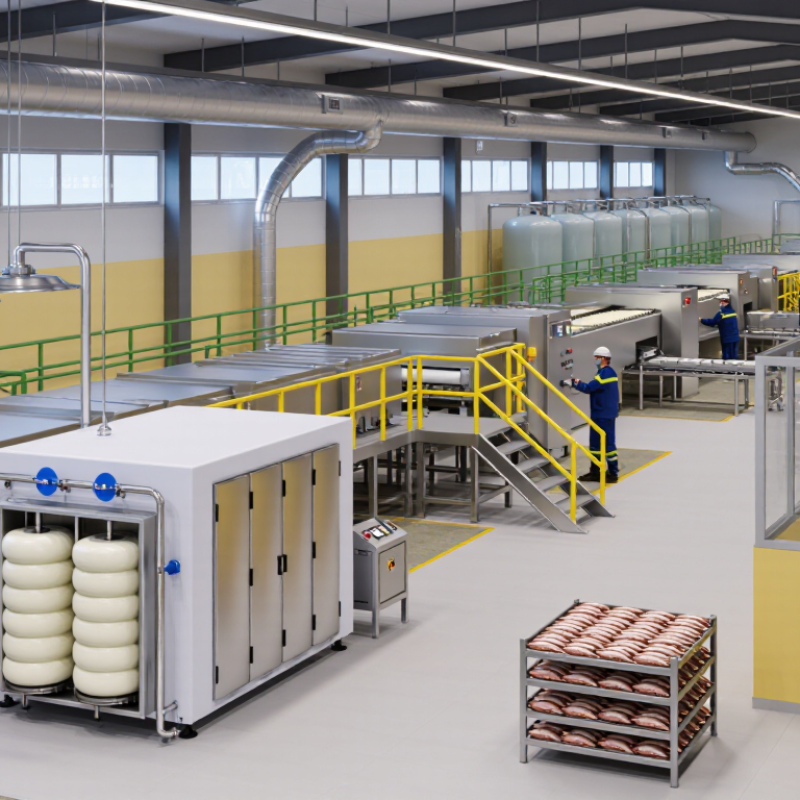
How to Choose Fish Meal Rendering Equipment?

Define Fish Meal Rendering Equipment and Its Core Functions

Fish meal rendering equipment is a production system that converts fish or processing by-products into stable, protein-rich meal. Its core functions include cooking, pressing, drying, oil separation, grinding, and screening. Each stage affects the final moisture level, protein quality, and storage life.

Cooking uses controlled heat to release water and oil from the raw material. A press then separates the solid cake from the liquid fraction. The cake enters a dryer, where careful temperature control reduces moisture without excessive protein damage. Oil and water are separated from the liquid fraction through suitable clarification equipment. Grinding creates a consistent particle size for handling and further processing.

Choosing equipment requires more than checking hourly capacity. Raw material freshness, bone content, salt level, and seasonal supply can change performance. Corrosion-resistant contact surfaces are essential in a wet, salty environment. Operators should also examine steam use, cleaning access, odor control, and the accuracy of temperature and moisture sensors. Small details matter.

A practical assessment should include trial data from similar raw materials. A specification may look complete but still overlook difficult cleaning points. That is a common weakness. Maintenance access, spare-part availability, and worker safety deserve equal attention. Equipment that saves energy but causes unstable moisture can create larger operating problems later. Reliable selection depends on measured results, hygienic design, and realistic production conditions.

Assess Raw Material, Processing Capacity, and Product Requirements

Choosing fish meal rendering equipment begins with the raw material, not the machine catalogue. FAO’s State of World Fisheries and Aquaculture 2024 reports 185.4 million tonnes of aquatic animals produced in 2022. About 89% entered human food channels, increasing the importance of processing by-products and seasonal supply. Measure species, moisture, fat, bone content, and freshness across several weeks. One laboratory sample is not enough.

Record the real feed rate in tonnes per day, not the advertised peak rate. A plant receiving 20 tonnes daily at 70% moisture needs different drying power from one processing lean trimmings. Cooker, press, dryer, evaporator, and mill capacity must match each other. A fast cooker cannot rescue an undersized dryer. Leave practical headroom, perhaps 15–25%, for wet weather, maintenance, and uneven deliveries. This is where many plans become optimistic.

Product requirements should guide temperature control, residence time, and finishing equipment. Buyers may specify protein, moisture, ash, digestibility, histamine, and oxidation limits. The FAO Fishery and Aquaculture Statistics Yearbook shows how widely species and utilization patterns vary between regions, so a single recipe rarely fits every raw material. I have seen operators focus on protein percentage while overlooking odor, darkening, or unstable fat. That choice can reduce value. Test pilot batches, compare laboratory results, and question every capacity figure before purchasing.

Compare Key Equipment Types and Their Processing Methods

How to Choose Fish Meal Rendering Equipment?

Equipment selection should follow the raw material, not the catalogue. FAO’s The State of World Fisheries and Aquaculture 2024 reported 185.4 million tonnes of aquatic animal production in 2022. About 89% was used for direct human consumption, leaving rendering plants with more variable by-products. Fat content, bone levels, freshness, and daily volume can change the best processing route.

A cooker starts the process by coagulating proteins and releasing oil. Continuous cookers suit steady throughput, while batch cookers offer better control for irregular supplies. After cooking, a screw press separates solids from liquor. Presses with adjustable compression are useful when raw material moisture changes. Small differences matter.

Drying technology deserves close comparison. Direct steam or hot-air dryers transfer heat quickly, but excessive temperature can darken meal and reduce protein quality. Indirect steam dryers usually provide gentler heating and lower contamination risk, although they may require higher investment. Rotary dryers are practical for large volumes. Disc dryers can deliver more controlled residence time and compact layouts. IFFO’s Fishmeal and Fish Oil Statistical Yearbook highlights continuing variation in raw materials and production conditions, so fixed settings can be misleading.

Moisture targets need verification.

Operators should measure outlet moisture, temperature, and peroxide values, rather than trust displays alone. Energy recovery from evaporated stickwater can improve efficiency. Yet this option adds maintenance points. A careful trial with actual raw material is often more reliable than choosing equipment from headline capacity.

How to Choose Fish Meal Rendering Equipment? — Compare Key Equipment Types and Their Processing Methods
Equipment Type Primary Processing Method Main Function Typical Feed Material Key Operating Factors Effect on Product Quality Advantages Limitations Best Use Case
Steam Cooker Indirect heating with steam through a jacket or internal heating surfaces Coagulates fish proteins and releases part of the oil and moisture before pressing Fresh or chilled whole fish, trimmings, and fish offal Heating temperature, residence time, steam pressure, and feed consistency Uniform cooking supports efficient separation and helps limit excessive protein damage Good heat control; suitable for continuous operation; relatively low direct contact with the product Requires a reliable steam supply and additional boiler-room infrastructure Medium- to large-scale plants seeking consistent cooking conditions
Direct-Fired or Hot-Air Cooker Direct contact with hot combustion gases or heated air Rapidly heats and partially dries the raw material while beginning protein coagulation Fish raw material with moderate moisture and plants with limited steam capacity Gas temperature, airflow, residence time, and combustion control Fast heating is possible, but poor control can cause localized overheating or oxidation Quick start-up; does not require a steam boiler; compact in some layouts Greater risk of uneven heating and possible contamination if combustion gases contact the product directly Small or specialized operations where steam generation is impractical
Screw Press Mechanical dewatering by continuous compression and shearing Separates press liquor, containing water and oil, from the cooked fish solids Properly cooked fish and fish offal Press speed, compression ratio, screen condition, and cooked-material temperature Effective pressing reduces the moisture load on the dryer and supports higher meal recovery Continuous operation; robust design; lower thermal demand after pressing Performance depends strongly on cooking quality; excessive pressure can increase fines and wear Standard continuous fish meal lines requiring mechanical dewatering
Decanter Centrifuge High-speed centrifugal separation of solids, water, and oil-containing liquid phases Clarifies press liquor and recovers suspended solids before oil separation Press liquor and liquid streams containing fine fish solids Bowl speed, differential speed, feed rate, and solids concentration Can improve recovery of fine solids and reduce suspended material in downstream liquid streams Compact; continuous; effective for fine particles that are difficult to settle by gravity Higher capital and maintenance requirements; power consumption is significant Plants processing high volumes or raw materials that generate fine suspended solids
Disc-Stack Centrifuge High-speed centrifugal clarification and liquid-liquid separation Separates fish oil from stickwater and fine suspended solids after pressing Clarified press liquor or liquid containing recoverable fish oil Feed temperature, flow rate, bowl speed, interface setting, and solids loading Produces cleaner oil and can improve recovery of valuable liquid fractions High separation efficiency; continuous operation; suitable for compact process layouts Requires careful feed conditioning and regular cleaning; sensitive to excessive solids Facilities prioritizing fish-oil recovery and liquid-stream clarification
Tube-Bundle Dryer Indirect convective drying through heated tubes and controlled airflow Removes moisture from pressed fish cake to produce stable fish meal Pressed fish cake with reduced but still substantial moisture Drying-air temperature, airflow, residence time, feed layer thickness, and exhaust humidity Indirect heating helps reduce direct oxidation and allows better control of final moisture Good product protection; suitable for continuous production; relatively low direct contact with combustion gases Higher equipment cost and more complex heat-transfer surfaces than simple direct dryers Quality-focused plants producing consistent meal for feed applications
Disc Dryer Indirect conductive drying using heated rotating discs Dries fish cake through contact with heated surfaces while mixing the product Pressed fish cake and other sticky, cohesive rendered materials Disc temperature, rotor speed, feed rate, vacuum or airflow, and product residence time Controlled indirect drying can help preserve protein quality and reduce surface scorching Efficient heat transfer; handles relatively sticky material; generally enclosed Moving parts require maintenance; overloading may reduce drying uniformity Plants handling cohesive fish cake and requiring controlled indirect drying
Direct Rotary Dryer Direct contact between hot air and tumbling fish meal or fish cake Rapidly reduces moisture after pressing Pressed fish cake or partially dried fish meal Hot-air temperature, drum speed, airflow, fill level, and residence time High temperatures or excessive residence time may darken the meal and reduce heat-sensitive quality High throughput; straightforward continuous operation; relatively simple mechanical design Greater risk of oxidation, overheating, dust generation, and odor emissions without proper control High-throughput operations where drying capacity and simple process flow are priorities
Hammer Mill Impact milling with rotating hammers and a perforated screen Reduces dried fish meal to a more uniform particle size Fully dried fish meal with low residual moisture Rotor speed, screen opening, feed rate, and meal temperature Improves particle-size consistency for blending, conveying, and feed formulation High capacity; adjustable particle size; widely applicable to dry meal Creates noise and dust; excessive heat or overgrinding can increase energy use General-purpose size reduction after drying and before storage or packaging
Pin Mill Fine grinding through high-speed impact between pins or discs Produces a finer and more uniform fish meal powder Dry, free-flowing fish meal requiring fine particle size Rotor speed, feed rate, clearance, and product temperature Can provide a fine, homogeneous meal, but heat generation must be controlled Suitable for fine grinding; compact; adjustable operating conditions Less suitable for damp or fibrous feed; higher wear and energy demand at very fine sizes Specialized applications requiring fine, uniform fish meal particles
Vibrating or Rotary Screen Mechanical classification by particle size Removes oversized particles and separates meal fractions before packing Ground and cooled fish meal Screen aperture, vibration or rotation speed, feed rate, and screen cleanliness Improves uniformity and helps prevent oversized particles from entering the final product Simple operation; low thermal impact; useful for quality control Screens can blind when meal contains excess moisture or oil; requires routine cleaning Final classification after grinding and before storage or packaging
Selection guidance: A typical continuous fish meal process combines cooking, mechanical pressing, liquid separation, drying, grinding, and screening. Equipment capacity should be matched to raw-material throughput, moisture content, oil content, desired meal quality, available utilities, and local odor-control requirements.

Evaluate Energy Use, Hygiene, Automation, and Maintenance Needs

How to Choose Fish Meal Rendering Equipment?

Evaluate Energy Use, Hygiene, Automation, and Maintenance Needs

Energy performance should be measured per tonne of finished meal, not only by motor size. FAO’s The State of World Fisheries and Aquaculture 2024 reported 185 million tonnes of aquatic animal production in 2022. That scale makes small efficiency losses expensive. Compare steam consumption, heat recovery, drying temperature, and standby power. A lower-temperature dryer may protect protein quality, but it can increase residence time. Test both results. Do not trust catalogue figures alone.

Hygiene is equally practical. Choose smooth stainless-steel surfaces, drainable pipework, accessible inspection doors, and clean-in-place connections. The FAO/WHO Code of Practice for Fish and Fishery Products emphasizes contamination control throughout processing. Automation should record temperature, pressure, moisture, and motor load. The IFFO Fishmeal and Fish Oil Statistical Yearbook shows the sector’s continued multi-million-tonne output, so reliable data tracking supports consistent production across large volumes. However, too many sensors can complicate troubleshooting. I have seen operators ignore alarms because the system produced too many of them.

Tips: Request a site trial using your raw material. Check moisture variation, odor control, cleaning time, spare-part availability, and technician access. Ask for verified energy data from comparable installations. Keep critical bearings visible. Schedule maintenance before vibration becomes noise. A cheap machine can become costly when cleaning takes longer than production.

How to Choose Fish Meal Rendering Equipment?

This procurement benchmark assigns practical evaluation weights to the four factors that most affect fish meal rendering performance. Energy use receives the highest priority because drying and evaporation typically dominate operating costs, while hygiene, automation, and maintenance strongly influence product safety, labor requirements, uptime, and long-term reliability. The percentages are planning targets and should be validated against site-specific production conditions.

Select Equipment Based on Cost, Compliance, and Future Expansion

Choosing fish meal rendering equipment starts with the raw material, not the catalog. In practical trials, check fish size, fat content, moisture, and seasonal variation. These factors influence cooker load, drying energy, and press performance. A low purchase price may hide higher fuel use and frequent maintenance. Request tested throughput under conditions close to your plant. Numbers matter. Ask about power demand, steam consumption, wear-part life, cleaning time, and expected yield.

Compliance should guide the equipment layout from the beginning. Confirm local requirements for emissions, wastewater, odor control, worker safety, and product traceability. A technically efficient line may still create costly problems if documentation is incomplete. Check safety guards, emergency stops, hygienic surfaces, inspection access, and material certificates. Keep operating records from installation onward. Small omissions become expensive.

Future expansion requires careful planning, but oversized equipment can waste capital today. Reserve space for additional dryers, presses, storage, and maintenance access. Size foundations, electrical panels, steam lines, and ventilation routes with later growth in mind. Compare total ownership cost, including installation, training, downtime, spare parts, and energy use. A staged system may suit uncertain supply better. One planning mistake is trusting projected fish volume too much. Seasonal shortages can leave large equipment underused. Recheck those assumptions before signing.

We Meet Our Clients Needs.

Meeting the diverse needs of our clients, we have complete machining facilities for everything from single part prototypes to large quantity production. Our small size is one of our biggest assets. It allows us to control costs and maintain the highest of standards.

Quality orientated  and delivery always on time or earlier than originally promised.

Strongly recommend MSD.