
How to Choose the Best Underwater Camera Light for Diving?
Choosing the right Underwater Camera Light can change a flat dive photograph into a vivid, detailed image. Below the surface, sunlight fades quickly, colors disappear, and suspended particles become obvious. A suitable light must restore color without creating harsh backscatter or distracting hotspots.
Alex Mustard, an award-winning underwater photographer and educator, has said, “Light is the most important tool in underwater photography.” His advice remains practical. Before comparing brands, divers should consider the subject, depth, water visibility, and camera system. Macro photography often benefits from a narrow, controlled beam. Wide-angle scenes usually need broader coverage and stronger output.
Brightness matters, but maximum lumens alone can mislead. A powerful light with poor beam control may illuminate every particle between the camera and reef. Look for adjustable output, smooth coverage, reliable color rendering, and a sturdy depth rating. Color temperature also affects the mood and accuracy of the final image. Warmer light can bring life to red coral, while neutral light often suits natural reef colors.
Handling is easy to underestimate. A compact light should balance comfortably on a tray or arm. Large controls are valuable when wearing thick gloves. Battery life must cover the planned dive, not an ideal test dive. Rechargeable batteries are convenient, although charging routines can fail.
No Underwater Camera Light performs perfectly in every condition. I would rather accept slightly lower output than carry a heavy, awkward setup. That is not always the best choice. Testing the light in real water, with your own lens and housing, remains more trustworthy than specifications alone.
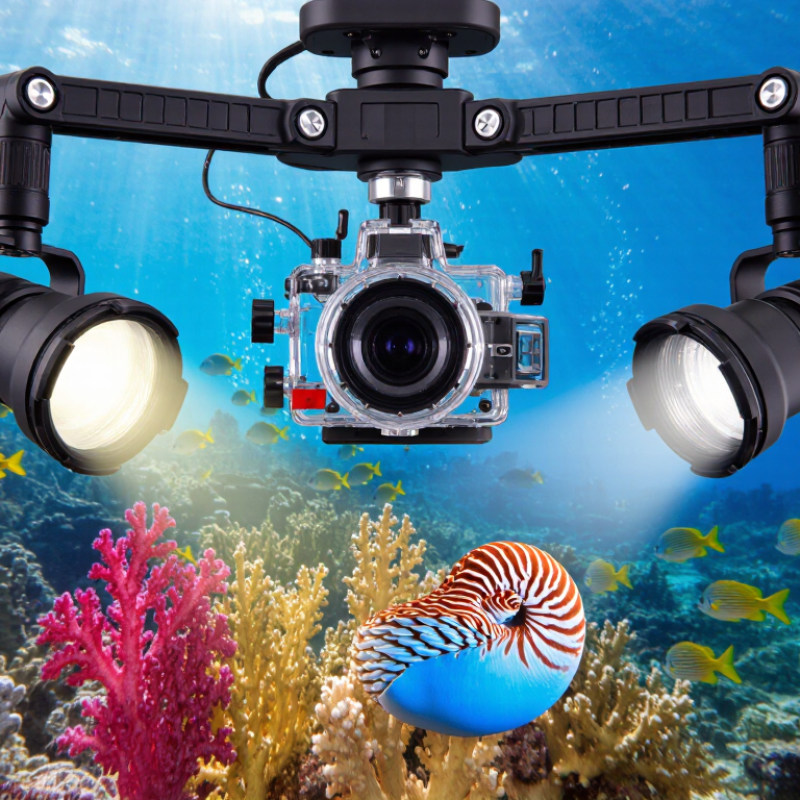
Understand the Role of an Underwater Camera Light
How to Choose the Best Underwater Camera Light for Diving?
Understand the Role of an Underwater Camera Light
An underwater camera light does more than brighten a dark scene. It restores color lost during descent. NOAA Ocean Exploration explains that water absorbs red wavelengths first, often within the upper few meters. Orange and yellow fade next, while blue travels farther. At 15 meters, a diver may see a blue-green reef, but the camera records weak reds and flat skin tones.
A suitable light should match your depth, subject, and camera lens. For close macro shots, choose a wide, soft beam with strong color rendering. This reveals tiny shrimp, coral texture, and natural skin tones without harsh hotspots.
For wide-angle scenes, two lights usually create better balance. Place them slightly away from the housing. This reduces backscatter from suspended particles. According to NOAA, even clear seawater contains particles that scatter light, so maximum brightness is not always the best answer.
Check beam angle, color temperature, battery duration, and waterproof depth. Lumens alone can mislead. A narrow beam may look powerful on the boat but illuminate only a small section underwater. I have made that mistake. A moderate-output light with even coverage often produces more usable footage.
The 2023 Divers Alert Network Annual Diving Report also emphasizes managing task loading and equipment reliability; a complicated lighting setup can distract from buoyancy and composition. Test the controls with gloves before entering the water. Controls that feel simple on land may become surprisingly awkward at depth.
Assess Your Diving Conditions and Camera Setup
Assess your diving conditions before choosing an underwater camera light. Clear tropical water still removes color quickly. NOAA reports that sunlight may reach approximately 200 meters in exceptionally clear seawater, but red wavelengths disappear much sooner. At ten meters, skin and coral can already look dull without artificial light. Silt, plankton, and depth reduce visibility further.
Check your camera setup next. A compact camera with a small sensor often needs more light than a larger sensor camera. Wide-angle scenes require broad beam coverage, while macro subjects need controlled, close illumination. Match the light’s beam angle to the lens, not only its advertised brightness. A narrow beam can create bright centers and dark corners. That mistake is common underwater.
DAN’s 2023 Annual Diving Report highlights how visibility, task loading, and environmental changes affect diver performance. Those factors also affect image quality. If current is strong, choose simple controls and secure mounting. If you dive beyond ten meters, carry enough power for repeated shots, not one perfect frame. Professional testing reports often measure output in lumens, yet lumen ratings do not show color accuracy or beam consistency. I have found that real-water testing matters more than a specification sheet. A light that seems powerful in a pool may look weak beside green water and suspended particles. Test it at depth, with your actual housing and lens.
How to Choose the Best Underwater Camera Light for Diving?
Assess your diving conditions and camera setup before choosing light output. These planning values reflect common requirements for recreational underwater photography and video.
How to read the chart: Macro subjects need less output because the light is close to the subject. Wide-angle scenes, deeper water, and reduced visibility require more lumens to illuminate a larger area and maintain color.
Compare Brightness, Beam Angle, and Color Quality
Choosing an underwater camera light begins with the scene, not its advertised maximum output. In clear, shallow water, 800 to 1,200 lumens may reveal natural color without flattening subjects. Deeper water absorbs red and orange wavelengths, so stronger output becomes useful. However, brightness alone can create harsh highlights on pale coral or reflective fish. I learned this during a dusk dive, when my light made a small subject look artificial. A lower setting produced a more believable image.
Beam angle controls how evenly light fills the frame. A narrow beam reaches farther and suits distant subjects or careful macro work. A wide beam covers reef scenes, but its edges may look dim underwater. For video, I usually prefer a smooth beam between 90 and 120 degrees. It reduces hot spots when the camera moves. Test this in a pool if possible. The beam can appear wider in promotional images than in real water.
Color quality deserves equal attention. Look for a high color rendering index, stable output, and a neutral tone. A color temperature near 5,000 to 5,600 Kelvin often keeps coral, skin, and sand believable. Some lights look bright but render reds as brownish gray. That weakness is easy to miss on a small screen. Check sample footage, not only specifications. Also consider controls usable with gloves. Buttons that feel obvious on land may become frustrating at depth. I still prefer less power when color remains accurate.
Evaluate Battery Life, Mounting, and Durability
Choosing an underwater camera light starts with battery performance, not maximum brightness. The U.S. Department of Energy’s Energy Storage Grand Challenge Roadmap identifies cycle life, temperature, and safety as key battery measures. For diving, compare rated runtime at the light’s highest usable output. A claimed 120 minutes may drop sharply in cold water. I prefer a light that still provides 30 minutes of reserve after a typical 45-minute dive. That margin feels practical, although my own test results have not always matched laboratory claims.
Mounting affects both footage and safety. A compact handle mount offers quick control, while a tray and dual arms create smoother, wider illumination. NOAA’s Diving Manual stresses secure equipment management and avoiding entanglement hazards. A loose light can swing into the reef, strike the camera, or distract the diver during descent. Check whether the mount accepts gloves easily. Tiny screws are frustrating at six metres.
Tips: Test the complete setup in shallow water first. Run the light for 20 minutes. Then inspect heat, brightness, seals, and movement. IEC 60529 defines IPX8 as protection during continuous immersion under specified conditions, but the depth and duration remain manufacturer-defined. Do not treat an IP rating as unlimited protection. Rinse saltwater away after every dive, dry the charging port carefully, and replace damaged O-rings. Durability is not only metal thickness; it is maintenance discipline.
How to Choose the Best Underwater Camera Light for Diving? - Evaluate Battery Life, Mounting, and Durability
| Selection Factor | Useful Target or Range | What to Check | Best Suited For |
|---|---|---|---|
| Light output | About 1,000–3,000 lumens for close-up work; 3,000–6,000 lumens for general video; higher output for wide scenes or strong ambient light. | Compare output at the intended beam angle. A wider beam spreads light over a larger area and may look less bright on the subject. | Macro subjects generally need less output than wide-angle reefs, wrecks, or night scenes. |
| Battery runtime | Around 1–2 hours at full power is a practical starting point; runtime is typically longer at reduced settings. | Check the manufacturer's runtime figures at each brightness level, charging time, battery replacement options, and whether output dims as charge falls. | Choose enough capacity for the planned shooting time, with reserve for delays or a second dive. |
| Beam angle | Approximately 60°–120° is common for video lights; wider beams can provide more even coverage for wide-angle footage. | Look for smooth, even illumination and minimal hotspotting. Consider the camera lens's field of view and whether a diffuser is available. | A broad, even beam is useful for video; a narrower beam can concentrate light on small subjects. |
| Color temperature | Many underwater video lights are in the 5,000–6,500 K range. | A consistent color temperature across paired lights can help keep footage more uniform. Check color-rendering information if accurate color is important. | Useful for restoring color lost with depth, especially in close-range video. |
| Mounting system | A ball mount is common on camera arms; tray clamps and handle mounts are also widely used. | Confirm the light's mount matches the tray or arm, and check that the setup can be tightened and adjusted with gloved hands. | Flexible arms help position lights to reduce backscatter; secure mounts matter in currents and during entry or exit. |
| Depth rating | Select a stated depth rating that exceeds the deepest planned dive, with an appropriate safety margin. | Verify the rating in the product documentation. Inspect seals and O-rings, and follow the maker's instructions for cleaning and maintenance. | A suitable rating and well-maintained seals help protect the light from water ingress. |
| Construction and controls | Look for corrosion-resistant materials, secure port protection, and controls that are easy to operate underwater. | Check for a durable housing, protected charging connections, clear battery indicators, and straightforward brightness controls. | Reliable handling and corrosion resistance are valuable for frequent saltwater use. |
| Travel weight and handling | Compare the complete rig weight, including batteries, arms, clamps, and tray. | A compact setup is easier to pack and handle, while larger lights may offer more output or longer runtime. | Important for air travel, shore entries, and divers who prioritize a lightweight camera rig. |
Figures are general selection guidelines, not guarantees; actual brightness and runtime vary by light design, battery condition, temperature, and power setting.
Match Light Features to Your Diving and Photography Needs
Choosing an underwater camera light starts with your diving style, not the highest lumen number. A wide-angle reef scene needs a broad, even beam that covers coral without harsh hotspots. Macro photography needs controlled, focused light for nudibranchs, shells, and small textures. During a recent shallow reef dive, I found that excessive brightness washed out pale sand and weakened color contrast. More power was not better.
Depth rating, color quality, and beam angle deserve careful attention. A light with strong color rendering can reveal reds and oranges that disappear at depth. Adjustable output also helps when subjects are close or easily disturbed. Use low power for reflective fish scales, then increase brightness in darker crevices. A red mode may help during night dives, although it can still affect some animals. Check the control design with gloves before buying. Tiny buttons look convenient in a shop, but they can become frustrating underwater.
Battery life should match your planned dive time, including safety delays and camera adjustments. Rechargeable batteries are practical, but removable cells may suit remote trips better. Test the light’s seals, charging port, and mounting system before every dive. Rinse it with fresh water afterward. I once ignored a slightly stiff control ring and regretted it later. Weight matters too; a heavy light can pull a compact camera downward and make steady framing difficult. A modest light that balances well may produce sharper images than a powerful, awkward one.
Article Source:
We Meet Our Clients Needs.
Meeting the diverse needs of our clients, we have complete machining facilities for everything from single part prototypes to large quantity production. Our small size is one of our biggest assets. It allows us to control costs and maintain the highest of standards.
Quality orientated and delivery always on time or earlier than originally promised.
Strongly recommend MSD.