
How to Choose the Right Capacitor Bank?

Choosing the right Capacitor Bank begins with the electrical system, not a catalog page. A suitable unit must match the network voltage, frequency, reactive power demand, and operating environment. These details affect power-factor correction, energy efficiency, equipment loading, and service life.

Field engineers should review load profiles before selecting capacitor capacity. A factory may need different correction levels during motor startup, production, and shutdown. Measure actual demand where possible. Estimates can be misleading. A bank that is too small may leave poor power factor unresolved. An oversized bank can create leading power factor, unnecessary switching, or unstable voltage conditions.

Harmonic distortion deserves careful attention. Variable-frequency drives, rectifiers, and welding equipment can interact with ordinary capacitors. In such systems, detuned reactors or harmonic-rated designs may offer safer performance. Protection devices, discharge resistors, enclosure ratings, ventilation, and automatic controllers also require professional evaluation. Small details matter.

Reliability is practical.

Review manufacturer test data, applicable electrical standards, installation instructions, and maintenance requirements. Compare more than the initial purchase price. A robust Capacitor Bank should support predictable operation, manageable maintenance, and safe isolation during service. However, no selection guide replaces measurements from the actual site. Real systems behave imperfectly, especially when loads change quickly. That uncertainty should remain part of the design discussion. A qualified electrical professional can verify the final configuration and confirm that the equipment suits local conditions.
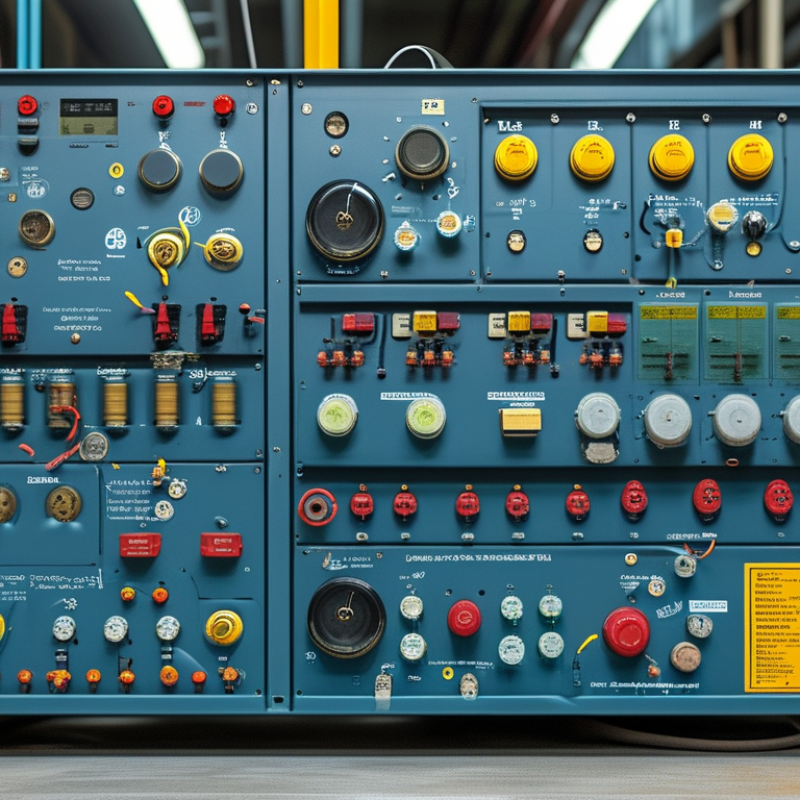
How to Choose the Right Capacitor Bank?

Define the Purpose and Operating Conditions of the Capacitor Bank

How to Choose the Right Capacitor Bank?

Define the Purpose and Operating Conditions of the Capacitor Bank

Start with the load, not the catalog. A capacitor bank should solve a measured problem, such as low power factor, voltage support, or reactive power penalties.

The U.S. Department of Energy reports that motor-driven equipment uses about 70% of industrial electricity. This makes motor load profiles essential when estimating reactive demand.

Record current, voltage, power factor, and harmonic distortion during production and idle periods. One snapshot is rarely enough.

Check how the electrical system behaves. Large motors can create sharp reactive-power changes during starting and unloading. A fixed bank may overcorrect during light load conditions. Automatic steps are usually safer when demand varies.

The bank must also tolerate ambient temperature, switching frequency, enclosure conditions, and available short-circuit current. IEC 60871-1 identifies temperature and voltage requirements for high-voltage shunt capacitors. Small details matter here.

Harmonics deserve careful attention.

Capacitors can interact with transformers, drives, and system inductance, producing resonance. IEEE 519-2022 sets a 5% total voltage distortion limit for systems below 69 kV at the point of common coupling.

That figure is a design reference, not permission to skip measurements. A harmonic study may justify detuned reactors or a different switching strategy.

In practice, engineers sometimes size banks from average readings and regret it later. Operating data should be reviewed after installation, because the original assumptions may be wrong.

Calculate Reactive Power Requirements and Required Capacitance

Choosing the right capacitor bank starts with measured load data, not a guess from the nameplate. Record real power, voltage, frequency, and power factor during normal and peak operation. A factory may show 400 kW at 0.78 power factor, but pumps, welders, and idle motors can change that value quickly.

Calculate the required reactive compensation with Qc = P(tan φ1 − tan φ2). Here, P is active power in kilowatts, while φ1 and φ2 come from the existing and target power factors. For 400 kW, improving power factor from 0.78 to 0.95 requires about 172 kVAr. Do not automatically select a 200 kVAr bank. A measured operating profile may justify smaller steps and prevent overcompensation.

Then convert reactive power into capacitance. For a single-phase circuit, use C = Qc ÷ (2πfV²). For a three-phase delta bank, use C = Qc ÷ (3 × 2πfV²), with Qc in var and voltage in volts. Check the connection, insulation rating, temperature, and switching method before installation. Harmonic-producing loads need extra review, because capacitors can amplify resonance. Detuned reactors may be necessary. Measure again after commissioning. I have seen calculations fail when voltage was entered as line-to-neutral instead of line-to-line. That small mistake changes the result substantially.

Select the Appropriate Voltage, Phase, and Connection Configuration

How to Choose the Right Capacitor Bank?

Selecting the correct voltage begins with measuring the actual electrical system. A capacitor bank must suit the system voltage, frequency, and expected operating range. Do not rely only on the panel label. Voltage can rise during light loading or generator operation.

In a 400-volt system, a bank rated exactly at 400 volts may provide little safety margin. Harmonic distortion can increase capacitor stress. A power-quality survey gives better evidence than assumptions.

Phase configuration must match the supply. Single-phase equipment needs a different arrangement from a three-phase industrial feeder. For balanced three-phase loads, a three-phase bank usually distributes reactive current more evenly.

The connection also matters. Delta connections can supply reactive power without a neutral conductor. Wye connections may suit systems requiring a neutral point or specific insulation coordination.

Check the capacitor unit voltage for the selected connection. The same bank can experience different voltage across each capacitor.

Connection errors are costly. Very costly.

Confirm phase sequence, switching steps, discharge resistors, and protective settings before energizing. Installations near variable-speed drives deserve extra caution because harmonics may require detuning reactors or another solution.

Standards and local electrical rules should guide the final design. A qualified engineer should verify short-circuit levels and enclosure conditions.

One practical lesson is uncomfortable: a perfectly calculated bank can still perform poorly when the load changes sharply. Measure after installation, then adjust the steps if the operating data disagrees with the original design.

Evaluate Safety Features, Control Methods, and Harmonic Protection

Choosing a capacitor bank is not only a kvar calculation. Safety features deserve equal attention. Select units with discharge resistors, current-limiting fuses, overpressure disconnectors, and temperature-rated enclosures. The enclosure should suit dust, moisture, and cleaning conditions on site. IEC 60831 provides useful requirements for low-voltage shunt capacitors.

Control method affects both service life and power quality. Contactor-switched banks suit stable loads with slower changes. Thyristor-switched systems respond faster when welders, lifts, or variable-speed drives change demand repeatedly. An automatic power factor controller should prevent hunting between steps. Measure before switching. A poorly tuned relay can create unnecessary transients, even when the average power factor looks excellent.

Harmonic protection requires more than installing reactors by habit. The IEA’s Energy Efficiency 2023 report states that electric motor systems consume roughly 46% of global electricity, increasing the importance of reliable correction equipment. Drives and converters can amplify resonance between the transformer and capacitor bank. Use a power-quality analyzer to record voltage distortion, current distortion, load changes, and the point of common coupling. IEEE 519-2022 offers planning limits for harmonic distortion at that point. Detuned reactors can reduce resonance risk, but their rating must match the system frequency and harmonic spectrum. Harmonics change everything. I would not approve a bank from a nameplate power factor alone. Field measurements may reveal a hot terminal, repeated fuse operation, or a fifth-harmonic current that calculations missed.

How to Choose the Right Capacitor Bank?

Evaluate Safety Features, Control Methods, and Harmonic Protection

How to read the chart: The values are reference limits commonly used when specifying low-voltage power-factor-correction capacitor banks. IEC 60831 permits continuous operation up to 110% of rated voltage and 130% of rated current, while typical capacitance tolerance is −5% to +10%. IEEE 519 establishes a 5% voltage-THD limit at the point of common coupling for systems rated up to 69 kV.

Selection guidance: Use contactor-switched steps for relatively stable loads, and thyristor-switched steps when fast-changing loads require frequent correction. Where nonlinear loads are present, select detuned reactors or tuned harmonic filters and verify the system resonance risk before energizing the bank. Capacitor units should also include discharge resistors, overcurrent protection, and suitable switching coordination.

Compare Installation Needs, Maintenance Requirements, and Total Cost

How to Choose the Right Capacitor Bank?

Choosing a capacitor bank starts with the installation environment, not only the required rating. Measure the load profile, available panel space, cable routes, and ventilation before comparing quotations. A compact bank may fit an existing switchboard, but heat buildup can shorten capacitor life. For retrofit projects, confirm breaker capacity, harmonic levels, and protection settings with a qualified electrical engineer. Installation details matter.

Maintenance requirements can change the real cost significantly. Ask how often technicians must inspect connections, clean filters, test capacitors, and verify discharge resistors. In dusty workshops, blocked ventilation can increase temperature and service calls. I have seen low-cost equipment become expensive after repeated fan replacements and unplanned shutdowns. The cheapest quote is not always the lowest total cost. Still, maintenance estimates are imperfect, especially when production loads change.

Tips: Compare five-year ownership costs, including energy losses, inspections, spare parts, labor, and downtime. Request clear testing procedures and access requirements. Check whether local technicians can service the equipment. Keep records of temperature, alarms, and power-factor readings. A detailed log often reveals problems early. Also, question unusually low maintenance promises. They may be optimistic, or simply incomplete.

How to Choose the Right Capacitor Bank? - Compare Installation Needs, Maintenance Requirements, and Total Cost

Typical planning values for low-voltage and medium-voltage industrial power-factor-correction projects. Actual values depend on voltage, kvar rating, duty cycle, harmonic spectrum, enclosure, labor rates, and local electrical regulations.
Capacitor Bank Configuration Best-Fit Application Typical Installation Needs Space and Environmental Requirements Maintenance Requirements Harmonic Compatibility Typical Service Life Indicative Installed Cost* Indicative Annual Maintenance* Estimated 10-Year Total Cost* Overall Selection Guidance
Fixed Capacitor Bank Steady loads with a relatively constant reactive-power demand, such as continuously operating motors, transformers, or dedicated process equipment. Requires a correctly rated protective device, isolation means, discharge resistors, short-circuit protection, suitable cable sizing, and verification of the target power factor before energization. Usually compact and suitable for an indoor electrical room or a properly rated outdoor enclosure. Provide ventilation and keep the bank away from excessive heat, moisture, dust, and corrosive vapors. Visual inspection every 3–6 months; check terminals, fuses, enclosure temperature, bulging, leakage, and abnormal noise. De-energize and verify discharge before hands-on work. Suitable where harmonic distortion is low and stable. Use a harmonic study before connecting to systems containing large variable-speed drives, rectifiers, UPS systems, or arc equipment. Approximately 10–15 years under suitable temperature and voltage conditions. US$2,000–8,000 US$150–400 US$3,500–12,000
Automatic Stepped Capacitor Bank Facilities with changing loads, including manufacturing plants, commercial buildings, pumping stations, and mixed motor loads. Requires a power-factor controller, current-transformer signal, step contactors or switching devices, protective coordination, control wiring, and commissioning at minimum and maximum operating loads. Needs more panel space than a fixed bank because of the controller, switching equipment, fuses, and multiple capacitor steps. Maintain clearances for heat dissipation and service access. Inspect and clean the enclosure every 3–6 months. Test contactors, controller settings, fuses, ventilation, capacitor temperature, and step switching. Contactors and cooling fans may require replacement during the system life. Acceptable on relatively clean power systems. In systems with significant harmonics, use detuned reactors or another harmonic-control solution to reduce resonance risk. Approximately 10–15 years; switching components may have shorter replacement intervals. US$5,000–18,000 US$300–900 US$9,000–32,000
Detuned Automatic Capacitor Bank Industrial facilities with moderate harmonic-producing equipment, such as variable-speed drives, rectifiers, data-center loads, or welding equipment. Requires a harmonic assessment, correctly selected reactor tuning, automatic step control, coordinated protection, thermal design, and commissioning checks for resonance and capacitor current. Requires additional cabinet volume and ventilation because detuning reactors generate heat. Provide adequate spacing, airflow, and access for reactor and capacitor inspection. Inspect reactors, capacitors, connections, fuses, fans, and thermal protection every 3–6 months. Record capacitor current and reactor temperature; investigate overheating or unusual vibration promptly. Better suited to harmonic environments than an unprotected capacitor bank. Detuning reduces the likelihood of resonance but does not replace a complete harmonic study or active filtering where distortion is severe. Approximately 10–15 years for capacitors; reactors and fans may require periodic replacement or servicing. US$9,000–30,000 US$500–1,300 US$16,000–48,000
Medium-Voltage Capacitor Bank Utility substations, large motors, medium-voltage feeders, and high-capacity industrial distribution systems where correction is required above 1 kV. Requires medium-voltage-rated switching and protection, isolation, grounding, discharge equipment, safety barriers, controlled access, and commissioning by qualified personnel. Typically needs a dedicated outdoor yard, fenced area, or medium-voltage switchgear section. Clearances, grounding, weather protection, and arc-flash controls are critical. Requires documented inspection and testing, including insulation condition, connections, fuses, surge protection, grounding, discharge devices, and enclosure condition. Maintenance intervals are commonly annual or based on the site safety program. Requires a detailed system study because switching transients, resonance, inrush current, and harmonic amplification can affect the wider medium-voltage network. Approximately 15–20 years with suitable voltage, temperature, and maintenance conditions. US$25,000–100,000+ US$1,000–4,000 US$40,000–145,000+ Appropriate only when the distribution voltage and system capacity justify the higher installation and safety requirements.
Contactor-Switched Capacitor Bank with Detuned Reactors Low-voltage facilities with regularly changing loads and moderate harmonic content where cost control and conventional correction are priorities. Requires a controller, current transformer, capacitor steps, contactors, detuned reactors, protective devices, temperature management, and commissioning across the operating load range. Requires a larger enclosure than a basic automatic bank because reactors add heat and weight. Adequate ventilation and separation from heat-sensitive equipment are essential. Inspect switching devices, capacitor current, reactor temperature, fuses, fans, and connections every 3–6 months. Replace worn contactors or fans as indicated by operating hours and test results. Provides improved protection against common resonance conditions, but reactor tuning must match the system design. It is not intended to eliminate high harmonic distortion by itself. Approximately 10–15 years for capacitors, with service parts replaced as needed. US$8,000–26,000 US$450–1,200 US$15,000–43,000
Thyristor-Switched Detuned Capacitor Bank Fast-changing loads requiring rapid correction, such as cranes, elevators, welding lines, presses, or equipment with frequent load steps. Requires electronic switching modules, controller settings, current-transformer feedback, fast protective devices, reactor selection, thermal design, and commissioning under representative load changes. Requires careful heat management and often forced ventilation. Panel space and service access must accommodate power electronics, reactors, capacitor stages, and monitoring equipment. Inspect cooling systems, thyristor modules, capacitors, reactors, fuses, terminals, and control alarms every 3–6 months. Thermal imaging and event-log reviews can help identify loose connections or overloaded components. Well suited to rapid load changes and avoids mechanical contactor wear. Detuning helps manage resonance, but a harmonic study remains necessary for systems with high distortion. Approximately 10–15 years; fans and electronic switching components may need earlier replacement. US$15,000–45,000 US$800–2,000 US$28,000–68,000
Cost basis: The cost ranges are non-brand, indicative installed values for typical commercial or industrial projects and include the bank, standard protection, enclosure, installation, and commissioning. The 10-year total-cost estimate combines indicative installed cost with ten years of routine maintenance and excludes electricity tariffs, major plant modifications, financing, taxes, and unplanned failures. A site-specific load profile, harmonic measurement, short-circuit study, and electrical-safety review should be completed before purchase.

We Meet Our Clients Needs.

Meeting the diverse needs of our clients, we have complete machining facilities for everything from single part prototypes to large quantity production. Our small size is one of our biggest assets. It allows us to control costs and maintain the highest of standards.

Quality orientated  and delivery always on time or earlier than originally promised.

Strongly recommend MSD.