
Shooting Nails Tips for Perfect Fastening and Efficient Use?

shooting nails is an essential technique in construction and woodworking. Proper use leads to efficient fastening and a polished finish. However, mastering this skill requires insight and practice.

Many beginners face challenges with shooting nails. Misfires can occur due to improper technique or incorrect nail selection. These mistakes highlight the need for understanding the tool and its capabilities. Knowledgeable users often share tips on keeping the equipment in top shape.

Achieving perfection with shooting nails involves more than just pulling the trigger. Awareness of materials and nail types is crucial. Sometimes, an intended outcome may not match the reality. This discrepancy calls for reflection and adjustment in technique. By embracing these challenges, one can improve their craftsmanship and achieve better results.
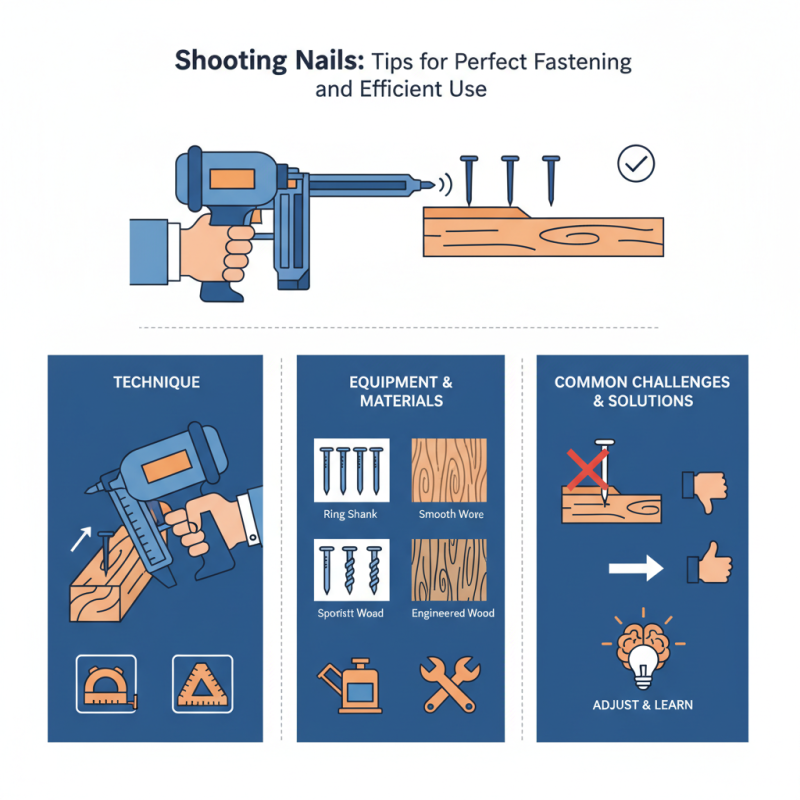
Shooting Nails Tips for Perfect Fastening and Efficient Use?

Choosing the Right Type of Nails for Your Project

Choosing the right type of nails for your project is essential for achieving strong and lasting results. The selection process can be overwhelming. Nails come in various sizes, materials, and types, making it crucial to understand their applications. For instance, galvanized nails resist rust and are ideal for outdoor projects. In contrast, wood screws provide a secure hold for furniture assembly.

Consider the material of your project before choosing nails. Hardwoods may require different nails than softwoods. For drywall, choose specialized drywall screws that prevent cracking. The wrong choice can lead to structural issues over time. Remember, appearance matters too. Nail size and type can impact the overall look of your finished project.

Sometimes, experimenting is necessary to find the best fit. Test a few types before committing. Mistakes are part of the process. A nail that works perfectly in one application might fail in another. Observing how each type performs helps refine your choices. Take notes during your projects; they can guide future decisions. This hands-on approach builds your expertise and confidence as a DIY enthusiast.

Understanding Different Types of Nail Guns and Their Uses

Nail guns are essential tools for various construction and DIY projects. They come in different types, each designed for specific tasks. Understanding these types can enhance your efficiency and accuracy during fastening.

Pneumatic nail guns require an air compressor. They are powerful and suitable for heavy-duty tasks. However, they can be cumbersome, especially in tight spaces. If you're working indoors, you may want to consider the noise and ventilation issues.

On the other hand, electric nail guns are easier to handle. They are lightweight and perfect for home projects. They can be corded or cordless, offering flexibility. Yet, battery life may limit usage time. Knowing the strengths and weaknesses of each type helps you choose the right tool for your needs.

Plus, there are specialized nail guns for specific applications, like roofing or framing. These options often have different nail sizes. Choose wisely to prevent misfires and wasted materials. Each gun has its quirks, giving room for learning through experience. Test various types before settling on one.

Shooting Nails: Types of Nail Guns and Their Uses

Proper Techniques for Loading and Operating Nail Guns

When using nail guns, loading and operating them correctly is crucial. Begin by selecting the right nails for your project. Different jobs require different types. The nails should fit securely in the magazine. If they are loose, misfires are likely.

Before you start, ensure you're wearing safety gear. Protect your eyes and ears. Improper usage can lead to injuries. Take your time with the setup. Misalignment can waste materials and time. Always check your air pressure settings. Too high or too low can affect performance.

Practice makes perfect. If you're new to using a nail gun, try it on scrap wood first. This allows you to understand the tool. Reflect on your technique after each use. Are you consistent in your placement? Are there any areas for improvement? This self-assessment can lead to better results over time.

Shooting Nails Tips for Perfect Fastening and Efficient Use

Technique Description Tips
Proper Loading Ensure nails are loaded according to the manufacturer's guidelines to avoid jams. Check nail size and type compatibility before loading.
Correct Angle Hold the nail gun at a 90-degree angle to the work surface for even penetration. Adjust your position frequently for comfort and better access to tight spaces.
Sequential Firing Press the trigger only after the tip is on the work surface to avoid misfires. Use this mode for precision work where placement is critical.
Regular Maintenance Keep the nail gun clean and well-lubricated to ensure optimal performance. Follow the manufacturer's maintenance schedule for best results.
Safety Practices Always wear appropriate safety gear and check surroundings before firing. Ensure no one is in front of the tool's line of fire.

Safety Precautions While Using Nail Guns

Using nail guns can boost efficiency in any project. However, safety should always be the top priority. Accidents can happen, and a moment of distraction can lead to serious injuries. It's crucial to wear appropriate personal protective equipment (PPE). Safety goggles and ear protection can shield you from debris and loud noises.

Before operating a nail gun, inspect the tool thoroughly. Check for any damage or wear. Ensure that all safety features are functional. It’s important to keep your hands and body away from the firing area. Misfires can occur, posing a risk to everyone nearby. Always keep the tool pointed away from yourself and others.

Eye protection is often overlooked but is essential. Nails can ricochet or become airborne. If a nail misfires, it can cause significant harm. Understanding how to handle a nail gun safely requires experience and knowledge. Regular practice in a controlled environment helps build confidence and ensures you make safe choices during actual tasks. Always reflect on your practices to improve your safety habits.

Tips for Maintenance and Troubleshooting of Nail Guns

Nail guns can significantly speed up your fastening tasks. However, maintenance is crucial for ideal performance. Regular cleaning helps keep the nozzle clear. Dust and debris can impede functionality. Inspect the air filter often. A clogged filter can lead to pressure issues, ultimately affecting your results.

Troubleshooting is often necessary. If nails jam, power off the tool before inspection. Remove any stuck nails carefully. Check the magazine for alignment; misalignment can cause frequent jams. Additionally, ensure you are using the right type of nails. Incorrect nails can lead to failures you did not anticipate.

Sometimes, nail guns can misfire, which can be frustrating. If this happens, check the air compressor settings. Low pressure can cause inconsistent performance. Connecting to a higher pressure source might improve operation. Remember, even the best tools require thoughtful maintenance and occasional troubleshooting to function reliably.

Article Source:

We Meet Our Clients Needs.

Meeting the diverse needs of our clients, we have complete machining facilities for everything from single part prototypes to large quantity production. Our small size is one of our biggest assets. It allows us to control costs and maintain the highest of standards.

Quality orientated  and delivery always on time or earlier than originally promised.

Strongly recommend MSD.