
What is a Static Melting Crystallizer and Its Benefits?
A Static Melting Crystallizer is an innovative device used in various industries. It streamlines the crystallization process. This equipment offers improved efficiency for producing high-purity materials. Its design ensures consistent heat and mass transfer, leading to optimal crystal formation.
In many applications, the Static Melting Crystallizer proves to be a reliable choice. Its ability to reduce contamination risk enhances product quality. By maintaining a steady flow, it minimizes fluctuations in temperature. This stability is crucial for precise control over crystallization.
Yet, like all technologies, it has limitations. The initial costs can be higher than traditional methods. Some users may find the setup complex. Understanding these factors is essential for effective implementation. Overall, the Static Melting Crystallizer demonstrates significant benefits for industries focused on purity and efficiency.
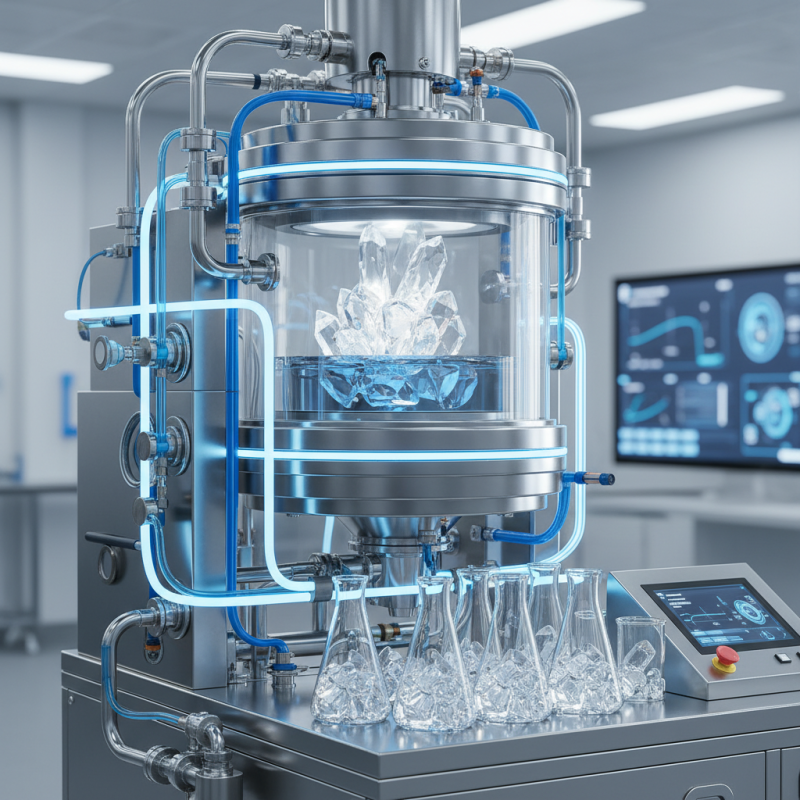
Definition and Functionality of Static Melting Crystallizers
Static melting crystallizers are essential in various industrial processes. They provide a controlled environment for crystallization, allowing for efficient solid-liquid separation. These systems utilize passive heat transfer, making them energy-efficient. Static melting crystallizers enable the production of high-purity crystals needed in many applications, including pharmaceuticals and chemicals.
The functionality of static melting crystallizers revolves around their design. They often have a stationary configuration, which enhances the crystallization process. This stationary aspect reduces the energy costs associated with moving parts. Moreover, the controlled temperature gradients promote uniform crystal growth. It’s important to monitor these parameters carefully for optimal crystal size and quality.
Tips: Regular maintenance is crucial. Ensure sensors and temperature controls are calibrated properly. Evaluate crystal growth rates frequently. Small adjustments can lead to significant improvements. Pay attention to potential inefficiencies, such as uneven cooling, that may affect product quality. Always seek feedback from operators to enhance the system's performance.
Static Melting Crystallizer Benefits Overview
This chart illustrates the key benefits of using Static Melting Crystallizers in industrial applications, highlighting aspects such as energy efficiency, cost reduction, product quality, operational stability, and the positive environmental impact.
Key Components Involved in Static Melting Crystallization Process
The static melting crystallization process is pivotal in various industrial applications, particularly for producing high-purity materials. Key components in this setup include the crystallizer design, cooling systems, and feedstock quality. A well-designed crystallizer optimizes heat transfer, ensuring efficient cooling and solidification of the material. Reports indicate that optimizing these components can enhance crystal size uniformity and purity, crucial for industries like pharmaceuticals and semiconductors.
The cooling system plays a vital role in the static melting crystallization process. It must maintain consistent temperature conditions for effective crystallization. Variations will yield inconsistent results, leading to subpar product quality. Additionally, the quality of feedstock directly influences the outcome. Ensuring minimal impurities is essential, as even small concentrations can alter the physical properties of the final product.
Industry studies reveal that improper crystallizer setup can lead to inefficiencies. For instance, up to 25% of product can be lost if crystallization conditions are not closely monitored. This underscores the need for meticulous design and operation, where even slight deviations from the optimal conditions can have significant repercussions.
What is a Static Melting Crystallizer and Its Benefits? - Key Components Involved in Static Melting Crystallization Process
| Component | Description | Benefits |
|---|---|---|
| Heating Element | Provides uniform heating to the feed material. | Ensures consistent melting and optimal crystallization. |
| Mixing Unit | Facilitates homogenous mixing of materials. | Promotes uniform crystallization and reduces defects. |
| Cooling System | Regulates the temperature to allow for controlled crystallization. | Enhances crystal quality and yield, prevents overheating. |
| Crystallization Chamber | Dedicated space for solidification and crystal formation. | Optimizes space for crystallization, increasing efficiency. |
| Filtration System | Separates crystals from the liquid phase. | Improves purity and quality of final product. |
Advantages of Using Static Melting Crystallizers in Industry
Static melting crystallizers are becoming increasingly important in various industries. They offer unique advantages that can enhance production efficiency. These systems enable the melting of materials while promoting crystallization simultaneously. This dual function is beneficial for processes requiring precise material purity.
The use of static melting crystallizers helps to optimize energy usage. They often require less energy compared to traditional methods, which can lead to lower operational costs. Moreover, they can produce higher-quality crystals due to their controlled environment. Contaminants are often minimized in the process. This is essential in industries like pharmaceuticals and food processing, where purity is non-negotiable.
While static melting crystallizers are efficient, there are areas for improvement. For example, the scalability of these systems can sometimes be a concern. Larger operations may not see the same efficiency gains as smaller setups. Additionally, maintenance can be challenging. Regular checks are required to ensure optimal performance. These factors necessitate careful consideration before implementation in large-scale production. Overall, the balance between benefits and potential drawbacks is crucial for successful application.
Applications of Static Melting Crystallizers in Various Sectors
Static melting crystallizers have a wide range of applications across various sectors. In chemical manufacturing, they help produce high-purity crystals. These devices ensure consistent temperature control, which is crucial for achieving desired crystal sizes. The process often results in fewer impurities, which can be a significant issue in traditional methods.
Pharmaceutical companies benefit from static melting crystallizers too. They use them to create pure compounds. The ability to precisely control conditions minimizes contamination risks. This precision is vital in drug formulation, where the efficacy depends on purity. In food processing, these crystallizers are used to stabilize sugar products. The controlled cooling allows for uniform crystallization, enhancing quality.
Despite their advantages, there are aspects to consider. Not all materials are suitable for this process. Understanding the specific properties of the material is essential for success. Operators must also monitor conditions closely for optimal results. Slight deviations can lead to unexpected outcomes, necessitating continuous improvement in practices.
Comparison of Static Melting Crystallizers with Other Crystallization Methods
Static melting crystallizers offer a unique approach to material separation and purification. Unlike traditional crystallization methods such as batch processes or cooling crystallizers, static melting crystallizers operate without moving parts. This design reduces maintenance needs and improves process stability.
In comparison, batch crystallizers often require continuous intervention. They involve significant energy consumption for heating and cooling, which can lead to inefficiencies. Conversely, static melting crystallizers maintain a consistent temperature. This can enhance the quality of the crystals produced, as the process is less prone to temperature fluctuations.
However, static melting crystallizers are not without their challenges. They may require specific materials to prevent fouling and ensure proper flow. Adjustments to the temperature and feed rate can also be complex. While they provide notable advantages, such as reduced operational costs, careful consideration is needed to optimize their performance for specific applications.
Article Source:
We Meet Our Clients Needs.
Meeting the diverse needs of our clients, we have complete machining facilities for everything from single part prototypes to large quantity production. Our small size is one of our biggest assets. It allows us to control costs and maintain the highest of standards.
Quality orientated and delivery always on time or earlier than originally promised.
Strongly recommend MSD.