
Top Switch Test Manufacturers in China for Global Buyers?
Choosing a Switch Test manufacturer in China involves more than comparing prices or browsing product catalogs. Buyers need equipment that matches their test requirements, production volume, and quality procedures. A bench-top tester may suit a small laboratory, while an automated system can support a faster production line. The details matter. Ask what the system measures, how results are recorded, and whether test fixtures can be adapted to your components. These practical questions help turn a broad supplier search into a focused evaluation.
This guide introduces factors global buyers can use to assess Chinese manufacturers, including engineering support, product documentation, calibration practices, customization, and export communication. Request clear specifications and sample reports, then confirm that the offered equipment fits your own workflow. A polished catalog proves little on its own. Factory audits, reference checks, or a technical demonstration may provide more useful evidence, depending on the purchase. Even a capable supplier may not be the right fit for every application. Compare claims with verifiable details, and leave room for questions when information is incomplete. The goal is not to name a universal winner, but to help buyers identify a reliable partner for their specific Switch Test needs.
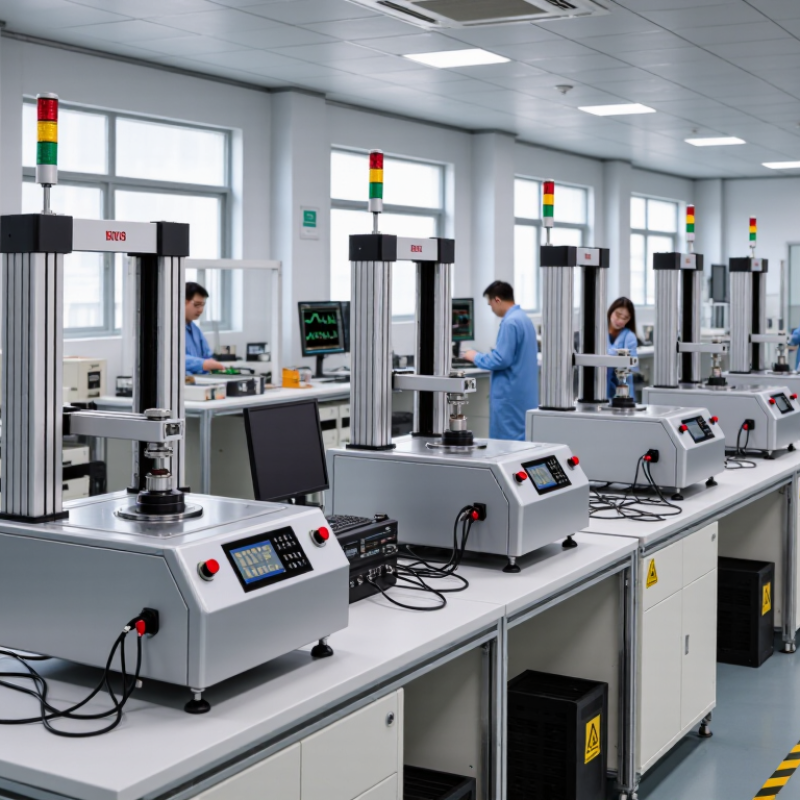
Types of Switch Testing Manufacturers in China
China’s switch-testing manufacturers generally fall into three groups: accredited independent laboratories, in-house factory laboratories, and specialist inspection or certification providers. Independent labs suit buyers needing impartial test reports for multiple suppliers. Factory labs offer faster design feedback, such as checking contact resistance after repeated switching. Specialist providers focus on particular areas, including endurance, temperature rise, insulation, or ingress protection. Their capabilities vary.
Look beyond equipment lists. Ask for the laboratory’s accreditation scope, sample preparation rules, calibration records, and test report format. A chamber or endurance rig alone does not prove that the lab can test your exact switch category. IEC 60669-1 covers household and similar fixed-installation switches rated up to 440 V and 63 A, giving buyers a useful scope reference. Small details matter.
Testing also has a broader building context. The 2023 Global Status Report for Buildings and Construction from the UN Environment Programme reported that buildings and construction accounted for 34% of global energy demand in 2022. Reliable switching can support dependable building systems, though it is not an energy-saving guarantee. One awkward point: a cheaper test plan may miss failure patterns that emerge only after long cycling. Buyers should compare methods, acceptance criteria, and retest policies—not just quoted prices.
Core Services and Technologies Used in Switch Testing
For global buyers, switch testing should begin with the product’s rated voltage, current, and intended duty—not a generic test package. Chinese laboratories commonly offer contact-resistance measurement, insulation-resistance checks, dielectric withstand tests, and mechanical endurance cycling. Engineers may record opening and closing times with a high-speed analyzer, then inspect contact wear after repeated operations. Repeatability matters. Test plans should reflect applicable IEC requirements, such as IEC 60947 for low-voltage switchgear or IEC 62271 for high-voltage equipment.
More advanced services include temperature-rise testing, environmental conditioning, and automated data capture. A temperature-rise setup can use thermocouples at terminals and contact points while current flows under controlled conditions. The resulting records help buyers compare samples and trace changes between production batches. MarketsandMarkets estimated the broader electrical testing services market at US$6.3 billion in 2022, forecasting US$8.1 billion by 2027; this figure covers more than switch testing, so it is useful context, not a switch-market measure. Small details count. Ask for calibrated instrument records, test conditions, uncertainty limits, and raw data alongside certificates. One weakness in many evaluations is treating a pass result as complete proof; sample selection and repeat tests still deserve scrutiny.
How Global Buyers Can Evaluate Chinese Manufacturers
Choosing a Chinese switch test manufacturer takes more than comparing unit prices. Ask for a sample report and check whether it names the test method, conditions, measured values, and acceptance limits.
A useful report may show applied force, travel distance, cycle count, and equipment identification. Request current calibration records, then confirm how failed readings are handled. Details matter. A polished PDF alone cannot prove repeatable work. Ask the supplier to test the same sample twice and explain any differences.
Assess the people and processes behind the equipment, too. Ask who reviews test programs, how software or fixture changes are recorded, and whether operators follow written procedures. If practical, witness a demonstration using your own switch samples, including setup and data export.
Check that technical answers come with evidence, not only promises. A checklist helps, but it can create false confidence. Revisit your evaluation after a pilot order, since delivery and support can look different under real deadlines.
Document test conditions and agreed limits before production.
Notable Switch Testing Manufacturers in China
China’s switch-testing suppliers serve appliance, automotive, and industrial-control production. Strong manufacturers can build fixtures for tactile, rocker, rotary, and push-button switches. Look for repeatable measurements of operating force, contact resistance, insulation, and electrical endurance. Ask to see calibration records and sample test reports. A clean dashboard helps, but it cannot replace traceable measurements.
Automation is raising expectations for consistent inspection. The International Federation of Robotics reported 4.28 million industrial robots operating worldwide in 2023, with China accounting for 276,288 new installations that year. These figures come from its World Robotics 2024 report. They do not measure switch-testing demand directly, but they show why automated test integration matters. Check whether a supplier can connect fixtures to production lines and export usable data. Small details matter. Cable routing, probe wear, and fixture alignment can quietly affect results.
Tips: Share your switch drawings, rated loads, and target cycle life before requesting a quotation. Ask for a sample test using your actual parts. Compare repeatability, not just speed. One limitation: a supplier’s factory demo may not reflect your production conditions. Test independently before scaling.
| Testing Area | What the Test Evaluates | Relevant Standard Reference | Evidence Global Buyers Can Request |
|---|---|---|---|
| Electrical endurance and switching performance | Operation under specified electrical loads, including switching cycles and contact performance appropriate to the switch type. | IEC 61058-1 for switches for appliances; IEC 60669-1 for switches for household and similar fixed electrical installations. | Test plan, sample identification, load conditions, cycle count, results, and the applicable standard edition. |
| Temperature rise and normal operation | Temperature rise at relevant terminals or parts while the device carries its rated current under defined test conditions. | Applicable product standard, such as IEC 61058-1 or IEC 60669-1. | Recorded current, ambient conditions, measurement locations, instrumentation details, and temperature readings. |
| Insulation and dielectric performance | Insulation resistance and dielectric withstand performance between specified conductive parts and accessible surfaces. | Applicable product standard; test requirements depend on product design and rating. | Test voltage, duration, acceptance criteria, equipment calibration records, and pass/fail results. |
| Mechanical endurance and operating force | Mechanical operation over repeated cycles, together with relevant actuation or operating-force checks. | Applicable product standard and the buyer’s product specification. | Test-cycle settings, fixture description, sample quantity, operating-force method, and failure records. |
| Ingress protection | Protection against access to hazardous parts and, where an IP rating is claimed, ingress of solid objects or water under specified conditions. | IEC 60529 for degrees of protection provided by enclosures (IP Code). | Declared IP rating, test setup, sample configuration, and reports covering the relevant IP tests. |
| Environmental testing | Performance after selected environmental exposures, such as cold, dry heat, damp heat, or temperature change, where applicable to the product. | Relevant IEC 60068 test methods, selected according to the product and test objective. | Chosen test method, exposure conditions, duration, pre- and post-test checks, and results. |
| Control-circuit switch testing | Performance of switches and switching elements used in control circuits, where this product category applies. | IEC 60947-5-1 for control circuit devices and switching elements. | Product classification, ratings, test scope, operating conditions, and supporting test records. |
| Laboratory competence and report traceability | Whether testing is performed by a competent laboratory with documented methods, equipment control, and traceable results. | ISO/IEC 17025 for the competence of testing and calibration laboratories. | Accreditation scope, laboratory identity, report number, sample traceability, and calibration status. Accreditation should be checked for the specific test scope. |
Export, Certification, and Supplier Selection Considerations
For global buyers, export readiness matters as much as a switch’s electrical rating. UNCTAD’s Review of Maritime Transport 2024 reports that maritime trade grew 2.4% in 2023, while containerized trade fell 0.3%. This uneven shipping picture makes realistic lead times and clear packing plans important. The WTO’s April 2024 trade outlook forecast merchandise trade volume growth of 2.6% for 2024; forecasts are not guarantees.
Ask potential Chinese suppliers for export references, product traceability, and a sample commercial invoice and packing list. Small details matter. Confirm who prepares shipping documents, how production delays are reported, and whether cartons protect terminals from impact and moisture. I would not judge export capability from a polished catalogue alone; a trial order can reveal gaps that an audit misses.
Certification depends on the switch’s end use and destination market. Check applicable standards, such as IEC 61058-1 for appliance switches, and confirm the tested model matches the offered product. Request complete test reports and verify that the laboratory’s scope covers the relevant tests. ISO/IEC 17025 accreditation can support confidence in test competence, but it does not replace product-specific review. Compare quotations alongside tolerances, inspection plans, defect handling, and change-control procedures. A low unit price may conceal costly variation.
We Meet Our Clients Needs.
Meeting the diverse needs of our clients, we have complete machining facilities for everything from single part prototypes to large quantity production. Our small size is one of our biggest assets. It allows us to control costs and maintain the highest of standards.
Quality orientated and delivery always on time or earlier than originally promised.
Strongly recommend MSD.