
China Top 10 Valve Actuator Manufacturers in 2026?
China’s valve actuator industry is entering 2026 with stronger automation demand, tighter quality expectations, and more specialized applications. Electric, pneumatic, and hydraulic solutions now serve water treatment, power generation, chemical processing, oil and gas, and general industrial systems. Behind every reliable movement is a carefully selected Valve Actuator.
This guide examines ten influential Chinese manufacturers for international buyers and engineering teams. The selection considers production capability, actuator range, torque accuracy, enclosure protection, control compatibility, certifications, export experience, and after-sales support. It also considers practical details, such as response time, manual override design, corrosion resistance, spare-parts availability, and performance in dusty or humid plants. A polished catalog is not enough.
Greg McMillan, a recognized process-control expert, has said, “The best control is no control.” His observation is useful here. A correctly sized actuator should move the valve accurately without constant correction, overheating, or unnecessary maintenance. That requires more than comparing prices.
Each company in this list deserves careful verification. Factory audits, product testing, reference projects, and certification checks can reveal differences hidden behind similar specifications. Some manufacturers offer excellent engineering but limited overseas service. Others provide broad product portfolios yet need stronger documentation. These weaknesses matter.
No ranking is perfect. Buyer priorities differ. A municipal water project may value simplicity, while a refinery may demand advanced diagnostics and strict traceability. This introduction therefore treats the “top 10” as a practical market shortlist, not an absolute verdict. Use it to begin technical conversations, request samples, and test whether a supplier’s promises survive real operating conditions.
Definition and Role of Valve Actuators in Industrial Systems
China Top 10 Valve Actuator Manufacturers in 2026
Definition and Role of Valve Actuators in Industrial Systems
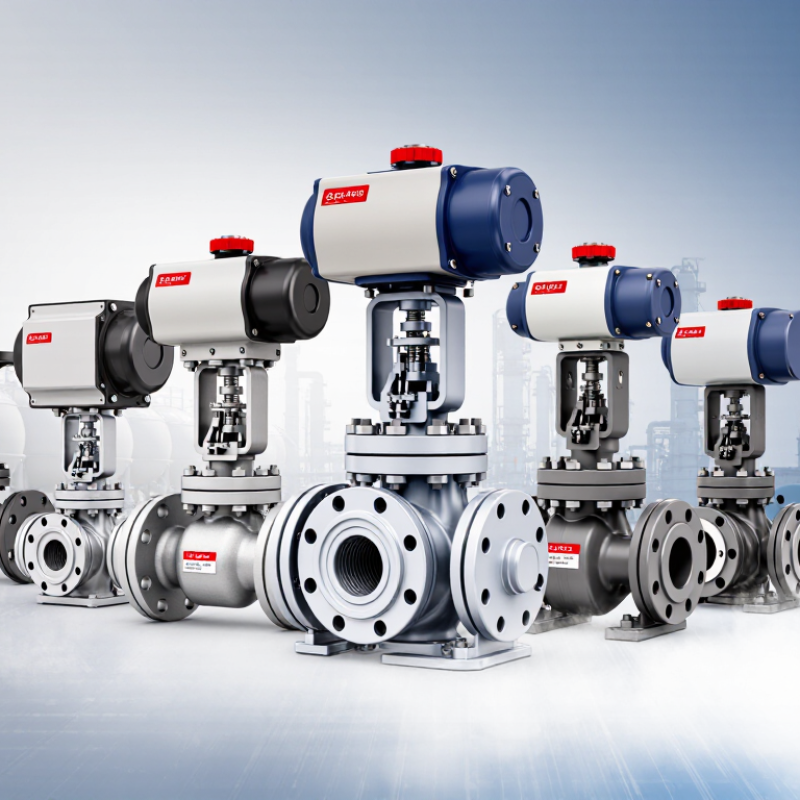
A valve actuator converts control signals into mechanical movement. It opens, closes, or positions a valve accurately. Common types include electric, pneumatic, and hydraulic actuators. Each suits different pressure, speed, and safety requirements.
Small movement matters.
In water treatment, an actuator may adjust flow through a pipe within seconds. In chemical processing, it can isolate a line during abnormal pressure events. Field commissioning shows that correct torque sizing is essential. Undersizing may leave a valve partly closed. Oversizing can damage seats, stems, or gear components. Installation errors remain a practical concern.
Industry demand is linked to automation and energy efficiency. The International Energy Agency reports that industry used about 37% of global final energy in 2022. This makes reliable flow control increasingly important. MarketsandMarkets has projected continued growth in the industrial valve actuator market through the decade, supported by process automation and infrastructure investment. Exact forecasts vary. Report boundaries are not always consistent.
Digital actuators now provide position feedback, fault alerts, and maintenance records. These functions support condition-based maintenance. However, connectivity does not guarantee reliability. Moisture, vibration, poor calibration, and unstable power can still cause failure. Engineers should verify fail-safe behavior, enclosure protection, response time, and manual override access before specifying equipment. Generic selection charts are useful, but they cannot replace site testing.
China Top 10 Valve Actuator Manufacturers in 2026? – Definition and Role of Valve Actuators in Industrial Systems
| No. | Actuator Technology Profile | Operating Principle | Typical Output Range | Typical Duty | Common Control Options | Typical Protection | Typical Industrial Applications |
|---|---|---|---|---|---|---|---|
| 1 | Electric Quarter-Turn Actuator | An electric motor drives a gearbox through 90° or similar rotary travel. | Approximately 10–4,000 N·m | On/off, inching, or modulating service | 24 VDC, 110/230 VAC, 4–20 mA, fieldbus | IP65–IP68; enclosure rating depends on design | Butterfly valves, ball valves, dampers, water treatment |
| 2 | Electric Multi-Turn Actuator | An electric motor produces multiple shaft rotations to move a linear valve stem. | Approximately 20–10,000 N·m | On/off, regulating, or positioning service | Local controls, 4–20 mA, remote I/O, digital networks | IP55–IP68; weatherproof or hazardous-area versions available | Gate valves, globe valves, sluice gates, power plants |
| 3 | Pneumatic Double-Acting Actuator | Compressed air is supplied alternately to both sides of a piston or diaphragm. | Approximately 20–100,000 N·m | Frequent cycling and fast on/off operation | Solenoid valve, pneumatic positioner, 4–20 mA | IP65–IP67; ATEX/IECEx versions may be available | Process isolation, chemical plants, compressed-air systems |
| 4 | Pneumatic Spring-Return Actuator | Compressed air moves the actuator while a spring returns it to a safe position. | Approximately 20–50,000 N·m | Emergency shutdown and fail-safe isolation | Solenoid valve, pneumatic positioner, emergency trip system | IP65–IP67; hazardous-area construction is common | Oil and gas, LNG, refining, combustion safety systems |
| 5 | Hydraulic Actuator | Pressurized hydraulic fluid generates high linear or rotary force. | From several kN to above 1,000 kN; torque varies by design | High-load, heavy-duty, or subsea operation | Hydraulic power unit, proportional valve, electro-hydraulic control | Application-specific; subsea and marine protection available | Large pipelines, hydroelectric facilities, steel mills, subsea systems |
| 6 | Electro-Hydraulic Actuator | An electric motor and hydraulic circuit are integrated into one controlled package. | High thrust or torque; project-specific sizing | Modulating service and independent emergency operation | 4–20 mA, digital control, local emergency controls | Weatherproof and hazardous-area configurations available | Remote pipelines, offshore platforms, turbine bypass systems |
| 7 | Linear Electric Actuator | A motor and screw, belt, or linear-drive mechanism produce axial movement. | Approximately 0.5–500 kN thrust | Positioning and modulating control | 24 VDC, 230 VAC, analog command, digital feedback | IP54–IP68 depending on enclosure and environment | Control valves, HVAC systems, water networks, dosing systems |
| 8 | Diaphragm Pneumatic Actuator | Air pressure acts on a flexible diaphragm connected to a valve stem. | Typically up to approximately 100 kN thrust | Continuous throttling and control-valve service | Pneumatic signal, electro-pneumatic positioner, 4–20 mA | Process-dependent; suitable materials selected for the medium | Steam, water, chemical processing, power-generation control loops |
| 9 | Quarter-Turn Scotch-Yoke Actuator | A piston-and-yoke mechanism converts linear piston movement into rotary torque. | Approximately 500–500,000 N·m | High-torque isolation and emergency shutdown | Pneumatic or hydraulic control; solenoid trip systems | IP65–IP68; hazardous-area options are widely used | Large ball valves, pipeline stations, terminals, offshore facilities |
| 10 | Smart Modulating Actuator | An actuator with integrated electronics for position control, diagnostics, and communication. | Application-specific; commonly tens to several thousand N·m | Continuous or intermittent positioning | 4–20 mA, HART, Modbus, Profibus, Ethernet-based networks | IP65–IP68; diagnostic and condition-monitoring functions vary | Smart water networks, process automation, energy management, remote assets |
We Meet Our Clients Needs.
Meeting the diverse needs of our clients, we have complete machining facilities for everything from single part prototypes to large quantity production. Our small size is one of our biggest assets. It allows us to control costs and maintain the highest of standards.
Quality orientated and delivery always on time or earlier than originally promised.
Strongly recommend MSD.