
China Top Carbon Fiber Components Manufacturers?
China has become a major production base for advanced composite materials. Its manufacturers now serve aerospace, wind energy, transportation, pressure vessels, and industrial equipment.
The China Carbon Fiber Industry Association reported rapid domestic capacity growth in its 2023 industry statistics. However, capacity alone does not prove manufacturing strength. Utilization rates, process stability, and qualified output remain important concerns. JEC Observer’s 2024 market analysis also identified aerospace, renewable energy, and automotive applications as key carbon fiber growth areas. These sectors demand more than attractive pricing.
This article examines China’s leading Carbon Fiber Components manufacturers through practical and technical criteria. The review considers precursor quality, fiber grades, tow sizes, resin compatibility, dimensional accuracy, and batch traceability. It also considers ISO systems, aerospace qualifications, testing equipment, and customer support. A reliable supplier should explain its tensile strength data clearly. It should also provide inspection records, cure-temperature guidance, and realistic production lead times.
The details matter. A component may look flawless beside a caliper, yet fail after repeated thermal cycling. That is why laboratory results and field experience deserve equal attention. Some manufacturers publish impressive capacity figures, but independent verification is not always easy. This weakness should not be ignored.
Our evaluation therefore combines public company information, industry reports, technical documentation, and application evidence. The ranking is not absolute. Different buyers need different strengths, from high-volume automotive parts to tightly controlled aerospace assemblies. Readers should confirm current certifications and sample performance before making a final decision.
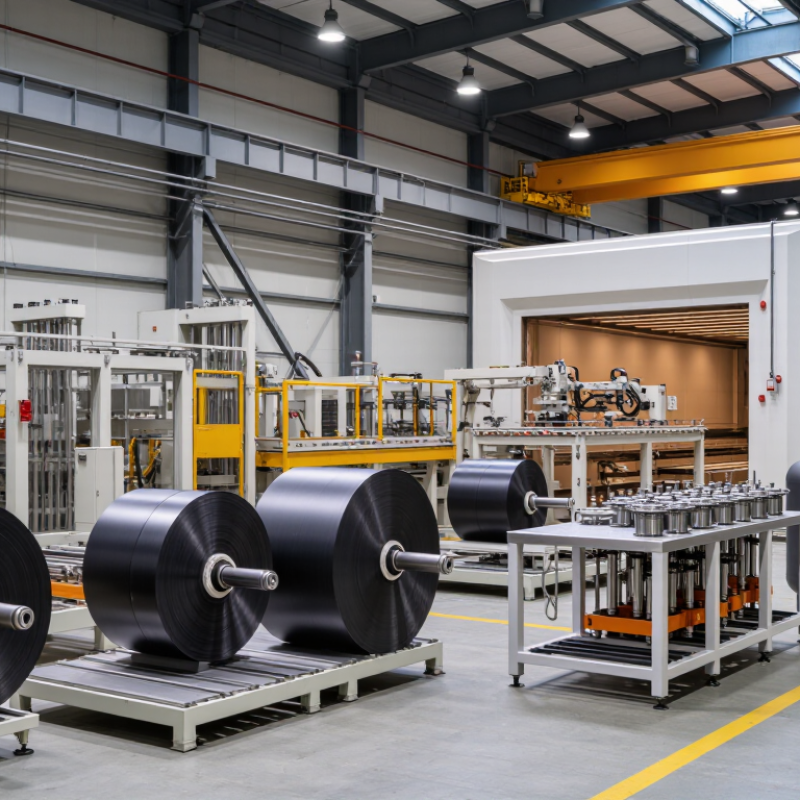
Defining China’s Top Carbon-Fiber Component Manufacturers by Industry Metrics
China’s top carbon-fiber component manufacturers should be judged by industrial metrics, not factory size alone. The China Carbon Fiber Industry Association reported approximately 141,500 metric tons of domestic carbon-fiber capacity in 2023. However, capacity does not equal qualified component output. Buyers should examine audited production records, equipment utilization, and consistent delivery performance.
Quality evidence matters more than impressive brochures. Aerospace, automotive, and energy customers typically review tensile strength, fiber-volume fraction, void content, dimensional tolerance, and batch traceability. ISO 13003 provides useful guidance for fiber-reinforced plastics, while the MarketsandMarkets Carbon Fiber Market report projects strong global growth through 2029. This growth increases pressure on Chinese suppliers to prove repeatable processing, not merely expand capacity.
Look beyond headline figures.
A reliable manufacturer should show documented testing, controlled curing cycles, and measured scrap rates. For structural parts, a stable fiber orientation can matter more than a lower purchase price. For high-volume automotive parts, cycle time and mold consistency deserve equal attention. China’s expanding capacity is encouraging, yet public data often mixes pilot lines with commercial production. That weakness deserves careful review. My assessment would therefore combine third-party test reports, customer qualification records, five-year delivery data, and factory-level process audits. A supplier with slightly lower capacity may still deliver stronger engineering reliability.
PAN-Based Carbon Fiber: 1K–48K Tow Sizes and T700 Strength Above 4.9 GPa
China’s carbon fiber sector increasingly serves aerospace, wind energy, pressure vessels, and sporting goods. The Fiber Year 2024 estimated global carbon fiber demand at approximately 130,000 tonnes in 2023. That demand favors stable PAN-based production, especially across 1K–48K tow sizes.
T700-grade fiber typically offers tensile strength above 4.9 GPa and a modulus near 230 GPa. These figures support lightweight laminates, reinforced tubes, and high-pressure structures.
Smaller 1K and 3K tows help create smooth surfaces and precise woven fabrics. Larger 12K, 24K, and 48K tows improve deposition efficiency and reduce processing cost.
The best Chinese manufacturers should provide consistent tow spread, low fuzz, and controlled sizing chemistry.
Numbers need verification. A catalog value is not proof. ASTM D4018 or ISO 10618 testing can confirm tensile performance under defined conditions.
Independent reports from MarketsandMarkets also identify renewable energy and automotive structures as major carbon fiber growth areas through this decade. However, test results may change with specimen preparation, resin selection, and laboratory conditions.
I would request batch records, coefficient-of-variation data, and samples before approving production. A fiber can exceed 4.9 GPa in testing, yet perform poorly when sizing compatibility is overlooked.
Key Chinese Manufacturers: Guangwei, Zhongfu Shenying, Hengshen, and Others
China’s carbon fiber component sector has matured beyond raw material production. Leading manufacturers now supply pressure vessels, automotive panels, industrial rollers, and aerospace structures. Their capabilities differ, so buyers should compare process depth rather than catalog size. Some operate large precursor and carbonization lines. Others specialize in molding, machining, or finished assemblies. This distinction matters when a project needs stable fiber alignment and repeatable dimensions.
In practical supplier reviews, engineers often examine tow consistency, resin content, void levels, and laminate strength. Factory visits can reveal useful details: clean layup rooms, controlled curing ovens, and labeled test coupons. Reliable producers maintain batch records from precursor chemistry through final inspection. They also provide tensile data, interlaminar testing, and dimensional reports. Certification helps, but it cannot replace direct sample validation. A component may pass a brochure test yet fail under vibration, heat, or repeated loading.
China’s strongest manufacturers combine scale with application engineering. They adjust ply schedules, tooling, and curing cycles for each component. Cost remains attractive, especially for medium and high-volume production. Yet communication gaps and uneven documentation still create risk. Promising samples can lose consistency during scale-up. Buyers should request pilot runs, change-control procedures, and realistic delivery records. The best partnership grows through evidence, not confident promises.
Carbon Fiber Material Performance by Modulus Class
The chart compares typical tensile modulus values across commonly used carbon fiber classifications. Higher-modulus fibers provide greater stiffness, while standard-modulus fibers generally offer a more balanced combination of strength, cost, and processability. Values are representative engineering ranges rather than company-specific specifications.
Component Production: Lay-Up, RTM, Pultrusion, and 50%–65% Fiber Volume
China’s leading carbon fiber component manufacturers compete through process control, not only equipment or capacity. Hand lay-up remains useful for complex shapes and low-volume parts. Technicians position each ply carefully, then control pressure and curing conditions. RTM offers cleaner surfaces and better repeatability. It also demands accurate molds, resin flow analysis, and reliable sealing.
Pultrusion suits long profiles with consistent cross-sections. Continuous fiber alignment can deliver strong axial performance, but poor tension control may create waviness. A 50%–65% fiber volume fraction often balances stiffness, strength, resin wet-out, and production stability. Higher fiber content is not automatically better. Dry spots, trapped air, or incomplete consolidation can weaken the component. In factory audits, these defects are sometimes missed because the surface looks acceptable. That is a serious process gap.
Tips: Ask manufacturers for fiber-volume test results, void-content data, and cure records. Inspect cut sections, not only polished samples. Confirm whether lay-up pressure, RTM injection speed, and pultrusion tension are documented. Small process changes can alter performance. Even experienced teams should review them. A practical supplier should explain limits clearly, including results that were not perfect.
China Top Carbon Fiber Components Manufacturers? – Component Production: Lay-Up, RTM, Pultrusion, and 50%–65% Fiber Volume
| Production Method | Typical Fiber Volume Fraction | Suitable Component Types | Typical Advantages | Main Process Considerations | Common Quality-Control Points |
|---|---|---|---|---|---|
| Hand Lay-Up | Approximately 45%–60% | Large panels, covers, fairings, tooling, prototypes, and low-volume structural parts | Flexible laminate design, low tooling investment, and good suitability for complex shapes | Operator consistency, resin distribution, debulking, consolidation, and curing control strongly affect results | Laminate thickness, fiber orientation, void content, resin-rich areas, dimensional accuracy, and surface finish |
| Vacuum-Bagged Prepreg Lay-Up | Approximately 50%–65% | Aerospace-style panels, sporting goods, lightweight brackets, shells, and high-performance covers | High laminate quality, accurate fiber placement, low void content, and repeatable mechanical performance | Requires controlled material storage, vacuum integrity, debulk cycles, and a defined cure schedule | Cure temperature and pressure, degree of cure, fiber alignment, void percentage, and ply-drop execution |
| Resin Transfer Molding (RTM) | Approximately 50%–60% | Brackets, housings, aerodynamic parts, automotive structures, and medium-volume enclosed components | Good two-sided surface quality, controlled dimensions, reduced manual finishing, and repeatable production | Preform permeability, resin flow, injection pressure, mold temperature, and venting must be carefully balanced | Complete impregnation, dry spots, race-tracking, fiber wash, mold alignment, cure uniformity, and part thickness |
| Compression Molding | Approximately 50%–65% | Repetitive brackets, covers, automotive components, and short-cycle structural parts | Fast cycle potential, consistent geometry, and suitability for repeat production with matched tooling | Charge placement, mold temperature, closing speed, pressure profile, and material flow influence fiber movement | Short shots, wrinkles, fiber distortion, flash, dimensional tolerances, surface defects, and cure state |
| Pultrusion | Approximately 55%–65% | Constant-section rods, beams, channels, strips, rails, and reinforcement profiles | Continuous production, high longitudinal stiffness, stable cross-sections, and efficient material utilization | Best suited to constant cross-sections; pulling speed, die temperature, resin impregnation, and tension require control | Profile dimensions, fiber alignment, surface cracking, resin cure, pull force, voids, and cut-length accuracy |
| Filament Winding | Approximately 50%–65% | Pressure vessels, tubes, shafts, cylinders, tanks, and axisymmetric components | Efficient load-oriented fiber placement and good repeatability for rotational geometries | Winding angle, band placement, tension, resin content, mandrel accuracy, and liner compatibility are critical | Fiber coverage, winding angle, liner bonding, leakage resistance, burst performance, voids, and wall thickness |
| Automated Fiber Placement / Automated Tape Lay-Up | Approximately 50%–65% | Large aerospace-style skins, stiffened panels, pressure shells, and complex laminates | Accurate ply placement, programmable fiber angles, reduced manual labor, and traceable process data | High equipment investment; lay-up speed, tow placement, heat management, compaction, and gap/overlap control are important | Ply position, gaps and overlaps, wrinkles, steering defects, consolidation, laminate thickness, and cure quality |
Supplier Comparison: Modulus, Tensile Strength, Capacity, Cost, and Lead Time
Choosing a carbon-fiber component supplier requires more than comparing catalog prices. The 2024 JEC Observer reports global carbon-fiber capacity above 200,000 tonnes annually, but usable capacity differs by grade, certification, and production schedule. Standard-modulus fiber commonly delivers 220–240 GPa modulus and 3.5–4.5 GPa tensile strength. Intermediate-modulus grades can exceed 290 GPa, but usually cost more. Test these values with ASTM D3039 coupons, not marketing sheets. Geometry changes everything.
Cost comparisons also need process detail. Industry surveys published by CompositesWorld in 2024 place standard industrial fiber near 15–30 US dollars per kilogram before conversion. Aerospace-qualified material may exceed 40 dollars per kilogram. Finished components can reach 80–250 dollars per kilogram after molding, machining, inspection, and scrap. Capacity claims require evidence. Ask for monthly output, reserved slots, and recent on-time delivery data. Typical lead times range from six to twelve weeks for repeat industrial parts, while qualified programs may require sixteen to thirty weeks. That matters. A cheaper quote can become expensive after tooling delays, extra inspection, or rejected laminates. The comparison is imperfect, because suppliers often report fiber capacity rather than finished-component capacity. Request cure records, lot traceability, tensile results, and a written lead-time commitment before approval.
We Meet Our Clients Needs.
Meeting the diverse needs of our clients, we have complete machining facilities for everything from single part prototypes to large quantity production. Our small size is one of our biggest assets. It allows us to control costs and maintain the highest of standards.
Quality orientated and delivery always on time or earlier than originally promised.
Strongly recommend MSD.