
What Are the Top HDPE Plastic Sheets Suppliers in China?
Choosing the right Hdpe Plastic Sheets supplier in China requires more than comparing online prices. Buyers must examine material consistency, manufacturing capacity, testing methods, and export experience. A sheet may look smooth and uniform, yet still vary in thickness, density, or impact strength.
This guide explores leading Chinese suppliers through practical purchasing criteria. It considers resin quality, sheet dimensions, color stability, surface finish, and custom fabrication services. Reliable manufacturers should provide technical data sheets, batch records, inspection reports, and clear tolerances. Certifications can support trust, but they should be verified rather than accepted blindly.
Factory communication also matters. Fast replies are useful, but precise answers matter more. Ask about minimum order quantities, sample approval, packaging, lead times, and after-sales support. Photos of extrusion lines can help, although they do not replace an independent audit. No supplier is perfect. Even experienced buyers can overlook moisture protection during transport or misunderstand thickness tolerances. That assumption can fail.
The suppliers discussed here are assessed for their ability to serve construction, chemical processing, mining, packaging, and industrial fabrication markets. Attention is given to production equipment, quality-control procedures, customization capability, and evidence of dependable delivery. Regional advantages may reduce costs, but product performance remains the priority. A careful comparison helps importers identify suppliers that offer stable Hdpe Plastic Sheets, transparent communication, and realistic long-term value.
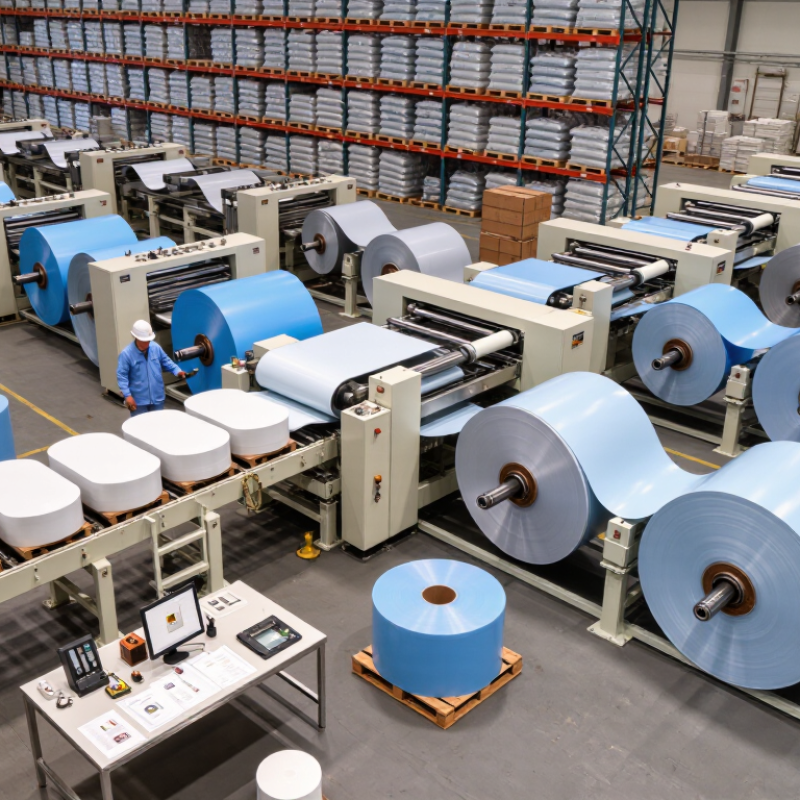
HDPE Sheet Basics: Density 0.941–0.965 g/cm³ and PE100 Grades
What Are the Top HDPE Plastic Sheets Suppliers in China?
HDPE plastic sheets are valued for toughness, chemical resistance, and low moisture absorption. Their typical density ranges from 0.941 to 0.965 g/cm³. This range affects stiffness, impact performance, and machining behavior. A sheet with higher density may feel more rigid, but density alone cannot predict service life. Experienced buyers should review tensile strength, elongation, impact data, and operating temperature.
PE100 is widely associated with high-performance polyethylene and strong resistance to pressure-related stress. However, PE100 labeling on a sheet needs careful verification. Ask suppliers for raw material certificates, batch traceability, and independent test reports. Confirm whether the grade suits tanks, liners, fabricated parts, or other applications. A polished datasheet is not proof. Sample testing remains necessary, especially when welding or outdoor exposure is expected. Some suppliers provide excellent samples but inconsistent production batches. That risk deserves attention.
Tips: Compare at least three Chinese suppliers using the same specification sheet. Check density by batch, not only by catalog range. Request a small trial order and inspect thickness, surface flatness, color uniformity, and cutting quality. Ask about welding guidance and storage conditions. I would also question unusually low prices. They may reflect recycled content, thinner tolerances, or weaker quality control. This is easy to miss. Reliable sourcing depends on documents, physical samples, and clear communication with the factory’s technical team.
What Are the Top HDPE Plastic Sheets Suppliers in China? - HDPE Sheet Basics: Density 0.941–0.965 g/cm³ and PE100 Grades
The table below provides a supplier-evaluation framework and typical HDPE sheet specifications. It is a market reference rather than a ranking of named companies or brands.
| Supplier Evaluation Dimension | Typical Technical Data or Requirement | Why It Matters | Recommended Verification |
|---|---|---|---|
| Base Resin Density | Approximately 0.941–0.965 g/cm³ for high-density polyethylene sheet materials | Density influences stiffness, chemical resistance, impact performance, and weight. | Request a material test report and confirm the test method, typically ISO 1183 or ASTM D792. |
| PE100 Grade Availability | PE100 is a polyethylene pressure-pipe grade with a minimum required strength of 10 MPa at 20°C for the relevant pipe classification; sheet suitability must be separately confirmed. | The PE100 designation does not automatically define every sheet property or certify a sheet for pressure-pipe use. | Ask for the resin grade, end-use specification, hydrostatic classification, and independent test documentation. |
| Standard Sheet Thickness | Common commercial ranges include approximately 0.5–100 mm; exact availability depends on the production process and sheet dimensions. | Thickness affects load capacity, fabrication method, weight, and project cost. | Confirm nominal thickness, measured tolerance, flatness, and edge condition on the quotation. |
| Sheet Dimensions | Typical custom formats may include widths around 1,000–2,000 mm and lengths around 2,000–6,000 mm, subject to equipment limits. | Larger formats can reduce joints and fabrication waste. | Request a production-size chart and verify the maximum usable dimensions, not only the nominal dimensions. |
| Manufacturing Process | Extrusion is widely used for continuous sheet production; compression molding may be used for thicker or specialty plates. | Processing method affects internal stress, surface finish, thickness consistency, and machinability. | Request process information, sample sections, dimensional inspection records, and surface photographs. |
| Mechanical Performance | Commonly reviewed properties include tensile strength, elongation, impact resistance, hardness, and flexural modulus. | Performance requirements vary considerably between liners, tanks, cutting boards, wear parts, and fabricated components. | Compare test values using the same standard, specimen direction, temperature, and conditioning method. |
| Operating Temperature | HDPE is commonly used for service temperatures around −50°C to 80°C, with the allowable range depending on load, design, and exposure. | Temperature changes affect stiffness, creep, dimensional stability, and impact behavior. | Obtain a temperature-performance statement for the intended application rather than relying on a general range. |
| Chemical Resistance | HDPE generally offers strong resistance to many acids, alkalis, salts, and aqueous chemicals, but compatibility is concentration- and temperature-dependent. | Chemical compatibility determines service life in tanks, ducts, liners, and industrial equipment. | Check a chemical-resistance chart and obtain application-specific confirmation for solvents, oxidizers, and elevated temperatures. |
| Food-Contact or Potable-Water Use | Only material formulations supported by applicable food-contact or drinking-water regulations should be specified for these uses. | General-purpose HDPE is not automatically approved for regulated contact applications. | Request the relevant declaration of conformity, migration data, and traceability documents. |
| Color and UV Stabilization | Natural, black, white, blue, and other colors may be available; outdoor grades can include UV stabilizers or carbon black. | UV protection helps reduce weathering, but color alone does not prove outdoor durability. | Specify the color standard, additive requirements, outdoor exposure period, and accelerated-weathering evidence. |
| Fabrication Support | Relevant capabilities may include CNC cutting, drilling, bending, welding, routing, and custom machining. | Integrated fabrication can simplify procurement and improve dimensional consistency. | Review drawings, tolerances, weld procedures, first-article samples, and inspection reports. |
| Quality and Traceability | A reliable supplier should identify resin batches, production dates, product dimensions, inspection results, and packaging details. | Traceability supports quality control, corrective action, and repeat purchasing. | Request batch labels, certificates of analysis, inspection plans, and retained-sample procedures. |
| Export and Packaging Capability | Suitable packaging may include protective film, moisture-resistant wrapping, pallets, corner protection, and container-load securing. | Correct packaging reduces scratches, warping, moisture exposure, and transit damage. | Confirm Incoterms, pallet dimensions, loading photographs, shipping marks, and replacement policy for transit damage. |
Note: PE100 is primarily a pressure-pipe material classification. A sheet described as PE100 should not be treated as pressure-pipe certified unless the supplier provides the applicable product standard and test evidence.
We Meet Our Clients Needs.
Meeting the diverse needs of our clients, we have complete machining facilities for everything from single part prototypes to large quantity production. Our small size is one of our biggest assets. It allows us to control costs and maintain the highest of standards.
Quality orientated and delivery always on time or earlier than originally promised.
Strongly recommend MSD.