
Top 10 PP Non Woven Fabric Manufacturers Worldwide

Pp Non Woven Fabric supports products that people rarely notice, yet use every day. It appears in medical gowns, shopping bags, crop covers, filtration layers, and household wipes. This material is produced by bonding polypropylene fibers without traditional weaving. The result can be lightweight, strong, breathable, and cost-efficient. However, performance changes with fiber diameter, bonding method, basis weight, and finishing treatment.

This introduction presents ten leading Pp Non Woven Fabric manufacturers worldwide. The selection considers production capacity, product consistency, export experience, quality certifications, technical support, and application range. It also examines raw-material traceability and practical sustainability efforts. Dr. Seshadri Ramkumar, a recognized nonwovens researcher, describes nonwovens as “a versatile material platform for innovation.” That observation matters because manufacturers serve very different needs. A spunbond supplier for agricultural covers may not match a meltblown producer serving filtration markets. Scale alone does not prove reliability.

Real-world details often reveal more than impressive brochures. Can a factory maintain uniform rolls during peak demand? Can it provide clear test data for tensile strength, air permeability, and elongation? Does its delivery remain dependable when resin prices rise? These questions shape the comparison. No global ranking is perfectly complete. Public information differs between regions, and some capable private manufacturers disclose little. That limitation deserves attention. Therefore, this overview should support careful supplier evaluation, not replace technical audits, sample testing, or direct commercial verification. Performance can look excellent on paper. Production floors tell a fuller story.
Top 10 PP Non Woven Fabric Manufacturers Worldwide

What Is PP Non Woven Fabric and How Is It Made?

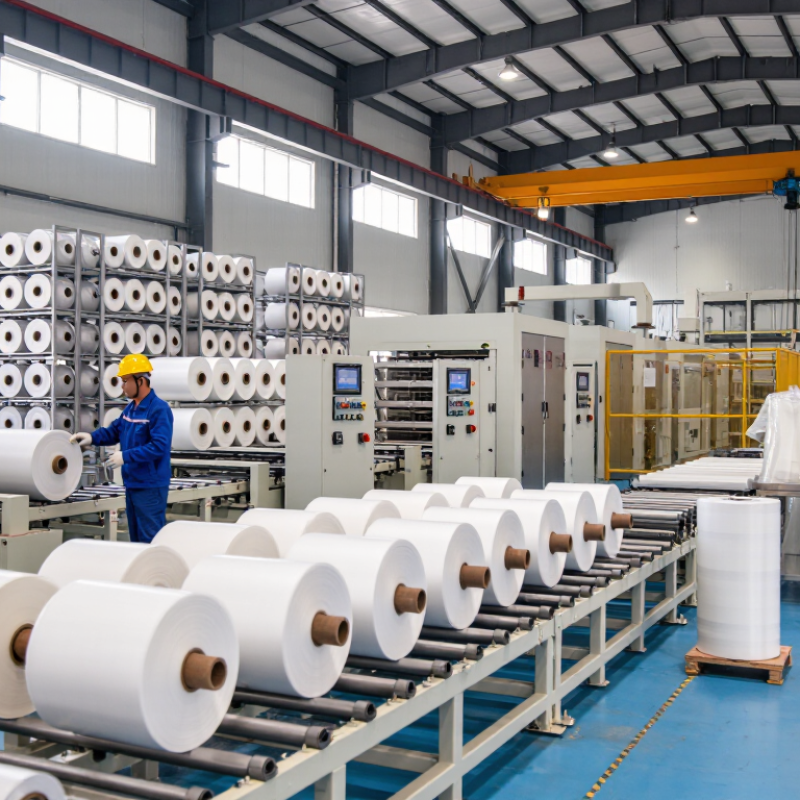
Polypropylene (PP) nonwoven fabric is a sheet made from bonded fibers, not woven yarns. It feels light, dry, and slightly waxy. Manufacturers produce it from thermoplastic PP pellets, which are melted and pushed through tiny spinneret holes. The resulting filaments cool quickly and form a continuous web.

Most industrial lines use spunbond, meltblown, or a combination of both. Spunbond creates stronger, larger filaments for bags, furniture covers, and medical gowns. Meltblown produces very fine fibers, often used in filtration layers. Heat, pressure, or chemical binders then lock the web together. Production teams inspect thickness, tensile strength, air permeability, and basis weight, measured in grams per square meter.

The process is efficient, but not flawless. Poor temperature control can create weak spots or uneven surfaces. Moisture and recycled content may also affect consistency. That detail matters.

Grand View Research estimated the global nonwoven fabrics market at about USD 53.5 billion in 2022, with a projected 7.8% compound annual growth rate from 2023 to 2030. Market definitions vary, so published figures should be compared carefully. PP remains important because it combines low density, chemical resistance, and scalable processing. However, its environmental performance depends on product design, collection systems, and end-of-life handling. A high-performing fabric is not automatically a sustainable one.

Key Criteria for Evaluating Global PP Non Woven Fabric Manufacturers

Selecting among the top 10 PP nonwoven fabric manufacturers requires more than comparing prices. Grand View Research valued the global nonwoven fabric market at approximately USD 53.5 billion in 2022. Its forecast also indicates strong growth through 2030. INDA and EDANA reported worldwide nonwoven production above 14 million tonnes in 2023. These figures show a crowded, high-volume market. They do not prove consistent quality.

A practical evaluation starts with resin control, process capability, and documented testing. Check polypropylene melt-flow records, GSM tolerance, tensile strength, elongation, and hydrostatic resistance. For hygiene or filtration applications, request batch-level laboratory results.

ISO 9073 methods and ASTM testing procedures can improve comparability. A serious supplier should explain its spunbond or meltblown settings clearly. It should also provide production capacity, lead-time history, and corrective-action records.

Small details matter.

Traceability is essential. Ask whether each roll carries a batch code, production date, and inspection record. Review quality certificates, environmental audits, recycled-content claims, and energy data.

Smithers’ global nonwovens outlook highlights rising demand for efficient and sustainable production. Still, sustainability claims can remain vague.

Ask for evidence.

I would also test samples from several production lots. One excellent roll proves little. A low quotation can hide unstable output, weak packaging, or delayed shipments.

No scorecard is perfect. Weight technical consistency more heavily than promotional language. Manufacturers deserve higher rankings when their data remains clear under difficult questions.

Top 10 PP Non Woven Fabric Manufacturers Worldwide

The top 10 PP non woven fabric manufacturers worldwide are best assessed through production capacity, process control, and regional supply strength. Public market studies place the global nonwoven fabric industry above US$50 billion in 2022, with steady growth expected through 2030, according to Grand View Research. Polypropylene remains important because it offers low density, chemical resistance, and efficient melt processing.

A practical ranking should examine spunbond and meltblown lines, annual output, recycled-content capability, and quality consistency. Manufacturing sites with automated web inspection can detect thin areas before rolls leave the plant. That matters in hygiene products, medical packaging, agriculture covers, and filtration media. Reports from Smithers also highlight rising demand for lightweight materials and advanced filtration structures. However, capacity figures often differ between company disclosures and market databases. The list cannot be perfectly neutral.

Buyers should compare basis weight, tensile strength, elongation, air permeability, and roll width tolerance. A fabric may look uniform under warehouse lighting but fail during high-speed converting. Production experience makes this clear. Moisture control matters too, especially in humid coastal factories. Certification systems, traceable raw materials, and documented laboratory testing strengthen supplier reliability. Energy use deserves more attention, although many rankings still focus mainly on output. Cost pressure can also encourage thinner fabrics, which may reduce durability. That trade-off needs closer review.

Products, Technologies, and Industries Served by Leading Manufacturers

The top 10 PP non woven fabric manufacturers worldwide serve demanding markets with specialized products. Their portfolios commonly include spunbond, meltblown, SMS, laminated, hydrophilic, and elastic fabrics. These materials support diapers, medical gowns, face masks, filtration media, crop covers, roofing membranes, and automotive interiors. Weight, tensile strength, softness, air permeability, and liquid resistance vary by application.

Leading manufacturers invest in high-speed extrusion lines, precise die systems, and automated winding equipment. Some combine spunbond and meltblown layers for stronger barrier performance. Others use ultrasonic bonding, corona treatment, or surface coatings to improve functionality. Experienced producers test basis weight, pore structure, elongation, and hydrostatic pressure during production. Batch records and traceable raw materials make quality claims more reliable. ISO-based quality systems can help, but certificates alone never replace practical testing.

Manufacturers also adapt fabrics for regional industries and changing customer requirements. Agriculture may require ultraviolet stability, while construction needs tear resistance and controlled breathability. Hygiene products demand softness and consistent absorption. Filtration applications require careful fiber distribution and stable pressure performance. No supplier is perfect. A fabric that performs well in one climate may fail under high humidity or rough handling. Buyers should request samples, technical data, and production evidence before making a decision. Small details matter.

How to Choose the Right PP Non Woven Fabric Manufacturer

Choosing the right PP non woven fabric manufacturer requires more than comparing prices. Start with the fabric’s intended use, such as packaging, agriculture, filtration, or hygiene products. Ask for the exact basis weight, width tolerance, tensile strength, air permeability, and roll length. Request samples from different production batches. Then measure them under the same conditions.

The manufacturer should explain its process clearly. Ask how it controls fiber quality, web formation, bonding temperature, and roll winding. Request recent test reports from independent laboratories when performance is critical. Check whether the factory can provide batch records, production dates, and traceable raw material information. Vague answers are a warning sign. So are unusually low prices.

Production experience appears in small details. Inspect sample edges, surface uniformity, odor, and moisture levels. If possible, review the inspection area or arrange a video audit. Ask how the team handles rejected rolls and customer complaints. A responsive technical engineer can prevent costly misunderstandings. However, polished documents do not prove consistent output.

Test the material in a realistic application. Place a sample on the actual machine, not only on a desk. Check feeding stability, sealing behavior, dust, and tearing after handling. Record the results. No checklist is perfect. Some decisions still depend on communication, delivery history, and honest technical limits. A manufacturer that admits a weakness may be more dependable than one promising everything.

We Meet Our Clients Needs.

Meeting the diverse needs of our clients, we have complete machining facilities for everything from single part prototypes to large quantity production. Our small size is one of our biggest assets. It allows us to control costs and maintain the highest of standards.

Quality orientated  and delivery always on time or earlier than originally promised.

Strongly recommend MSD.