
What Are the Top Machining Equipment Manufacturers?
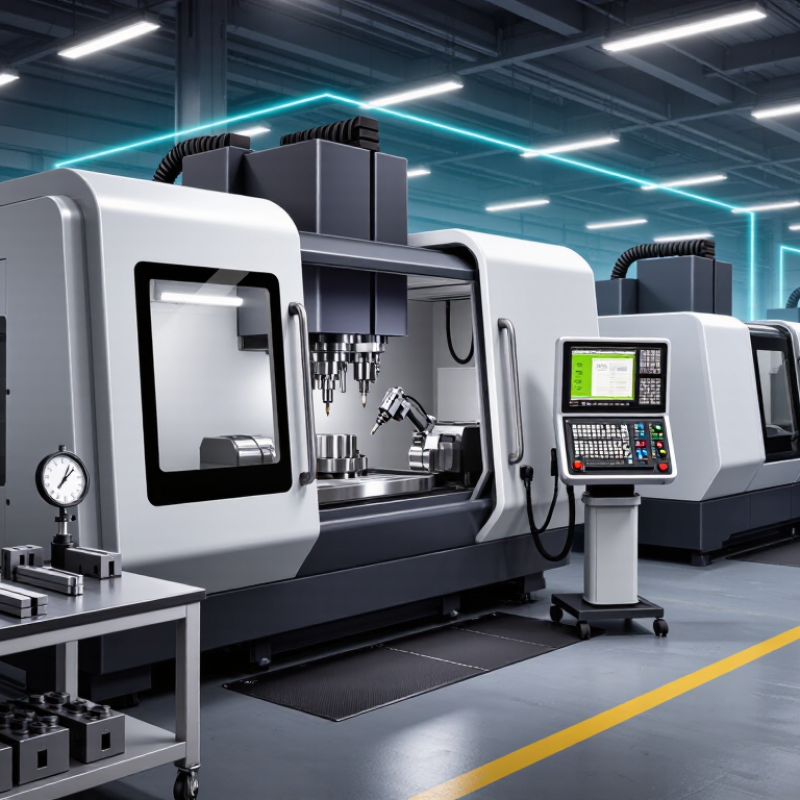
Choosing the top machining equipment manufacturers requires more than comparing glossy brochures. A reliable evaluation considers machine accuracy, spindle performance, control systems, automation, service support, and long-term operating costs. In a busy workshop, these details become visible quickly. A stable five-axis machine may hold tight tolerances through a long production run, while a poorly supported system can create costly delays.
This overview examines established manufacturers such as Mazak, DMG MORI, Okuma, Makino, Haas, and other influential brands. Their strengths differ. Some focus on advanced multitasking platforms, while others offer accessible CNC solutions for small and mid-sized manufacturers. The best choice depends on material, batch size, operator skill, floor space, and required tolerances. There is no universal winner.
Real-world performance matters.
A responsible comparison should combine manufacturer specifications with independent reviews, user experience, maintenance records, and verified service coverage. Factory demonstrations can reveal useful details, such as chip evacuation, tool-change speed, vibration, and interface clarity. Yet demonstrations rarely reproduce every production problem. That limitation deserves attention.
Pricing also needs careful interpretation. A lower purchase price may hide training expenses, software fees, or difficult parts availability. Conversely, premium machining equipment may offer better thermal control and stronger resale value, but only when its capabilities are used. This guide therefore treats rankings as practical reference points, not absolute judgments. Readers should confirm current specifications, local support, and compliance requirements before making a purchasing decision. Manufacturers continuously update their platforms, and older opinions can become inaccurate. That is an uncomfortable but important reality.
What Is Machining Equipment and Why Does Manufacturer Quality Matter?
What Are the Top Machining Equipment Manufacturers?
Machining equipment includes CNC mills, lathes, grinders, drilling systems, and cutting tools. These machines remove material with controlled accuracy. They shape metal, plastics, and advanced composites into usable parts.
That definition sounds simple. It is not.
Manufacturer quality affects accuracy, uptime, safety, and long-term operating cost. A rigid machine can hold tight tolerances during repeated production. A poorly built system may create vibration, heat, and inconsistent surfaces. Those defects often appear as rejected parts, not dramatic breakdowns. According to Fortune Business Insights, the global CNC machine market reached about $83.96 billion in 2023. Such scale reflects growing demand for dependable automation, not merely more machines.
Quality also includes software, service, documentation, and spare-part access. A precise machine still underperforms when operators cannot calibrate it correctly. The International Organization for Standardization links quality management with consistent processes and continual improvement through ISO 9001 principles. This matters on the shop floor. A technician needs clear maintenance intervals and reliable measurement data.
Cost can mislead.
A lower purchase price may hide expensive downtime. The U.S. Department of Energy reports that industrial motor systems can represent a major share of facility electricity use. Efficient drives and properly maintained equipment can therefore reduce operating waste. Still, energy savings are not guaranteed. Installation, workload, tooling, and operator skill change the result. Buyers should compare verified cycle times, repeatability tests, service response, and total ownership cost before choosing a manufacturer.
What Are the Top Machining Equipment Manufacturers? - What Is Machining Equipment and Why Does Manufacturer Quality Matter?
A practical comparison of major machining equipment categories, typical specifications, applications, and manufacturer-quality factors.
| Equipment Category | Primary Machining Function | Typical Axis Configuration | Common Accuracy Range | Suitable Materials | Typical Applications | Quality-Critical Features | Manufacturer Quality Impact |
|---|---|---|---|---|---|---|---|
| Vertical Machining Center | Computer-controlled milling, drilling, tapping, and contouring with a vertically oriented spindle. | 3 to 5 linear or rotary axes | Approximately ±0.005 to ±0.025 mm, depending on machine class, calibration, and operating conditions. | Aluminum, steel, stainless steel, cast iron, brass, and engineering plastics. | Prismatic components, tooling plates, molds, fixtures, and general production parts. | Thermal stability, spindle rigidity, linear guide quality, and backlash control. | Strong influence on repeatability, surface finish, tool life, and unattended production. |
| Horizontal Machining Center | Multi-face milling and drilling with a horizontally oriented spindle and automatic workpiece rotation. | 3 to 5 axes, commonly with a rotary pallet | Approximately ±0.005 to ±0.020 mm in well-maintained precision installations. | Steel, cast iron, stainless steel, aluminum, and nickel-based alloys. | Automotive components, pump bodies, transmission parts, and high-volume production work. | Pallet positioning, chip evacuation, spindle load capacity, and automatic tool changing. | Affects cycle time, multi-face alignment, production uptime, and process consistency. |
| CNC Turning Center | Rotates the workpiece while fixed or driven tools perform turning, boring, threading, and grooving. | 2 to 5 axes, with optional live tooling | Approximately ±0.005 to ±0.020 mm for standard precision work. | Steel, stainless steel, aluminum, brass, titanium, and plastics. | Shafts, bushings, flanges, fittings, threads, and rotationally symmetrical components. | Chuck accuracy, spindle thermal growth, turret rigidity, and bar-feeding reliability. | Directly affects concentricity, thread accuracy, cycle stability, and scrap rates. |
| Swiss-Type CNC Lathe | Performs precision turning with a guide bushing that supports slender workpieces close to the cutting tool. | 4 to 13 or more programmable axes | Often approximately ±0.002 to ±0.010 mm for suitable applications. | Stainless steel, titanium, cobalt alloys, brass, aluminum, and medical-grade materials. | Small medical parts, electronic pins, miniature shafts, and precision connector components. | Guide-bushing accuracy, synchronization, bar control, and high-speed spindle balance. | High-quality construction is essential for miniature features, long unattended cycles, and low vibration. |
| CNC Grinding Machine | Removes small amounts of material with an abrasive wheel to achieve tight dimensions and fine surfaces. | 2 to 6 axes, depending on grinding process | Approximately ±0.001 to ±0.010 mm; specialized systems can achieve tighter results. | Hardened steel, carbide, ceramics, glass, and selected superalloys. | Precision shafts, bearing races, cutting tools, dies, and hardened components. | Wheel balance, coolant control, machine stiffness, dressing accuracy, and vibration suppression. | Determines dimensional consistency, surface integrity, heat control, and final-part performance. |
| Electrical Discharge Machining | Uses controlled electrical discharges to remove electrically conductive material without direct cutting force. | 3 to 5 axes; wire systems commonly use coordinated X, Y, U, and V axes | Approximately ±0.002 to ±0.015 mm, depending on process type and settings. | Tool steel, carbide, hardened steel, nickel alloys, and other electrically conductive materials. | Fine molds, intricate cavities, narrow slots, punches, and complex profiles. | Electrical stability, dielectric filtration, wire control, flushing, and servo response. | Improves feature accuracy, corner quality, surface finish, and process reliability. |
| CNC Laser Cutting Machine | Uses a focused laser beam to cut, pierce, or mark sheet, plate, tube, or selected three-dimensional parts. | 2 to 5 controlled axes | Approximately ±0.025 to ±0.100 mm, depending on material thickness and machine design. | Carbon steel, stainless steel, aluminum, brass, copper, and coated sheet materials. | Sheet-metal panels, enclosures, brackets, signage, and low-to-medium volume fabrication. | Beam quality, motion control, autofocus, assist-gas regulation, and optical cleanliness. | Influences edge quality, piercing reliability, heat-affected zones, and material utilization. |
| CNC Waterjet Cutter | Uses a high-pressure abrasive or pure-water stream to cut materials with limited thermal distortion. | 2 to 5 axes | Approximately ±0.075 to ±0.250 mm for common industrial cutting conditions. | Steel, aluminum, stone, glass, composites, rubber, and heat-sensitive materials. | Heavy plate, architectural components, composite panels, and large-format profiles. | Pump reliability, nozzle condition, abrasive delivery, motion accuracy, and taper compensation. | Affects edge taper, cutting speed, operating cost, and dimensional repeatability. |
| CNC Gear- and Profile-Machining Equipment | Produces involute gears, splines, and specialized profiles through coordinated cutting or shaping operations. | 3 to 7 coordinated axes | Approximately ±0.005 to ±0.030 mm, depending on gear size, class, and inspection method. | Hardened and unhardened steels, cast iron, bronze, and selected powder-metal materials. | Gearboxes, robotics, aerospace drives, industrial reducers, and vehicle powertrains. | Axis synchronization, spindle indexing, tool rigidity, thermal control, and inspection capability. | Critical for tooth accuracy, noise reduction, load distribution, service life, and safety. |
| Additive Manufacturing Equipment | Builds components layer by layer using polymers, metals, ceramics, or composite feedstocks. | 3 to 6 controlled axes or layer-based motion systems | Approximately ±0.050 to ±0.300 mm before finishing, depending on technology and part size. | Thermoplastics, photopolymers, stainless steel, titanium alloys, nickel alloys, and ceramics. | Prototypes, lightweight structures, customized tooling, medical models, and complex internal channels. | Layer consistency, material control, calibration, thermal management, and software-process integration. | Determines density, dimensional stability, repeatability, material traceability, and post-processing requirements. |
Important: The accuracy values shown are representative industrial ranges rather than universal specifications. Actual results depend on machine configuration, workholding, tooling, material, temperature, calibration, operator practice, and preventive maintenance. High-quality manufacturers typically provide stronger process documentation, dependable service support, spare-parts availability, inspection data, and long-term machine stability.
Related Posts
-
2026 Best Machine and Machine Tool Trends for Global Buyers?
-
2026 Top Machining Equipment Trends and Innovations to Watch?
-
2026 Top Trends in Machining Equipment for the Manufacturing Industry?
-
Why Are Machine Tools Essential for Modern Manufacturing?
-
The Future of Machine Tools Innovations Transforming Manufacturing Processes
-
10 Essential Tips for Choosing the Right Machine Tool for Your Workshop
We Meet Our Clients Needs.
Meeting the diverse needs of our clients, we have complete machining facilities for everything from single part prototypes to large quantity production. Our small size is one of our biggest assets. It allows us to control costs and maintain the highest of standards.
Quality orientated and delivery always on time or earlier than originally promised.
Strongly recommend MSD.