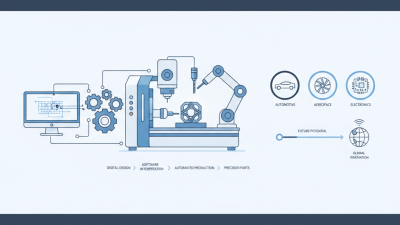
Why Choose China Top CNC Machining Manufacturing?

Choosing China for top CNC machining manufacturing is not simply a search for lower prices. It is a decision about capability, consistency, and long-term production control. China’s mature supply chain connects precision machining factories with toolmakers, material suppliers, surface-treatment specialists, and inspection laboratories. This network can shorten production cycles without sacrificing engineering requirements.

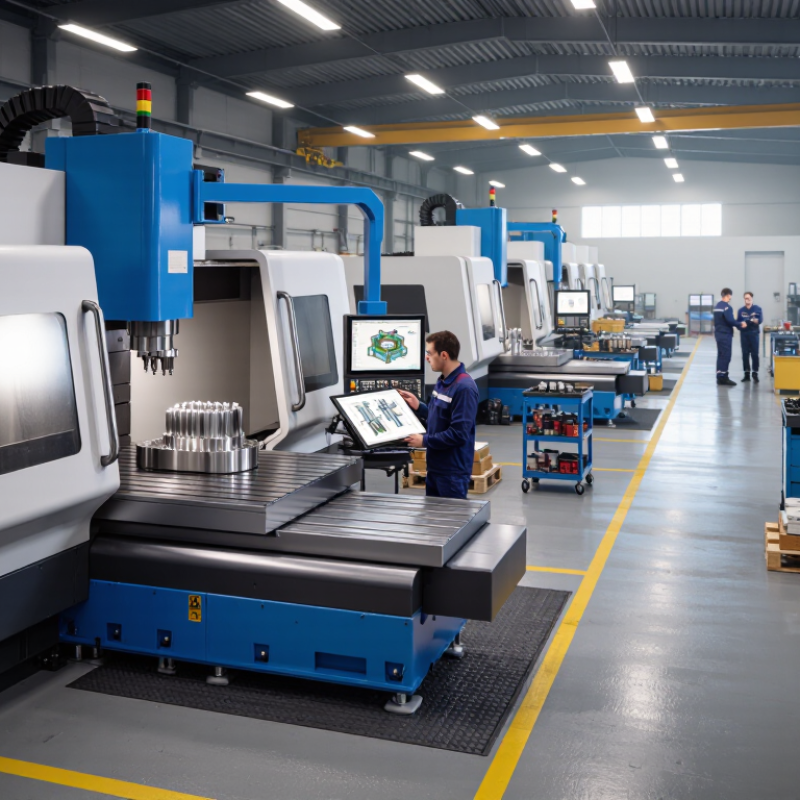
Peter Zelinski, editor-in-chief of Modern Machine Shop, has stated, “Manufacturing is a process of continuous improvement.” That principle explains China’s growing strength in CNC machining manufacturing. Many experienced suppliers use multi-axis machining centers, automated tool management, coordinate measuring machines, and digital production records. These details matter when a component must hold a tight tolerance across thousands of units.

Real experience still matters. A reliable factory will review drawings carefully, question unclear tolerances, and recommend practical changes before cutting metal. It should provide material certificates, first-article inspection reports, and measurable quality data. A polished website is not enough. Ask for machine lists, sample parts, process photos, and evidence of previous projects.

The process is not flawless.

Communication gaps can delay approval. Poorly defined specifications can create expensive rework. Even an advanced supplier may miss expectations without a clear inspection plan. That is why careful buyers compare technical responses, not only quotations. They examine engineering support, production transparency, quality systems, packaging methods, and export experience.

The strongest choice is rarely the cheapest factory. It is the partner that explains risks honestly, documents its work, and improves after feedback. With proper verification, China can offer scalable CNC machining manufacturing for prototypes, industrial equipment, automotive components, medical devices, and complex custom parts.
Why Choose China Top CNC Machining Manufacturing?

What Is China’s CNC Machining Manufacturing Industry?

China’s CNC machining manufacturing industry is a large, connected production network. It serves automotive, medical, electronics, robotics, energy, and industrial equipment sectors. Many factories operate CNC mills, turning centers, wire-cut machines, and multi-axis equipment. This range supports both simple brackets and complex aluminum housings.

The industry combines skilled technicians with digital production systems. Engineers commonly review 3D models, tolerances, material specifications, and surface requirements before machining begins. Quality teams may use coordinate measuring machines, optical scanners, hardness testers, and detailed inspection reports. Material certificates and process records also improve traceability. In practical sourcing, clear drawings and realistic tolerances often matter more than a low quotation.

It is not flawless. Capacity, communication, and inspection discipline can differ greatly between suppliers. A fast sample does not always prove stable mass production. Some workshops still depend too heavily on manual checks. This deserves attention. Reliable manufacturers usually welcome pre-production reviews, first-article inspection, and measurable acceptance standards. They also explain risks, such as thin walls, sharp internal corners, difficult materials, or excessive tolerance demands. China’s CNC sector remains competitive because it can combine equipment access, engineering labor, supplier networks, and flexible production volumes. Still, every project needs careful verification, not assumptions.

How Do Chinese CNC Machining Manufacturers Operate?

Why Choose China Top CNC Machining Manufacturing?

How Do Chinese CNC Machining Manufacturers Operate?

Chinese CNC machining manufacturers often operate through coordinated engineering, production, inspection, and logistics teams. A customer drawing is reviewed before quotation. Engineers check tolerances, material grades, surface finishes, and possible machining risks. They may suggest changing a deep pocket or thin wall. Small changes can reduce vibration and tool wear. That advice reflects shop-floor experience, not only software.

After approval, planners assign machines based on material, dimensions, tolerance, and order volume. Operators prepare tools, fixtures, workholding, and cutting parameters. A typical cell may include turning centers, three-axis mills, five-axis equipment, and coordinate measuring machines. Inspection records often include first-article measurements and batch checks. Traceability matters. Part labels, material certificates, and revision numbers reduce avoidable confusion.

The process is not flawless. Busy factories can suffer scheduling pressure, communication gaps, or inconsistent feedback between shifts. A capable supplier should disclose these risks and document corrective actions. I have found that clear drawings, sample approval, and written change control prevent many disputes. Yet even a careful process needs human judgment. A measurement may pass while the part still feels difficult to assemble. Experienced teams therefore combine instruments, operator checks, and practical fit testing.

Why Choose China for CNC Machining Manufacturing?

China’s share of global manufacturing value added increased substantially between 2010 and 2022. This large industrial base supports CNC machining through established material supply chains, engineering capabilities, production capacity, and integrated finishing and inspection services.

Data source: World Bank World Development Indicators, Manufacturing Value Added in Current U.S. Dollars (NV.IND.MANF.CD), rounded figures calculated against the world aggregate.

What Advantages Does China Offer for CNC Machining?

Why Choose China Top CNC Machining Manufacturing?

China offers a dense manufacturing network for CNC machining, from raw materials to surface finishing. This connected supply chain can shorten purchasing time and reduce repeated coordination. Buyers can source aluminum, stainless steel, titanium, and engineering plastics through experienced suppliers. Many workshops also provide turning, milling, drilling, grinding, and secondary treatments in one production plan.

Skilled machinists use modern multi-axis equipment, digital drawings, and coordinate measuring machines. These tools support stable dimensions, detailed inspection records, and repeatable production. For complex parts, engineers can review wall thickness, tool access, tolerance limits, and material behavior before machining. This practical feedback may prevent costly redesigns. It does not always happen automatically.

Cost remains an important advantage, especially for medium and large production runs. Lower labor and integrated supply costs can improve a project’s overall budget. China also has strong export infrastructure, supporting international delivery through established freight channels. However, the lowest quotation may hide weak inspection, unclear tolerances, or inconsistent materials. Price alone is a poor quality-control system.

Reliable cooperation depends on documented drawings, approved samples, inspection standards, and clear communication. Buyers should request material certificates, dimensional reports, and process details when necessary. Regular video inspections or third-party audits can add useful visibility. Time-zone differences and language gaps may still create delays. Careful planning helps, but no supplier relationship is perfect.

Which Factors Determine CNC Machining Quality in China?

Choosing China’s top CNC machining manufacturers requires more than comparing prices. Quality begins with material control, process planning, and disciplined communication. Reliable factories verify alloy grades with certificates and record each batch before machining starts. Engineers also review drawings for unclear tolerances, thin walls, and difficult tool paths. This practical review can prevent expensive corrections later.

Machine condition strongly affects accuracy. A capable workshop follows calibration schedules and checks spindle runout, tool wear, and fixture stability. During production, operators inspect critical dimensions with calibrated micrometers, gauges, or coordinate measuring equipment. A first-article report should show actual measurements, not only a pass or fail statement. Small details matter.

Surface finish depends on cutting speed, coolant control, tool selection, and final handling. Good manufacturers keep inspection records and trace parts through each operation. They also protect finished components from scratches, moisture, and mixed batches during packaging. I have seen projects delayed because a correct part arrived without clear identification. The machining was sound, but the system was weak. No workshop is perfect. Even experienced teams should review rejected parts, question repeated defects, and improve the process instead of hiding mistakes. Clear feedback between designers, engineers, and inspectors often determines whether a Chinese CNC supplier delivers consistency or merely attractive samples.

Why Choose China Top CNC Machining Manufacturing? - Which Factors Determine CNC Machining Quality in China?

Quality Factor Measurable Dimension Common Industry Reference or Typical Range How It Is Verified Why It Matters
Dimensional Accuracy Linear and geometric tolerances Approximately ±0.01 to ±0.05 mm for many precision-machined features; the required value depends on material, size, process, and drawing specification. Coordinate measuring machine, calibrated micrometers, height gauges, and inspection reports Controls fit, assembly performance, interchangeability, and functional reliability.
Surface Finish Surface roughness, usually expressed as Ra Typical CNC milling or turning finishes are about Ra 1.6–6.3 μm; fine finishing can achieve lower values when specified. Contact or non-contact surface roughness tester and visual inspection under controlled lighting Affects friction, sealing, wear resistance, appearance, and coating adhesion.
Material Control Material grade, condition, and traceability Material must match the engineering drawing and applicable specifications, such as aluminum, stainless steel, carbon steel, brass, engineering plastics, or titanium grades. Material certificates, heat or lot numbers, incoming inspection, and positive material identification when required Prevents incorrect strength, corrosion resistance, thermal behavior, or machinability.
Machine Capability Axis configuration, spindle condition, rigidity, and repeatability Three-, four-, and five-axis machining centers are selected according to part geometry; machine repeatability should be suitable for the specified tolerance. Machine calibration records, ball-bar testing, first-article results, and capability studies Reduces setup errors, positional variation, vibration, and rework.
Process Planning Datum strategy, workholding, toolpath, cutting parameters, and setup sequence A controlled process should define the machining sequence, inspection points, tool offsets, and acceptance criteria before production. Process sheets, setup instructions, CNC programs, tool lists, and first-piece approval Improves consistency between batches and minimizes dimensional drift.
Tooling and Tool Life Tool wear, tool material, edge condition, and replacement criteria Cutting tools should be replaced or reconditioned according to measured wear, surface-finish changes, burr formation, or dimensional trends. Tool-life records, in-process checks, tool presetting, and visual inspection Limits burrs, chatter, overheating, dimensional changes, and premature tool failure.
Quality Management System Document control, corrective action, training, and inspection records ISO 9001 is a widely used framework for quality management systems; certification does not replace product-specific inspection. Audit certificates, documented procedures, nonconformance reports, and corrective-action records Creates repeatable controls and improves accountability across the manufacturing process.
Inspection Equipment Measurement range, resolution, calibration status, and suitability Inspection equipment should have adequate resolution for the drawing tolerance and be calibrated at defined intervals. Calibration certificates, equipment registers, gauge repeatability studies, and measurement-system analysis Ensures that acceptance decisions are based on reliable measurement data.
In-Process Inspection Inspection frequency and control of critical characteristics Critical dimensions are commonly checked during setup and production; the frequency should reflect risk, volume, and process stability. First-piece inspection, sampling plans, SPC charts, and operator inspection records Detects problems before a full batch is completed and reduces scrap costs.
Post-Machining Treatment Deburring, cleaning, heat treatment, anodizing, plating, painting, or passivation Treatment requirements should specify the applicable process, coating thickness or hardness where relevant, color, coverage, and corrosion-performance criteria. Coating-thickness gauges, hardness testing, cleanliness checks, certificates, and visual inspection Protects parts from corrosion, improves wear resistance, and supports final assembly.
Production Capacity Available machines, shift structure, capacity planning, and delivery control Capacity should be matched to part complexity, batch size, required lead time, and inspection workload rather than judged only by machine count. Capacity plans, production schedules, machine utilization data, and delivery records Helps maintain stable quality when order volume or product variety increases.
Packaging and Logistics Protection against impact, moisture, contamination, and corrosion Packaging should be selected according to part weight, surface sensitivity, transport distance, humidity exposure, and storage duration. Packaging specification, final visual inspection, quantity verification, and shipment records Preserves dimensional and surface quality after production and during transportation.

Note: The numerical ranges shown are commonly used industry references for general CNC machining and are not universal limits. Final acceptance criteria should always follow the approved engineering drawing, applicable material specifications, and purchase requirements.

How Should Buyers Select a Chinese CNC Machining Supplier?

Choosing a Chinese CNC machining supplier requires more than comparing prices. Start with technical evidence. Review the supplier’s machining equipment, material experience, tolerance control, and inspection process. A reliable supplier should explain how it verifies dimensions, surface finish, and thread accuracy. Ask for sample inspection reports, not only polished photographs. In practical projects, a clear drawing review often prevents costly revisions later.

Request a prototype before approving batch production. Check the prototype with calibrated tools, especially around tight tolerances and thin walls. Confirm material certificates, process records, packaging details, and expected lead times. Communication also matters. Engineers should answer specific questions about tool paths, fixturing, heat treatment, and possible design changes. If every answer sounds vague, caution is reasonable. A very low quotation may reflect missing inspection steps, weaker materials, or unrealistic delivery promises.

Tips: Compare at least three qualified suppliers using the same drawings and specifications. Ask who controls quality at each production stage. Visit the facility when possible, or arrange a live video inspection. Check whether production records can trace each batch. Keep all revisions written and dated. This seems simple, but teams often overlook it under schedule pressure. No checklist is perfect. Supplier selection still requires judgment, technical discussion, and a small test order before larger commitments.

We Meet Our Clients Needs.

Meeting the diverse needs of our clients, we have complete machining facilities for everything from single part prototypes to large quantity production. Our small size is one of our biggest assets. It allows us to control costs and maintain the highest of standards.

Quality orientated  and delivery always on time or earlier than originally promised.

Strongly recommend MSD.