Top Home CNC Machines for Beginners in 2026
Choosing a home CNC machine in 2026 is no longer limited to experienced machinists. Compact routers, desktop mills, and hybrid systems now fit beside a workbench, sometimes with surprisingly quiet operation. Yet beginner-friendly does not mean effortless.
A suitable machine should match your workspace, materials, budget, and patience. Wood, plastics, aluminum, and occasional brass each demand different cutting speeds, tooling, and machine rigidity. A model that carves plywood beautifully may struggle with metal. Check the working area carefully. A machine advertised as compact may still need room for dust collection, cables, and emergency access.
John Saunders, founder of Saunders Machine Works and NYC CNC, often emphasizes a practical learning mindset: “The best way to learn CNC is to start making chips.” That advice remains useful, but beginners should start with controlled, simple projects. Make a nameplate. Cut a shallow pocket. Measure the result.
This guide examines the top home CNC machine options for beginners in 2026. It considers setup time, software, accuracy, noise, maintenance, safety features, and community support. Real ownership involves more than impressive specifications. Belts stretch. Bits break. First attempts can look rough.
That is normal.
The strongest choice may not be the fastest machine or the largest one. It may be the system you can understand, maintain, and use consistently. We will also question common assumptions, because “easy to use” can hide confusing software or expensive accessories. A thoughtful purchase creates skills, not just finished parts.
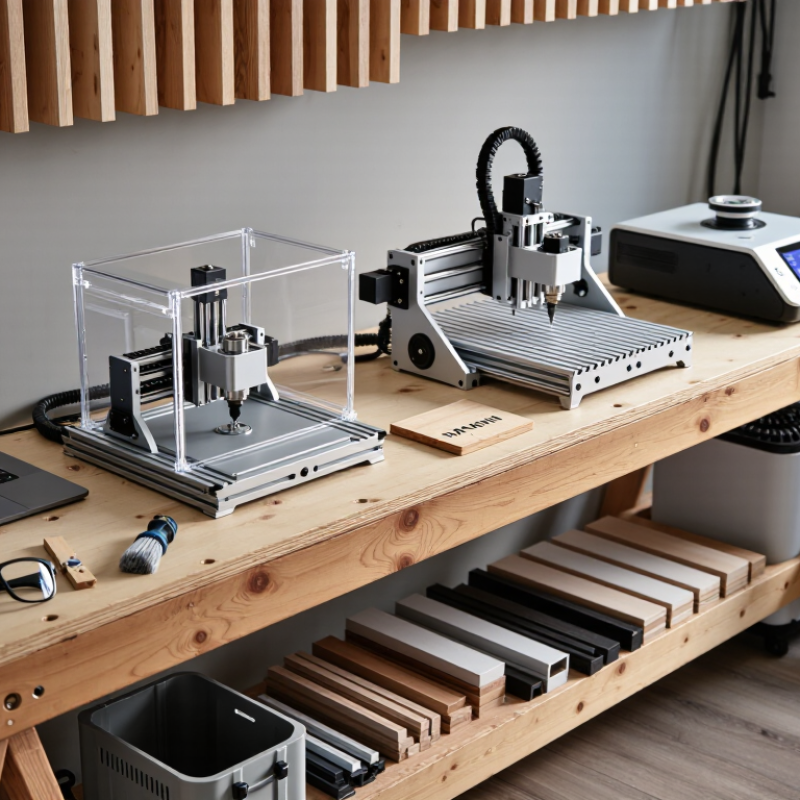
What a Beginner Should Know Before Choosing a Home CNC Machine
Choosing a home CNC machine starts with your workspace, not the advertised cutting speed. Measure the bench, doorways, and storage area carefully. Leave room for cables and dust collection. A compact machine may fit a desk, but its cutting area could limit useful projects. Decide what you will make: signs, small furniture parts, circuit boards, or detailed models. Material choice matters.
Rigidity is more important than impressive specifications. A flexible frame can leave ridges on hardwood and uneven edges on plastic. Check the machine’s working envelope, spindle range, motion system, and repeatability. Beginners also need accessible software and clear setup instructions. Complicated controls create avoidable mistakes. Ask whether replacement parts, technical documents, and safety guidance are available. Reliable support is part of the machine’s real value.
Noise and dust deserve honest attention. Cutting wood can fill a room with fine particles within minutes. Use suitable extraction, eye protection, hearing protection, and safe cable management. Never leave a running machine unattended. I once underestimated how much bench space maintenance required. That mistake affected every later project. A beginner should also budget for cutters, clamps, spoil boards, software, and failed test pieces. Start with soft material and simple toolpaths. Measure twice, simulate once, and expect the first result to need improvement.
How to Match CNC Machine Types with Your First Projects
Top Home CNC Machines for Beginners in 2026
How to Match CNC Machine Types with Your First Projects
Your first project should decide the machine, not the machine’s advertised size. A desktop CNC router suits plywood, hardwood, acrylic, and shallow signs. Its wider work area helps with trays, panels, and simple furniture parts. A compact CNC mill is better for aluminum brackets, small molds, and precise mechanical components. It usually offers stronger rigidity, but its smaller table limits creative scale.
Consider a diode or CO2 laser only for compatible sheet materials, engraving, and clean two-dimensional designs. Ventilation, fire protection, and material restrictions require serious attention. The International Federation of Robotics reported 541,302 industrial robots installed worldwide in 2023, showing how quickly automated production is expanding. Beginners still need slower, controlled workflows. Automation does not replace judgment.
I learned this the hard way. My first cutting plan ignored workholding, so the material shifted during a pocketing operation. Start with a spoilboard, clamps, basic measuring tools, and test cuts. A router is often the most forgiving entry point for wood projects. Choose a mill when dimensional accuracy matters more than cutting area. For aluminum, use shallow passes and frequent chip removal. Keep early designs small.
The 2024 Deloitte Smart Manufacturing survey found that many manufacturers expect smart production to improve productivity, but home users should not copy factory setups blindly. A smaller machine with reliable calibration may teach more than an oversized model. Leave room for mistakes.
Which Features Matter Most in a Beginner-Friendly CNC Setup
A beginner-friendly CNC setup should make the first cut predictable, not impressive. Grand View Research estimates the global CNC machine market will grow strongly through 2030. That growth makes feature overload tempting. Beginners usually need fewer variables. Choose rigid construction, clear controls, and adjustable cutting speed. A small work envelope can be safer and easier to manage. It also suits a garage bench.
Software matters as much as hardware. Look for visual toolpaths, simple zero-setting, and reliable file previews. The World Economic Forum’s Future of Jobs Report 2025 says 39% of workers’ core skills may change by 2030. Learning basic CAD and CAM skills is therefore valuable. However, an advanced interface may slow practice. I have found that a simple workflow encourages more careful measurements. Not every mistake needs expensive equipment. Dust collection, emergency stopping, and enclosed moving parts deserve serious attention. NIOSH guidance repeatedly emphasizes hazard control before operator behavior.
Tips: Measure twice. Test above the material. Keep the first projects small. Confirm the machine’s compatible materials and electrical requirements before purchase. A sturdy spoilboard and visible workholding can prevent frustrating slips. Automatic probing sounds convenient, but calibration errors still happen. That is the uncomfortable part. Beginner equipment is not maintenance-free. ISO 12100 recommends designing around foreseeable risks, so inspect cables, fasteners, and guards regularly. The perfect setup remains partly subjective. Your available space, noise tolerance, and patience matter more than a long feature list.
Top Home CNC Machines for Beginners in 2026
Which Features Matter Most in a Beginner-Friendly CNC Setup?
The chart uses a practical 1–5 priority score for home users. Safety, reliable motion, easy setup, and beginner-friendly controls receive the highest weighting because they reduce learning difficulty, setup errors, and operating risk. Cutting speed and maximum work area are useful, but they are usually less important for a first machine than predictable operation and safe access.
Scale: 1 = lower priority for most beginners; 5 = essential priority. Scores are an editorial benchmark, not a brand or manufacturer ranking.
How to Compare Safety, Software, Materials, and Workspace Needs
For a beginner, safety should guide every home CNC machine comparison. Safety comes before cutting. Look for a reachable emergency stop, stable construction, and clear moving-part protection. An enclosure can contain chips, but it does not replace supervision or ventilation. Check whether the machine supports reliable dust extraction and secure grounding. Read the manual before powering the machine, even if setup looks simple.
Software matters just as much as hardware. Choose controls with clear toolpaths, useful previews, and adjustable cutting parameters. A good preview can reveal a wrong depth before the bit reaches the material. Confirm that common design files import correctly. Beginners should also find tutorials explaining feeds, speeds, tool selection, and work holding. I prefer simple software, although simple interfaces can hide advanced settings.
Materials shape the machine’s real usefulness. Wood and certain plastics are often suitable for early projects, while harder materials demand greater rigidity and experience. Workspace needs are easy to underestimate. Measure the machine, cable space, dust collection area, and access around the table. Leave room to load materials safely. I once focused too much on cutting size and ignored cleanup space. That mistake made each project slower. A small, organized bench may be more practical than a larger machine in a crowded room. Consider noise, lighting, storage, and whether children or pets can enter the work area. Consistent routines matter.
How to Start Your First CNC Project and Build Skills Gradually
Starting your first home CNC project should feel manageable, not intimidating. Choose a compact machine with clear instructions, adjustable speed, and reliable emergency controls. Begin with soft wood or plastic, not expensive materials. A simple engraved coaster can teach design, tool setup, work holding, and cleanup. Keep your first design small. Mistakes become cheaper and easier to understand.
Measure the material carefully before cutting. Secure it firmly, because movement can ruin the project or damage a tool. Learn how zeroing works, then run a simulation or make a shallow test pass. Stand nearby during operation.
Never touch moving parts or leave the machine unattended. My early test cuts were too deep because I trusted default settings. That mistake taught me to check every value manually. It still happens occasionally.
Tips:
Keep a project notebook. Record material type, bit size, cutting speed, depth, and what went wrong. Change one setting at a time. Wear suitable eye protection and follow the machine’s safety guidance. As your confidence grows, try pockets, contours, and simple joints. Pause when results look unusual. A rough edge may indicate incorrect speed, a dull tool, loose material, or an unrealistic design. Skill develops through controlled experiments, careful observation, and honest review.