China Top 10 CNC Machining Equipment Manufacturers

China’s CNC manufacturing sector has become a serious source of advanced production equipment. The country now serves automotive, aerospace, medical, electronics, and precision tooling industries. This article examines China’s top 10 CNC machining equipment manufacturers and their practical strengths.

The evaluation considers machine accuracy, spindle performance, automation options, control systems, service networks, and production flexibility. It also examines how manufacturers support demanding operations, such as tight-tolerance milling, high-speed drilling, turning, and five-axis machining. A reliable CNC machine should perform consistently on the factory floor, not only in a showroom demonstration. Operators notice the difference through smoother cuts, reduced vibration, stable thermal control, and fewer rejected parts.

Real experience matters here. Buyers often compare installation guidance, operator training, spare-part availability, and response times after delivery. These details can influence production more than an impressive specification sheet. A machine may offer excellent repeatability, yet still create problems if software support is weak or maintenance is difficult. No ranking is perfect. Supplier performance can vary by region, model, and customer requirements.

This overview aims to provide a balanced reference for purchasing managers, engineers, and international buyers. It does not treat brand popularity as the only measure of quality. Instead, it connects technical capability with long-term operating value. Readers should verify current specifications, certifications, factory capacity, and service terms before making a final decision. That extra step is easy to overlook. It should not be.
China Top 10 CNC Machining Equipment Manufacturers

China’s CNC Machining Equipment Industry: Scope and Development

China’s CNC machining equipment industry covers turning centers, milling machines, grinding systems, machining centers, controllers, tooling, software, and maintenance services. Its scope now reaches automotive parts, medical devices, aerospace components, energy equipment, and general machinery. The China Machine Tool Industry Association reported continued growth in domestic machine tool output during 2024, especially for metal-cutting equipment. Exact figures vary by classification, which makes simple market comparisons unreliable.

Development is moving from standalone machines toward connected production cells. Sensors monitor spindle vibration, tool wear, and temperature beside the operator’s workstation. The National Bureau of Statistics reported that China’s high-tech manufacturing investment increased in 2024, supporting demand for tighter tolerances and shorter production cycles. UNIDO data also places China among the world’s largest manufacturing economies, creating a broad customer base for CNC suppliers and service providers.

Cost remains important, but it is no longer the only measure. Buyers increasingly assess positioning accuracy, energy use, software compatibility, training, and spare-parts response. Industry reports often describe rapid automation progress, yet smaller factories may still depend on manual loading and offline programming. That gap deserves more attention. A modern machine does not automatically create modern production. Reliable results depend on process knowledge, stable materials, skilled technicians, and disciplined measurement.

Key Criteria for Evaluating CNC Machining Equipment Manufacturers

China Top 10 CNC Machining Equipment Manufacturers

Key Criteria for Evaluating CNC Machining Equipment Manufacturers

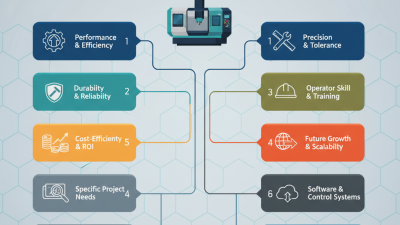
Selecting a CNC machining equipment manufacturer requires more than comparing purchase prices. According to Grand View Research’s 2024 market analysis, global CNC machine demand continues to expand as factories pursue higher automation and production flexibility. Buyers should examine positioning accuracy, repeatability, spindle speed, thermal stability, and control-system compatibility. Request measured test results, not only catalogue figures. Numbers matter.

Real production evidence is equally important. A reliable manufacturer should provide machine-hour records, acceptance-test procedures, spare-parts availability, and documented service response times. ISO 230 testing methods can help verify geometric accuracy and positioning performance. The International Federation of Robotics reported 541,302 industrial robot installations worldwide in 2023, showing how closely machining equipment now connects with automated production cells. Ask whether the machine supports robot loading, inspection data, and remote diagnostics.

Total cost deserves careful attention. Energy consumption, tooling wear, operator training, software updates, and planned maintenance can exceed the initial price over several years. A supplier with local technical support may reduce costly downtime, even when its quotation is higher. I have seen impressive demonstrations fail under continuous cutting because cooling systems were undersized. Test it. Manufacturers should allow sample machining with the buyer’s material, tolerances, tooling, and cycle-time targets. Independent reports provide useful benchmarks, but factory-floor evidence remains harder to replace.

Profiles of China’s Top 10 CNC Machining Equipment Manufacturers

China’s top ten CNC machining equipment manufacturers reflect a broad industrial ecosystem. Their profiles differ by machine type, engineering depth, and export experience. Several specialize in three-axis and five-axis machining centers for automotive, aerospace, and medical components. Others focus on turning centers, gantry mills, or compact machines for smaller workshops.

A reliable comparison should examine spindle speed, positioning accuracy, thermal control, and service coverage. One manufacturer may offer rigid castings and strong vibration control. Another may provide flexible automation, robotic loading, and integrated inspection systems. Some companies invest heavily in digital monitoring and remote diagnostics. Others remain competitive through practical designs and accessible maintenance. Factory visits often reveal details brochures omit, such as coolant management, chip evacuation, and operator training. However, rankings can be imperfect. Sales data, regional reputation, and published specifications do not always tell the same story. Buyers should verify test-cut results before making a decision.

Tips: Request sample parts, accuracy reports, warranty terms, and service response times. Check how the machine performs after continuous operation, not only during demonstrations. Ask about spare-part availability in your region. A clear acceptance test can prevent costly misunderstandings. Also, review software compatibility and operator access carefully. Small interface problems can slow production every day. Experience suggests that the “best” manufacturer depends on workload, material, tolerances, and available technical staff.

China Top 10 CNC Machining Equipment Manufacturers - Profiles of China’s Top 10 CNC Machining Equipment Manufacturers
Profile Primary Equipment Portfolio Typical Machine Configuration Published Specification Range Target Production Segment Common Applications Quality and Compliance Focus Export Capability Market Positioning
Manufacturer Profile 01 Vertical machining centers Horizontal machining centers 3 to 5 axes; palletized options available Travels commonly up to 2,000 mm; spindle speeds approximately 8,000–18,000 rpm Medium- and large-batch metalworking Automotive components, general machinery, hydraulic parts and industrial tooling Factory inspection systems, laser measurement, process traceability and ISO 9001-oriented quality management Dealers and distributors across Asia, Europe, North America and other industrial markets Broad industrial coverage with emphasis on productivity and standardization
Manufacturer Profile 02 CNC lathes Turning centers Turn-mill machines 2-axis to multitasking mill-turn configurations Turning diameters commonly from 250–800 mm; bar capacities approximately 42–100 mm Precision turning and automated repetitive production Drive components, shafts, flanges, fittings and precision mechanical parts In-process gauging, chuck and spindle balancing, dimensional inspection and documented calibration Regular export supply supported by multilingual technical documentation Strong focus on turning productivity, cycle-time reduction and automation readiness
Manufacturer Profile 03 Five-axis machining centers High-speed milling systems Simultaneous 5-axis and 3+2-axis machining Spindle speeds commonly up to 20,000–30,000 rpm; positioning accuracy often within ±0.005–0.010 mm Complex geometries and high-value components Aerospace structures, impellers, molds, medical components and precision prototypes Thermal compensation, volumetric accuracy testing, CMM inspection and controlled process documentation International project sales with application engineering support Premium precision segment with emphasis on complex multi-sided machining
Manufacturer Profile 04 CNC gear machinery Hobbing systems Gear shaping equipment Dedicated gear production cells with optional loading and inspection automation Suitable for small- to large-diameter gears; module ranges commonly cover fine to medium industrial gearing Transmission and powertrain manufacturing Automotive gears, reducers, industrial gearboxes, wind-power components and engineering machinery Tooth-profile inspection, runout measurement, process capability monitoring and ISO-based quality systems Export-oriented supply for automotive and industrial gearbox markets Specialist manufacturer profile focused on gear accuracy and repeatability
Manufacturer Profile 05 CNC grinding machines Cylindrical grinders Internal grinders External, internal and complex-profile grinding configurations Grinding tolerances commonly reaching micron-level control, depending on workpiece and process conditions Finishing operations requiring high dimensional accuracy Bearings, precision shafts, hydraulic components, automotive parts and cutting tools Temperature-controlled inspection areas, balancing, roundness measurement and surface-finish verification Served through regional distributors and technical service partners Precision finishing specialist with emphasis on surface quality and dimensional stability
Manufacturer Profile 06 CNC wire-cut EDM Die-sinking EDM Hole-drilling EDM Fine-wire, submerged-wire and automatic threading configurations Typical wire diameters approximately 0.10–0.30 mm; accuracy depends on material, thickness and cutting strategy Toolmaking and difficult-to-machine materials Progressive dies, injection molds, carbide parts, aerospace details and micro-features Dielectric control, automatic compensation, surface-finish monitoring and repeatability testing Widely supplied to mold and die markets in Asia and overseas Cost-effective precision EDM solutions for tooling and complex profiles
Manufacturer Profile 07 CNC router systems Stone and glass machining centers Large-format cutting equipment 3-axis and 4-axis platforms; optional rotary and automatic tool-change systems Working areas commonly from 1,300 × 2,500 mm to more than 2,000 × 4,000 mm Large-format processing and non-ferrous material fabrication Woodworking, signage, aluminum panels, stone, glass, plastics and composite materials Spindle runout checks, dust-control options, electrical safety testing and production acceptance testing Strong online and distributor-based export presence Flexible, application-driven equipment for small and medium-sized manufacturers
Manufacturer Profile 08 CNC press brakes Fiber laser cutters Sheet-metal automation Integrated cutting, bending and loading or unloading cells Laser power commonly from 1–20 kW; sheet sizes frequently range from 1,500 × 3,000 mm upward Fabrication, enclosures and structural sheet-metal production Electrical cabinets, kitchen equipment, construction hardware, automotive panels and machinery frames Beam alignment, cutting-parameter databases, bend-angle verification and safety certification processes Global project delivery supported by installation and operator training Automation-oriented supplier for integrated sheet-metal production lines
Manufacturer Profile 09 CNC vertical lathes Heavy-duty turning centers Large machining centers Large-workpiece turning and milling platforms with high-load structures Workpiece diameters commonly from 1,000 mm to more than 5,000 mm; high torque at low spindle speeds Heavy engineering and oversized component production Energy equipment, mining machinery, shipbuilding, rail equipment and construction machinery Structural accuracy checks, load testing, alignment verification and long-cycle reliability testing Project-based exports supported by engineering customization Heavy-duty equipment profile emphasizing rigidity, load capacity and service life
Manufacturer Profile 10 CNC mold-making centers High-speed engraving machines Precision milling systems High-speed 3-axis and 5-axis configurations with automatic tool management Spindle speeds commonly from 18,000–40,000 rpm; fine interpolation and surface-finish control Mold, die and precision component manufacturing Plastic injection molds, die-casting molds, electrodes, consumer-product tooling and optical parts Tool presetter integration, surface inspection, thermal stability testing and repeatability verification Export sales supported by application samples and remote technical assistance Specialized profile focused on fine details, complex surfaces and short development cycles

Core Technologies, Product Lines, and Manufacturing Capabilities

China’s top 10 CNC machining equipment manufacturers compete through core technologies, product breadth, and factory execution. Their strongest platforms commonly combine high-speed spindles, linear guides, automatic tool changers, and multi-axis interpolation. Thermal compensation is increasingly important for stable micron-level positioning. However, advertised accuracy can differ from shop-floor results.

The product lines usually cover vertical machining centers, horizontal machining centers, turning centers, mill-turn systems, and five-axis machines. Some manufacturers also develop gear-processing, laser-processing, and large-format equipment. According to the International Federation of Robotics’ World Robotics 2024 report, China installed 276,288 industrial robots in 2023, representing 51% of global installations. This supports demand for connected CNC cells, robotic loading, pallet systems, and real-time production monitoring.

Manufacturing capability depends on more than machine design. Reliable suppliers need precision casting, spindle balancing, guideway assembly, software integration, and traceable inspection processes. ISO 230-2 testing helps verify positioning accuracy and repeatability under defined conditions. The China Machine Tool Industry Association continues to track domestic output, exports, and CNC adoption across the sector. Yet no ranking is perfect. A strong laboratory result may weaken under heat, vibration, or inconsistent maintenance. Buyers should inspect sample parts, calibration records, control-system stability, and after-sales response before making a technical judgment.

Market Applications and Factors for Selecting a Suitable Manufacturer

China’s CNC machining equipment manufacturers serve automotive, aerospace, medical, electronics, energy, and precision tooling markets. Each sector demands different machine behavior. Automotive production values speed and repeatability, while medical components require clean processes, traceability, and tight dimensional control. Aerospace work often needs stable cutting performance for difficult alloys. Electronics production may prioritize miniature parts and flexible automation.

Selecting a suitable manufacturer requires more than comparing machine prices. Review spindle power, axis travel, positioning accuracy, thermal stability, control systems, and available automation. Ask for test cuts using material similar to your own. Examine surface finish, measured tolerances, cycle time, and tool wear. A factory visit can reveal maintenance habits, operator training, inspection equipment, and assembly discipline.

Proof beats promises.

After-sales support also affects production risk. Confirm spare-part availability, remote diagnostics, installation guidance, and response times in writing. Check whether the manufacturer provides calibration records, quality documentation, and application engineering. Total cost includes energy use, tooling, downtime, software updates, and training. A low quotation can hide expensive interruptions.

No selection model is perfect. Even a carefully tested machine may perform differently after shipping, installation, or process changes. Leave room for commissioning trials and honest review.

Fit matters more.

We Meet Our Clients Needs.

Meeting the diverse needs of our clients, we have complete machining facilities for everything from single part prototypes to large quantity production. Our small size is one of our biggest assets. It allows us to control costs and maintain the highest of standards.

Quality orientated  and delivery always on time or earlier than originally promised.

Strongly recommend MSD.