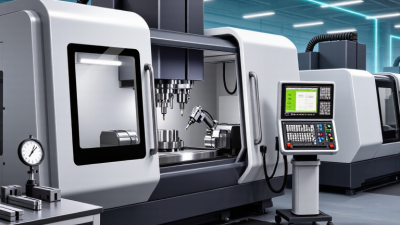
How to Choose Machining Equipment in 2026?
Choosing machining equipment in 2026 is no longer a simple comparison of spindle speed, price, and brand reputation. Manufacturers must connect equipment decisions with production volume, material behavior, labor availability, energy use, and digital readiness. A five-axis machining center may reduce setups, yet it can become expensive underused capacity. Sometimes, a reliable three-axis machine is the better investment.
Industry data supports a more disciplined approach. The International Federation of Robotics reported 541,302 industrial robots installed worldwide in 2023, showing how quickly automation is entering production environments. Grand View Research estimates that the global machine tools market will continue expanding through the decade, driven by automotive, aerospace, medical, and precision-engineering demand. These figures indicate opportunity, but they do not identify the correct machine for every workshop. Local electricity costs, operator skills, coolant management, and after-sales support still matter.
Process planning should guide the purchase. Dr. Peter Scallan, a manufacturing engineering specialist, wrote, “The process plan is the link between design and manufacture.” That principle remains useful when evaluating machining equipment. Buyers should test real workpieces, measure cycle times, inspect surface finish, and calculate tool consumption. Ask difficult questions. What happens during a night shift? Can technicians repair the control system quickly? Will the machine remain productive after product designs change?
No checklist is perfect. A glossy demonstration can hide vibration, awkward access, or unstable software. The best decision combines measured trials, operator experience, supplier evidence, and a realistic five-year cost model. Performance matters. Resilience matters more.
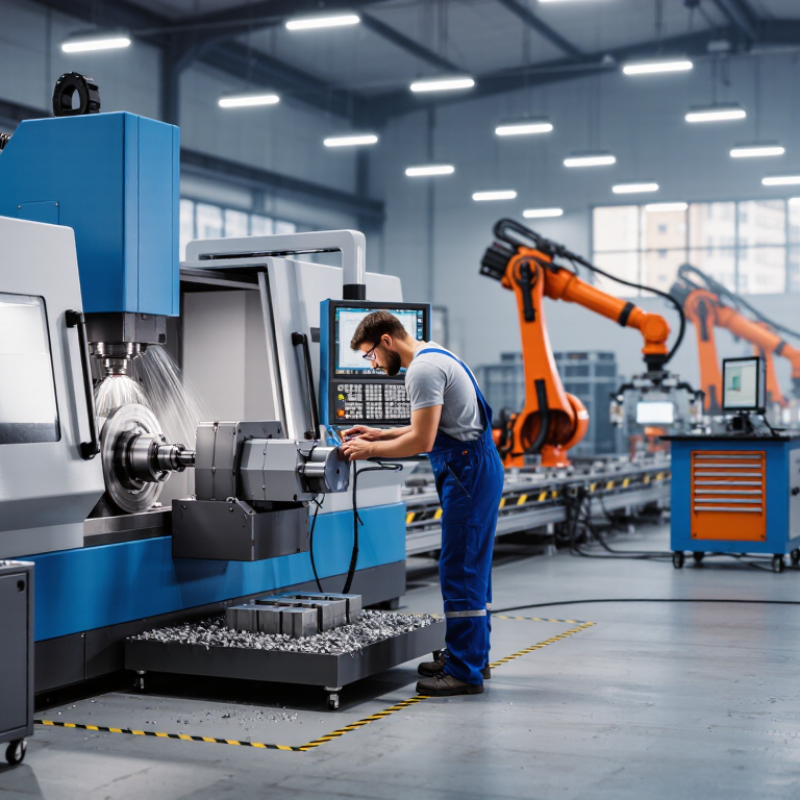
Define the Machining Goals, Materials, and Production Requirements
How to Choose Machining Equipment in 2026?
Define the machining goal before comparing equipment. Start with the part’s dimensions, tolerances, surface finish, and annual volume. A prototype cell needs flexibility. A repeat production line needs stable cycle times and quick loading. Write these requirements down. Guesswork becomes expensive.
Material choice changes everything. Aluminum may demand high spindle speed and sharp tooling. Stainless steel needs rigidity, cooling, and controlled cutting forces. Hardened alloys require stronger tools and slower, more predictable passes. Check the material’s hardness, thermal behavior, and chip formation before selecting a machine. The wrong match can create vibration, poor finishes, and unnecessary tool consumption.
Production data should guide the final decision. The International Federation of Robotics reported 541,302 industrial robots installed worldwide in 2023, a 10% annual increase.
This signals growing interest in automation, but automation is not always the best answer. A 2024 Smart Manufacturing Survey found that manufacturers continue prioritizing productivity and process reliability.
Measure spindle utilization, setup time, scrap rate, and operator workload first. Small shops often overlook maintenance access. That mistake returns later. Choose controls, tooling, inspection, and material handling as one system, not separate purchases.
A cheaper machine may lose its advantage through longer setups and unstable accuracy. Recheck the plan using real production samples.
My practical view is imperfect: projected volumes often change, so leave some capacity for uncertainty.
Compare Machine Types, Axes, Capacities, and Operating Methods
Choosing machining equipment in 2026 starts with the part, not the catalog. Compare machine types against material, tolerance, batch size, and floor space. A three-axis mill suits many prismatic parts and keeps programming manageable. A four- or five-axis machine reduces repositioning and reaches angled surfaces. However, extra axes add setup skill, maintenance needs, and collision risk. Turning equipment handles round stock efficiently. Mill-turn systems combine operations but demand careful planning. Bigger is not automatically better.
Review spindle power, working envelope, table load, chuck size, tool capacity, and automation compatibility. Match these limits to real jobs, including fixtures and cutting tools. A machine that barely clears a 600-millimeter part may fail after clamping. Leave room for chip evacuation and tool access. Operating method matters too. Manual control can suit prototypes and repairs. CNC is usually stronger for repeatability. Lights-out production requires stable tooling, probing, monitoring, and a reliable recovery plan. I have seen impressive cycle times become poor output when setup changes were ignored.
Tips: Ask operators to test a representative part before purchase. Record setup time, tool changes, inspection points, and operator movement. Compare hourly cost with usable spindle time, not brochure speed. Check training, service access, and spare-part availability. These details protect production reliability. Still, no selection is perfect. Future materials or tighter tolerances may expose today’s assumptions. Keep the evaluation open.
How to Choose Machining Equipment in 2026?
Comparison of typical machine types, axis configurations, workpiece capacities, and operating methods.
The chart shows representative planning ranges for common CNC equipment. A higher axis count can reduce repositioning and improve access to complex surfaces, while capacity depends on machine structure, chuck or fixture configuration, workholding, and material. Use these figures as an initial selection reference and verify the final specifications for the intended part.
Evaluate Accuracy, Speed, Automation, and Software Compatibility
How to Choose Machining Equipment in 2026?
Evaluate Accuracy, Speed, Automation, and Software Compatibility
Choosing machining equipment in 2026 requires more than comparing spindle speed or purchase price. Accuracy should match the part’s tolerance, material, and expected production volume. Ask for measured repeatability data, not only catalog specifications. A test cut can reveal vibration, thermal drift, and surface defects before installation.
Speed matters, but faster is not always better. A machine that accelerates quickly may still lose time during tool changes or setup. I once favored a faster model and overlooked its lengthy calibration process. That mistake reduced daily output. Measure complete cycle time, including loading, inspection, and maintenance.
Automation should remove repetitive handling without making operators helpless. Look for reliable probing, tool monitoring, and accessible safety controls. Software compatibility deserves equal attention. Confirm that the controller accepts your existing CAD/CAM files, post-processors, inspection data, and network standards. Poor integration creates manual edits and hidden errors. Test data transfer with a real production file.
Review training time, service access, and update policies. A technically advanced machine can underperform when staff cannot diagnose alarms quickly. My evaluation checklist now includes sample programs, operator feedback, and three days of trial production. It is not perfect, but it exposes practical weaknesses better than a showroom demonstration.
Calculate Total Ownership Costs, Workforce Needs, and Energy Use
How to Choose Machining Equipment in 2026?
Calculate Total Ownership Costs, Workforce Needs, and Energy Use
Choosing machining equipment in 2026 requires more than comparing purchase prices. Calculate total ownership costs across the machine’s working life, not just the invoice.
A practical worksheet should include installation, tooling, consumables, maintenance, software, training, financing, depreciation, and disposal. Add expected downtime. A cheaper machine may lose money through slow setups or frequent service calls. Use three production scenarios: normal demand, peak demand, and a quiet month. Record cycle time, changeover minutes, scrap, and hourly labor. Ask operators to review your assumptions. They often notice hidden work engineers miss.
Workforce planning deserves equal attention. Count skilled hours for setup, inspection, programming, loading, and troubleshooting. One unattended cycle does not mean zero labor. Training may require paid practice with sample parts.
Energy estimates should use measured load, idle draw, compressed-air demand, and local electricity rates. Check utility bills where possible. A meter reading beats a brochure claim. Compare energy per acceptable part, not energy per running hour.
An earlier estimate ignored warm-up time and weekend standby use. It looked precise, but it was wrong. Leave a contingency for uncertain maintenance and demand. Recheck the model after three months of production data.
Verify Safety Standards, Maintenance Support, and Future Scalability
Choosing machining equipment in 2026 requires more than comparing speed and purchase price. Safety should be verified before production begins. Check physical guards, emergency stops, door interlocks, and clearly labeled control panels. Request documented risk assessments and operator training materials. Confirm that the equipment meets applicable regional safety requirements. A machine may appear advanced, yet poor access around moving parts can create daily hazards.
Maintenance support affects productivity long after installation. Ask about technician response times, spare-part availability, inspection schedules, and remote diagnostic options. Review sample service records, not just sales promises. Experienced operators know that small alignment problems can become costly failures. Still, maintenance plans are not perfect. A supplier may underestimate downtime during busy periods, so test the support process before signing. Speak with current users when possible.
Tips: Measure the service area first. Leave space for repairs and material handling. Check whether controls support future automation, data collection, and software updates. Confirm electrical requirements and energy use. Choose equipment that can handle expected growth without forcing an immediate replacement. However, avoid paying for unused capacity. My practical mistake was focusing too heavily on maximum output; the machine later occupied valuable floor space and complicated workflow changes. A realistic production forecast is safer than optimistic expansion plans.
How to Choose Machining Equipment in 2026? - Verify Safety Standards, Maintenance Support, and Future Scalability
| Equipment Type | Best-Fit Applications | Typical Work Envelope | Key Safety Verification Points | Relevant Standards and Requirements | Maintenance Support to Confirm | Future Scalability Options | Selection Assessment |
|---|---|---|---|---|---|---|---|
| CNC Milling Center | Prismatic components, dies, molds, fixtures, and small-to-medium production batches. | Three to five controlled axes; workpieces commonly range from small components to parts over 1 meter, depending on configuration. | Fully enclosed work zone, interlocked doors, emergency stops, chip and coolant containment, guarding of rotating tools, and safe access for setup. | ISO 12100 ISO 16090-1 IEC 60204-1 | Preventive-maintenance schedule, spindle inspection, way and ballscrew checks, calibration service, software backup, and local technical response. | Additional axes, pallet changer, probing, tool monitoring, robotic loading, and connection to production-monitoring systems. | High flexibility Strong choice when product variety and future automation matter. |
| CNC Turning Center | Rotational parts such as shafts, bushings, couplings, threaded components, and hydraulic parts. | Commonly supports bar or chuck work with turning diameters from compact parts to approximately 600 mm or more on large models. | Chuck and spindle guarding, interlocked enclosure, safe chuck-key control, overspeed protection, bar-feed guarding, and controlled access during setup. | ISO 12100 ISO 23125 IEC 60204-1 | Chuck and jaw inspection, spindle alignment, lubrication checks, coolant management, turret inspection, and service-part availability. | Live tooling, sub-spindle, bar feeder, parts catcher, robotic tending, and in-process gauging. | High productivity Efficient for repeatable cylindrical production and unattended cycles. |
| CNC Swiss-Type Lathe | High-volume, small-diameter precision parts for medical, electronics, instrumentation, and fluid-control applications. | Typically optimized for bar diameters below approximately 32 mm, although larger configurations are available. | Guarding around the guide bushing and tooling, interlocked access, safe chip evacuation, coolant-pressure controls, and emergency-stop verification. | ISO 12100 ISO 23125 IEC 60204-1 | Guide-bushing inspection, spindle and sub-spindle service, high-pressure coolant maintenance, tooling alignment, and rapid setup support. | Bar feeders, automatic part transfer, multi-channel programming, tool-life monitoring, and integrated inspection. | High throughput Best when cycle time and repeatability outweigh setup simplicity. |
| Wire Electrical Discharge Machine | Complex profiles, hardened materials, narrow slots, punches, dies, and components requiring low cutting force. | Work envelopes commonly range from approximately 300 × 200 mm to over 1,000 × 700 mm, depending on machine size. | Dielectric-fluid containment, door interlocks, fire detection or suppression provisions, electrical isolation, and safe handling of energized components. | ISO 12100 IEC 60204-1 Local fire code | Dielectric filtration, resin replacement, wire-path inspection, deionized-water quality checks, corrosion prevention, and specialist service access. | Automatic wire threading, multi-axis taper cutting, remote monitoring, expanded work tanks, and automated loading. | Specialized capability Valuable for difficult materials and intricate geometries, but requires dedicated expertise. |
| Sinker Electrical Discharge Machine | Deep cavities, fine details, hardened tool steels, molds, dies, and parts with difficult internal geometry. | Usually selected by electrode and workpiece size; medium systems commonly handle molds and components under approximately 1,000 kg. | Fire prevention, dielectric-fluid monitoring, enclosed work zone, electrode handling safety, grounding, and emergency shutdown controls. | ISO 12100 IEC 60204-1 Local fire code | Dielectric filtration, tank cleaning, electrode-condition checks, power-supply inspection, and scheduled accuracy verification. | Automatic electrode changers, robotic workpiece handling, probing, electrode libraries, and unattended machining cycles. | High precision Suitable when cavity quality is more important than material-removal speed. |
| CNC Surface Grinder | Flat, parallel, and fine-finish surfaces on hardened steel, carbide, precision tooling, and gauge components. | Table sizes commonly range from approximately 300 × 150 mm to over 1,000 × 600 mm. | Wheel guard, workholding security, spindle-brake condition, coolant splash control, spark management, and safe wheel-changing procedures. | ISO 12100 ISO 16089 IEC 60204-1 | Grinding-wheel inspection, spindle vibration checks, coolant filtration, table-way lubrication, magnetic-chuck testing, and alignment service. | Automatic dressing, probing, palletization, robotic loading, closed-loop size control, and process data collection. | High accuracy Recommended for tight flatness, parallelism, and surface-finish requirements. |
| Five-Axis Machining Center | Complex aerospace, energy, medical, impeller, mold, and reduced-setup components. | Ranges from compact high-speed systems to large machines with workpiece capacities exceeding several tonnes. | Full enclosure, collision avoidance, safe rotary-axis access, verified machine simulation, interlocked doors, and operator training for multi-axis motion. | ISO 12100 ISO 16090-1 IEC 60204-1 | Rotary-axis calibration, kinematic verification, thermal compensation checks, spindle service, control-system backup, and advanced application support. | Robotic loading, pallet pools, automated probing, digital twins, machine connectivity, tool-condition monitoring, and lights-out production. | High scalability Best for complex parts, fewer setups, and long-term automation plans. |
| CNC Laser Cutting System | Sheet and plate profiling, thin-wall components, fabrication parts, and high-mix production. | Typical sheet areas include approximately 1,500 × 3,000 mm; thickness capability depends on the laser source and material. | Class 1 enclosed beam path, door interlocks, fume extraction, fire detection, reflective-material controls, and safe cylinder or gas-line management. | ISO 11553-1 IEC 60825-1 IEC 60204-1 | Optical-path cleaning, protective-window replacement, nozzle alignment, assist-gas checks, extraction-filter service, and laser-source diagnostics. | Automatic sheet storage, loading and unloading, nesting software, part sorting, piercing monitoring, and production scheduling integration. | High automation potential Effective for fast profile cutting with strong material-utilization controls. |
| Industrial Robot for Machine Tending | Loading and unloading CNC machines, pallet transfer, inspection transfer, and repetitive handling operations. | Payloads commonly range from approximately 5 kg to over 200 kg, with reach selected for the cell layout. | Risk assessment, perimeter guarding, safety-rated monitored stops, interlocked gates, emergency stops, safe speed limits, and validated cell controls. | ISO 10218-1 ISO 10218-2 ISO/TS 15066 ISO 13849-1 | Lubrication, axis-brake inspection, end-effector checks, cable management, safety-circuit validation, and application-program backup. | Additional machines, vision inspection, automatic gauging, pallet systems, flexible grippers, and centralized cell monitoring. | High labor leverage Most valuable where production volume and repetitive handling justify integration costs. |
| Coordinate Measuring Machine | Dimensional verification, first-article inspection, process validation, and statistical quality control. | Bridge sizes commonly range from approximately 500 × 500 × 400 mm to several meters for large components. | Safe access, controlled probe movement, stable guarding where required, electrical protection, and ergonomic loading procedures. | ISO 10360 ISO 17025 environment IEC 60204-1 | Annual or risk-based calibration, environmental monitoring, probe qualification, software updates, air supply maintenance, and measurement training. | Automatic pallet loading, scanning probes, shop-floor enclosures, direct machine feedback, and quality-data integration. | Quality critical Choose when traceable measurement and closed-loop manufacturing are priorities. |
Note: Work-envelope ranges and capability indicators are representative industry ranges, not guaranteed specifications. Before purchase, verify the exact model’s risk assessment, conformity documentation, local regulatory requirements, service response time, spare-parts availability, training scope, total cost of ownership, and compatibility with planned automation or digital-production systems.
Related Posts
-
What Are the Top Machining Equipment Manufacturers?
-
2026 Best Machine and Machine Tool Trends for Global Buyers?
-
How to Choose the Right Machining Equipment for Your Business Needs?
-

2026 Top Machining Equipment Trends and Innovations to Watch?
-
2026 Top Trends in Machining Equipment for the Manufacturing Industry?
-
Why Are Machine Tools Essential for Modern Manufacturing?
We Meet Our Clients Needs.
Meeting the diverse needs of our clients, we have complete machining facilities for everything from single part prototypes to large quantity production. Our small size is one of our biggest assets. It allows us to control costs and maintain the highest of standards.
Quality orientated and delivery always on time or earlier than originally promised.
Strongly recommend MSD.