
Top Precision CNC Machining Manufacturers in China
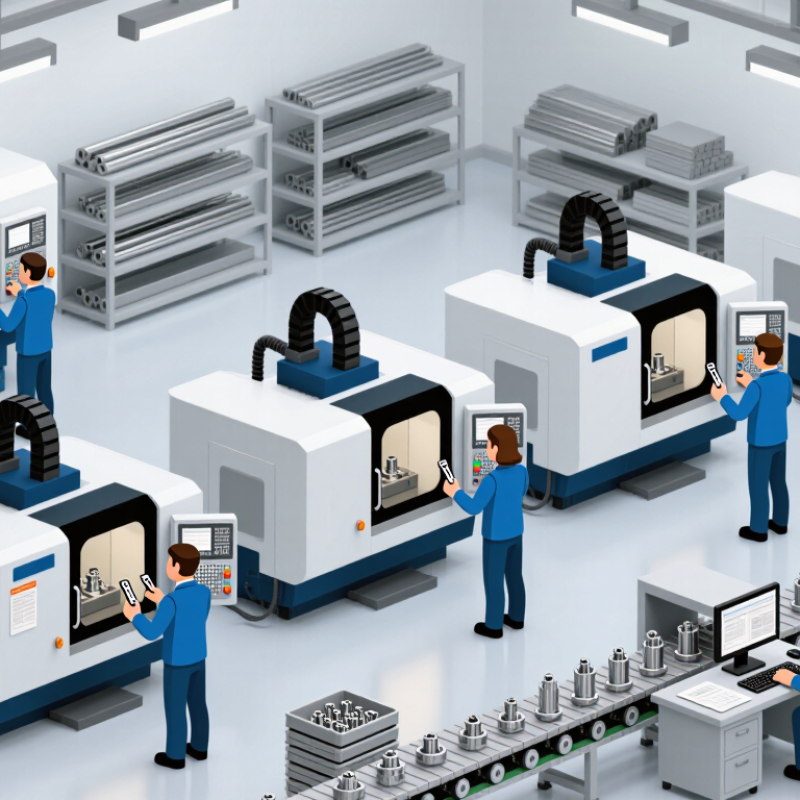
China has become a major source of CNC equipment and contract manufacturing, but choosing a supplier takes more than comparing prices. Precision CNC machining depends on repeatable processes, capable inspection, and clear communication. A bright machine shop floor is reassuring. It is not proof of consistent quality.
Grand View Research valued the global CNC machine market at USD 101.22 billion in 2023 and projected a 6.3% compound annual growth rate through 2030. This figure describes CNC machines, not the precision machining services market, so it should not be treated as a direct measure of supplier demand. The distinction matters. As manufacturing expert Taiichi Ohno put it, “Without standards, there can be no improvement.” For buyers, that principle points to practical questions: Are inspection methods documented? Can a supplier hold tolerances across production runs? Are material certificates and measurement reports available?
This guide introduces leading precision CNC machining manufacturers in China and the capabilities that may set them apart. It considers processes such as 5-axis milling and turning, along with quality systems, materials, communication, and delivery performance. A polished website can hide gaps. No shortlist is perfect, and published claims deserve verification through drawings, sample parts, and direct technical discussions. That extra effort can feel tedious. It can also prevent an expensive mismatch.
What Defines a Precision CNC Machining Manufacturer?
A precision CNC machining manufacturer does more than cut metal to a drawing. It manages the process from design review through final inspection. Engineers check dimensions, material, and datum references before selecting tools and workholding. A small mismatch in how a part is located can shift a hole pattern or leave an uneven shoulder.
The shop should match machine capability to the required tolerance, rather than promise the tightest number by default. For a milled aluminum housing, this may mean checking critical bores with a calibrated bore gauge and verifying flatness on a surface plate. Inspection results need to connect to the drawing, so a buyer can see which features were measured and how. Details matter. Repeatable setups, tool-wear checks, and clear records help keep parts consistent across a batch.
Communication is part of precision, too. A capable manufacturer flags an ambiguous callout or a thin wall that may distort during machining. No process is flawless; a rushed setup or unclear datum can still cause problems. That deserves honest review, not a confident promise. Buyers can assess a supplier by asking how it controls variation, handles nonconforming parts, and reports inspection findings. A clean sample is useful. Consistency is the harder test.
Top Precision CNC Machining Manufacturers in China - What Defines a Precision CNC Machining Manufacturer?
| Evaluation Dimension | What It Means | Evidence to Request | How to Assess It |
|---|---|---|---|
| Engineering drawing interpretation | The supplier can interpret dimensions, datum references, surface texture symbols, and geometric tolerances before production. | A drawing review, clarification log, and documented quotation assumptions. | Check that questions about ambiguous dimensions and inspection requirements are raised before machining begins. |
| Process capability | Machining capability depends on the part geometry, material, setup, tooling, machine condition, and required tolerance; a machine specification alone does not guarantee the finished-part result. | Part-specific process plan, setup strategy, and measurement results from comparable work, with sensitive details removed if necessary. | Evaluate capability against the actual drawing and production quantity rather than relying on a single advertised tolerance. |
| Dimensional inspection | Measurements are made using methods and instruments appropriate to the feature, tolerance, and part geometry. | Inspection plan, sample inspection report, instrument identification, and calibration records. | Confirm that critical dimensions are measured and reported, and that measurement methods can access the specified features. |
| Geometric tolerancing | Geometric dimensioning and tolerancing controls characteristics such as position, flatness, perpendicularity, and runout where specified. | Inspection records tied to drawing datums and the applicable geometric tolerance callouts. | Check that the inspection plan addresses geometric requirements, not only basic length, width, and diameter measurements. ISO 1101 is an international GPS standard for geometrical tolerancing. |
| General tolerances | General tolerance standards may apply to dimensions that do not have individual tolerances, when the drawing specifies the applicable standard and class. | The drawing note identifying the standard and tolerance class, plus confirmation that the supplier has reviewed it. | Do not assume a general tolerance applies automatically. ISO 2768-1 covers general tolerances for linear and angular dimensions without individual tolerance indications. |
| Machine and process control | Equipment condition, workholding, tool management, and process monitoring all affect repeatability and part quality. | Maintenance and tool-control procedures, machine capability information, and documented first-piece checks. | Ask how the supplier controls setup changes and verifies the first part before continuing a production run. |
| Quality management | A documented quality system helps control procedures, records, nonconformities, and corrective actions; certification does not by itself prove a specific part meets its drawing. | Current certificate scope, quality procedures, nonconformance process, and traceable production records where required. | Verify that the certification is current and relevant to the manufacturing site and activities being quoted. ISO 9001 specifies requirements for quality management systems. |
| Material verification | Material grade and condition must match the purchase specification because they can affect machining behavior and finished-part performance. | Material certificates or supplier records, purchase specifications, and lot identification when required. | Confirm that the material designation, condition, and traceability requirements match the drawing or purchase order. |
| Surface finish and finishing | Surface texture, deburring, coating, heat treatment, and other secondary operations must meet the specified requirements. | Surface-finish measurement records where required, process documentation, and certificates for outsourced operations when applicable. | Check that finish requirements are defined with a measurable specification and are verified after the relevant operation. |
| Production consistency | Parts should remain conforming across the agreed batch, not just during an initial sample or first-article inspection. | In-process inspection records, final inspection reports, and a defined sampling or control plan. | Ensure the inspection frequency and acceptance criteria are agreed before production, especially for critical features. |
| Nonconformance and corrective action | A capable manufacturer identifies, contains, documents, and investigates nonconforming product instead of shipping it without approval. | Nonconformance records, corrective-action process, and customer approval procedure for any deviation. | Ask how affected parts are segregated, how root causes are investigated, and how changes are communicated. |
| Delivery and communication | Reliable delivery requires clear handling of production status, inspection hold points, packaging, and schedule changes. | Written lead-time assumptions, order-status updates, packaging requirements, and a defined escalation contact. | Compare the quoted schedule with the required inspection, finishing, and shipping steps; confirm how delays will be reported. |
Related Posts
-
10 Best CNC Machining Companies for Global Buyers
-
China Top CNC Machining Technology Suppliers
-
Why Choose CNC Machining Technology for Global Sourcing?
-
10 Best CNC Machining Technologies for Global Buyers
-

Why Is CNC Machining Precision Essential for Modern Manufacturing?
-
Top 10 Benefits of CNC Machining for Modern Manufacturing Techniques?
We Meet Our Clients Needs.
Meeting the diverse needs of our clients, we have complete machining facilities for everything from single part prototypes to large quantity production. Our small size is one of our biggest assets. It allows us to control costs and maintain the highest of standards.
Quality orientated and delivery always on time or earlier than originally promised.
Strongly recommend MSD.