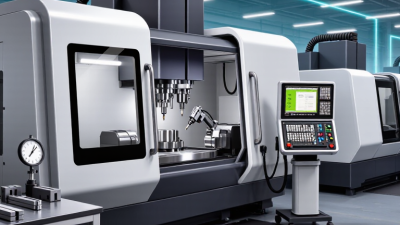
How to Choose the Right Machining Equipment?
Choosing machining equipment is not a matter of buying the largest machine or the newest control. It starts with the parts you make, the tolerances you hold, and the materials you cut. As CNC educator and author Mike Lynch’s practical approach can be summarized: “Choose for the work, then verify the fit.” That is a useful reminder, not a substitute for checking actual machine specifications.
A careful selection compares spindle speed and power, axis travel, tool capacity, workholding, control features, and support availability. Picture a stainless-steel part that needs a fine finish and repeatable dimensions. A machine suited to that job may be a poor fit for large aluminum parts produced in short cycles. Details matter. Check the machine’s usable work envelope, not just its advertised travel. Ask for a test cut using representative material, tooling, and tolerances. Review maintenance records and confirm that operators can access service and training.
The purchase price is only part of the decision. Tooling, installation, energy use, downtime, and operator time affect the cost per part. A spreadsheet helps, but its estimates can be wrong; real production data is better. This guide outlines how to match machining equipment to your workload, evaluate technical and financial trade-offs, and spot questions worth asking before purchase. No checklist can replace a shop-floor trial. That may be the part buyers overlook.
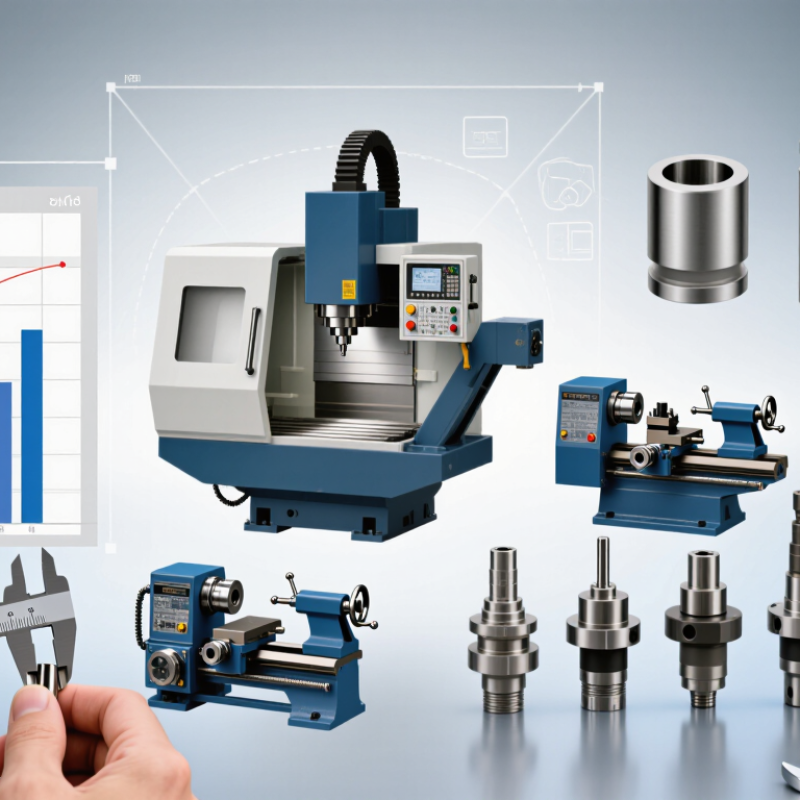
Define Part Requirements and Production Goals
Before comparing machine specifications, write down what the part actually demands. Record material, dimensions, tolerances, surface finish, and the features that drive setup time. A 0.02 mm tolerance on a bearing seat may matter more than a fast spindle if the process cannot hold it consistently. Note part size, too. A long shaft can flex under cutting forces, while a small aluminum bracket may be limited by how quickly operators can load and inspect it.
Then define the production target in usable terms: annual volume, batch size, shifts, changeover frequency, and delivery deadlines. Estimate cycle time from the full process, including tool changes, loading, inspection, and downtime—not just the cutting pass. Deloitte and MAPI’s 2024 Smart Manufacturing Survey found that 86% of manufacturers viewed smart manufacturing as a competitiveness driver over the next five years. That supports tracking performance, but sensors cannot fix an unrealistic cycle-time estimate. Start with actual job records where possible.
A simple worksheet helps. List the three most critical part features, required output per shift, and acceptable scrap rate. Separate today’s needs from likely future work; otherwise, it is easy to pay for unused capacity. Be honest about uncertainty. Forecasts are often wrong. Revisit them with production staff, who may know that a supposedly minor setup change costs twenty minutes per batch. Cite: Deloitte and MAPI, 2024 Smart Manufacturing Survey.
Identify Suitable Machining Processes and Equipment Types
Choosing machining equipment begins with the part, not the machine catalogue. List the material, feature geometry, tolerance, surface finish, and expected batch size. A shaft with concentric diameters often suits turning; a flat plate with pockets usually needs milling. Deep holes, thin walls, or tight finishes may require separate operations. Be specific. A vague requirement such as “high precision” cannot guide a sound purchase.
Match those operations to equipment: CNC lathes for rotational parts, machining centers for multi-face milling and drilling, and grinders for demanding surface finishes. Also check workholding, tool access, spindle speed, and inspection needs. The International Federation of Robotics’ World Robotics 2024 report recorded 541,302 industrial robot installations in 2023, up 10% from 2022. That growth makes automation worth assessing, but it does not make automation suitable for every shop. Consider whether part volume and repeatability justify robotic loading.
Ask suppliers to machine a representative part and measure the result. Review cycle time, scrap risk, setup effort, and operator skill requirements, not just the quoted machine price. I would still leave room for judgment: drawings rarely capture every awkward setup or tool change. A trial run can expose those details. Keep the data. Record actual cycle times and finish measurements before committing to a machine configuration.
Compare Machine Capacity, Precision, and Compatibility
How to Choose the Right Machining Equipment?
Compare Machine Capacity, Precision, and Compatibility
A machine’s listed travel is only a starting point. Check the dimensions and weight of your actual parts, then leave room for fixtures, tools, and safe movement. A 600 mm workpiece may not fit comfortably on a machine with 600 mm of travel. Capacity is more than a number. Consider spindle power and the materials you plan to cut; hard alloys can demand more than light finishing work.
Precision claims also need context. Look for repeatability, positioning accuracy, and how those figures were measured. A tight tolerance on paper may not hold during long production runs if heat builds up or the machine is poorly maintained. Ask for a sample cut or measurement report when possible. Small details matter. And be realistic: a machine that exceeds every tolerance may cost more without improving the finished part.
Compatibility affects daily work. Confirm that the machine accepts your existing tooling, workholding, software, and power supply. Check whether operators can load parts safely and whether routine maintenance is practical in your shop. A machine can be technically capable yet awkward to use. I’d compare the full setup, not just the machine itself; that estimate can still miss something, so involve the people who will run it.
How to Choose the Right Machining Equipment?
Compare machine capacity, positioning precision, and material compatibility. The figures below are representative planning benchmarks, not universal specifications; confirm the exact work envelope and accuracy with the machine supplier.
| Machine type | Typical material compatibility | Best suited to |
|---|---|---|
| Compact 3-axis vertical machining center | Aluminum, steel, and engineering plastics | Small parts and general-purpose milling |
| 5-axis machining center | Aluminum, steel, titanium, and complex alloys | Complex parts machined from multiple angles |
| Large-travel 3-axis machining center | Steel, aluminum, and other machinable metals | Large parts and long workpieces |
| High-precision 5-axis machining center | Aluminum, steel, titanium, and precision alloys | Tight-tolerance components with complex geometry |
Choose a work envelope that fits the part and its fixtures, then verify positioning accuracy under the conditions that matter for your process. Material compatibility also depends on tooling, spindle power, fixturing, and cutting parameters.
Evaluate Costs, Safety, and Operational Requirements
How to Choose the Right Machining Equipment?
The purchase price is only one part of the cost. Include tooling, installation, power use, maintenance, and the floor space needed around the machine. A lower-priced option may become expensive if setup takes longer or common parts are difficult to source. Estimate costs across several years, not just the first invoice. The estimate will still be imperfect.
Safety affects both people and production. Check that guards, emergency stops, and interlocks suit the machine’s actual tasks. Consider chip control, coolant handling, noise, and how operators load heavy workpieces. A tidy layout matters: crowded walkways and awkward reaches can turn routine work into avoidable hazards. Ask operators to review the proposed setup; they often notice practical problems early.
Operational needs should guide capacity and features. List the materials, part sizes, tolerances, and typical batch volumes the shop handles. Then compare those needs with spindle capacity, work envelope, changeover time, and measurement requirements. A high-speed machine may not help when jobs change often or skilled operators are scarce. Plan for training and service access, too. One assumption may be wrong: expected demand can shift, so leave room for realistic changes without paying for capacity that sits idle.
Validate Equipment Performance Before Making a Selection
How to Choose the Right Machining Equipment?
Equipment specifications are a starting point, not proof of performance. Before selecting a machine, test it against the materials, tolerances, and part sizes your shop actually handles. Run representative jobs, including a longer production cycle, and measure dimensional accuracy at several points. Numbers matter. A machine may hold tolerance when cold but drift after hours of operation. Check spindle vibration, repeatability, tool changes, and chip removal under realistic conditions. Small details count.
Tips: Run the same test part several times. Record setup time, cycle time, temperature, and measurement results. Ask an experienced operator to note unusual noise or vibration. Keep the test conditions consistent; otherwise, comparisons can mislead. Run it warm.
Compare results with your real production requirements, not just the best result from a single trial. Review measurement methods and confirm that gauges are suitable and calibrated. If possible, test a difficult feature that has caused problems before. A smooth demonstration is useful, but it may not reveal routine weaknesses. Even a careful test has limits, so record what was not tested. The right choice is the machine that performs reliably across the work you need—not simply the one with the most impressive specifications.
How to Choose the Right Machining Equipment? - Validate Equipment Performance Before Making a Selection
| Performance dimension | What to verify | Validation method or evidence | Selection decision |
|---|---|---|---|
| Work envelope and access | Usable X, Y, and Z travel; table or chuck size; maximum workpiece dimensions; tool and fixture clearance. | Compare the machine’s documented working limits with the largest part, fixture, and tool assembly in the production plan. | Confirm the complete setup fits, not just the unfixtured workpiece. |
| Positioning accuracy and repeatability | Axis positioning deviation and the machine’s ability to return consistently to commanded positions. | Review axis test results measured using an applicable method such as ISO 230-2. Check the test conditions, measurement uncertainty, and compensation status. | Compare measured results with the part’s tolerances and the planned process capability. |
| Geometric accuracy | Straightness, squareness, parallelism, and other geometry relevant to the machine configuration. | Request a documented geometric inspection using an applicable machine-tool test method, such as ISO 230-1. | Prioritize geometry that directly affects the part’s critical features and datum relationships. |
| Thermal stability | Changes in machine positioning or part dimensions as the machine warms up or experiences temperature variation. | Review thermal-effect test data, where appropriate using ISO 230-3, and run a representative warm-up and production cycle. | Check whether warm-up routines, temperature control, or in-process compensation are needed for the required tolerances. |
| Spindle capability | Speed range, power and torque curves, taper or interface, runout, and duty limitations. | Check the spindle specification and test the actual cutting tools and materials planned for production; do not assess suitability from maximum speed alone. | Match available power and torque at the required operating speeds to the cutting processes and tool sizes. |
| Dynamic performance | Contour behavior, vibration, and axis coordination during multi-axis motion and changes in direction. | Use a circular test such as a ballbar test, where suitable, and inspect a representative contour; ISO 230-4 covers circular tests for numerically controlled machine tools. | Check performance against the part’s contour, surface-finish, and cycle-time requirements. |
| Cutting capacity and rigidity | Stability under the planned depth of cut, feed rate, tool overhang, workholding arrangement, and material-removal load. | Run a supervised cutting trial using representative material, tooling, workholding, and machining parameters; inspect the part and cutting behavior. | Verify that the machine can achieve the required part quality and process rate without unacceptable chatter or tool wear. |
| Tooling and workholding | Tool capacity, tool-length and tool-diameter limits, change time, fixture interfaces, and access to all required features. | Simulate or physically verify the complete tool and fixture setup, including clearance and tool-change movements. | Confirm the intended process can run without manual tool changes or inaccessible features that undermine production flow. |
| Cycle time and production readiness | Repeatable cycle time, setup and changeover needs, unattended operation requirements, and availability of required options. | Time a representative production cycle, including tool changes and required probing or handling steps; document assumptions and exclude unplanned test interruptions. | Compare demonstrated throughput with demand, staffing, and the planned number of shifts. |
| Acceptance criteria and serviceability | Written acceptance limits, included accessories, installation conditions, maintenance requirements, and service response arrangements. | Agree on test procedures, measurement conditions, deliverables, and pass/fail criteria before purchase; review maintenance documentation and support terms. | Select equipment only when performance, scope of supply, and ongoing support are clearly documented. |
Note: Test results depend on machine configuration, measurement method, environmental conditions, and setup. Define application-specific acceptance limits before comparing equipment.
Related Posts
-
What Are the Top Machining Equipment Manufacturers?
-
How to Choose Machining Equipment in 2026?
-
2026 Best Machine and Machine Tool Trends for Global Buyers?
-
How to Choose the Right Machine Tool for Your Business?
-
Why Are Machine Tools Essential for Modern Manufacturing?
-

Top Machine Tools to Watch for Global Buyers in 2026?
We Meet Our Clients Needs.
Meeting the diverse needs of our clients, we have complete machining facilities for everything from single part prototypes to large quantity production. Our small size is one of our biggest assets. It allows us to control costs and maintain the highest of standards.
Quality orientated and delivery always on time or earlier than originally promised.
Strongly recommend MSD.