
What Is Precision CNC Machining?
Precision CNC machining uses computer-controlled tools to shape metal or plastic parts to carefully specified dimensions. A machine follows programmed instructions while cutting tools remove material from a solid workpiece. The process can produce features such as flat faces, narrow slots, threaded holes, and accurately sized bores. Small details matter. A slight change in tool position can affect how parts fit together, especially in assemblies with moving components.
Precision does not come from the machine alone. It depends on the design, material, cutting tools, workholding, calibration, and inspection methods. For example, heat from cutting can change a part’s dimensions, while an unsuitable setup may cause vibration or surface marks. Skilled machinists account for these factors and check critical features with suitable measuring equipment. Still, no process makes every dimension effortless; tighter tolerances can increase inspection time, machining effort, and cost. That trade-off deserves careful thought.
This guide explains what precision CNC machining means, how the process works, and where it is commonly used. It also introduces tolerances, materials, equipment, quality checks, and factors that influence results. These basics help designers and buyers ask clearer questions before production begins. A drawing may look complete, but practical constraints sometimes emerge only when the part is prepared for machining. Understanding those limits early can help avoid surprises.
Definition and Core Principles of Precision CNC Machining
What Is Precision CNC Machining?
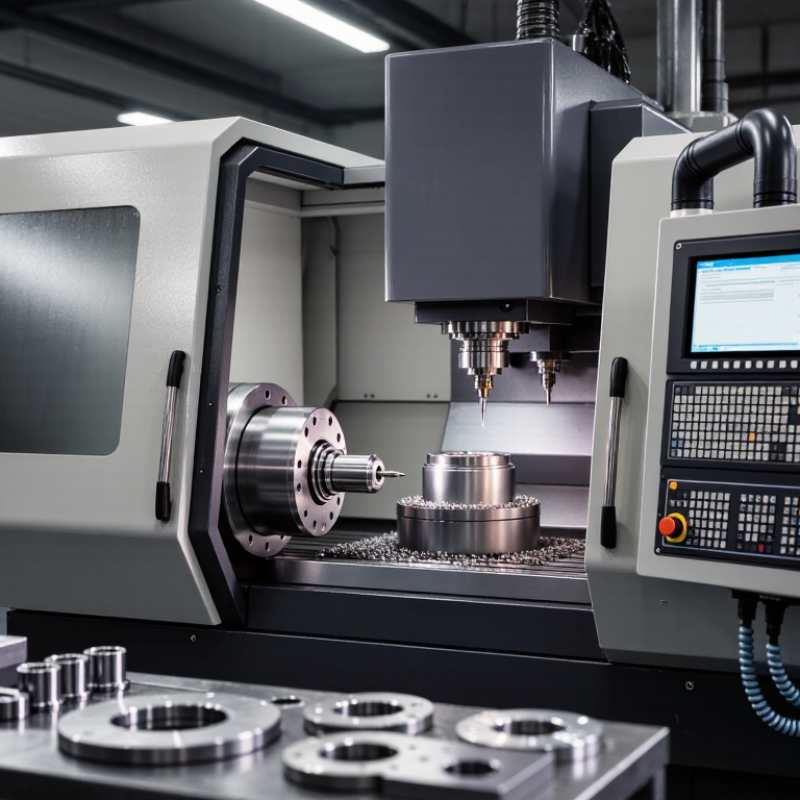
Precision CNC machining is a subtractive manufacturing process. A computer directs cutting tools to remove material from a solid workpiece. The instructions define tool movement, speed, and position. The goal is to produce parts that match specified dimensions and tolerances.
The process begins with a digital part model and a planned toolpath. The machine locates the workpiece using a fixed coordinate system, then cuts it with tools such as an end mill or drill. Workholding must keep the stock steady; even slight movement can affect a hole’s position. Cutting speed and feed rate also matter. Too much heat can distort a thin aluminum plate, while a dull tool may leave rough edges. Small errors matter.
Precision depends on more than the machine. Material variation, tool wear, setup, and measurement all influence the result. Operators may check a feature with a micrometer or coordinate measuring machine, then adjust the setup if readings drift. A clean simulation helps, but it cannot reveal every real-world issue. That part is easy to underestimate. Tolerances should reflect how the component functions, not simply how many decimal places appear on a drawing.
What Is Precision CNC Machining? — Definition and Core Principles
| Topic | Definition or Principle | Why It Matters |
|---|---|---|
| Definition | Precision CNC machining is the computer-controlled removal of material from a workpiece to produce parts that meet specified dimensions, geometry, and surface requirements. | It enables repeatable production of components with controlled features and documented requirements. |
| Numerical control | A CNC program directs machine movements and operating commands, typically using coordinates, feed rates, spindle speeds, and tool instructions. | Programmed control reduces reliance on manual positioning and helps reproduce approved machining operations. |
| Design and tolerances | Engineering drawings define nominal dimensions, permissible variation, geometric controls, and surface finish requirements. | Clear, appropriate specifications give manufacturing and inspection teams measurable acceptance criteria. |
| Workholding and setup | The part is located and secured in a fixture or machine holding device, with the work coordinate system and tool offsets established. | Stable, repeatable setups help control part position and reduce errors between operations. |
| Toolpath planning | Toolpaths specify how cutting tools move through the material, including approach, cutting, and retract movements. | Suitable toolpaths can improve accuracy, surface quality, cycle time, and tool life. |
| Cutting conditions | Tool selection, cutting speed, feed rate, depth of cut, and coolant use are chosen for the material, geometry, machine, and required finish. | Balanced conditions help manage heat, cutting forces, vibration, and tool wear. |
| Machine capability | Achievable results depend on the machine’s condition, rigidity, calibration, thermal behavior, tooling, and setup—not just its nominal positioning specification. | Capability should be assessed against the actual part requirements and manufacturing process. |
| In-process control | Operators may check critical features during production and adjust offsets or processes when measurements indicate a need. | Early checks can help detect drift before it affects a larger batch of parts. |
| Inspection and verification | Finished features are measured using appropriate instruments, such as calipers, micrometers, gauges, or coordinate measuring equipment. | Inspection confirms whether the part conforms to its drawing and acceptance criteria. |
| Common processes | CNC milling uses rotating cutting tools; CNC turning rotates the workpiece against a cutting tool. Drilling and other operations may be integrated into a machining plan. | Process selection depends on the part’s geometry, material, quantity, and required features. |
| Typical applications | Precision CNC machining is used for components such as housings, brackets, shafts, manifolds, fixtures, and custom mechanical parts. | It is useful when parts require controlled dimensions, repeatable features, or complex machined geometry. |
Note: No single tolerance or surface-finish value applies to all precision CNC-machined parts. Achievable results depend on the material, geometry, machine, tooling, setup, process, and inspection method.
Related Posts
-
Top Precision CNC Machining Manufacturers in China
-
10 Best CNC Machining Technologies for Global Buyers
-
Why Choose CNC Machining Technology for Global Sourcing?
-
10 Best CNC Machining Companies for Global Buyers
-
What Is CNC Machining in Manufacturing?
-
2026 Best CNC Machining Precision Services for Buyers
We Meet Our Clients Needs.
Meeting the diverse needs of our clients, we have complete machining facilities for everything from single part prototypes to large quantity production. Our small size is one of our biggest assets. It allows us to control costs and maintain the highest of standards.
Quality orientated and delivery always on time or earlier than originally promised.
Strongly recommend MSD.